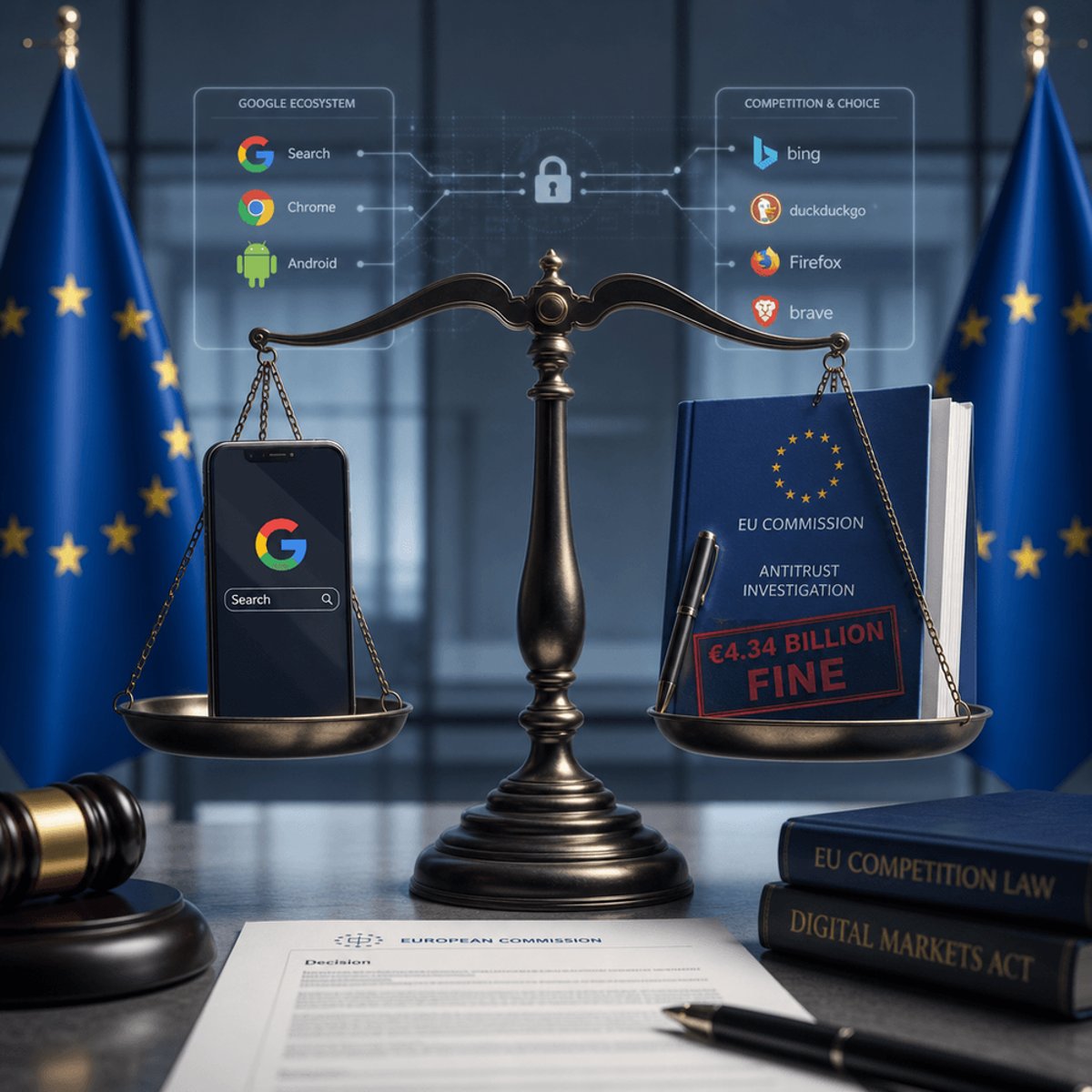
Google just lost its last shot at overturning the European Union's record-breaking $4.7 billion antitrust fine. The tech giant's appeal was rejected, cementing the 2018 penalty imposed by the European Commission for abusing Android's mobile dominance. It's the largest antitrust fine in EU history and sets a major precedent for how regulators can hold Big Tech accountable for platform abuses.
Google is officially on the hook for $4.7 billion. The European Union's top court just rejected the company's final appeal against the massive antitrust fine, ending an eight-year legal battle that started when regulators accused Google of turning Android into a weapon against competitors.
The European Commission originally hit Google with the penalty in 2018, arguing the company abused its dominant position by forcing smartphone manufacturers to pre-install Google Search and the Chrome browser as a condition for accessing the Google Play Store. According to the Commission's original decision, Google also paid manufacturers to exclusively pre-install Google Search and prevented them from selling devices running alternative "forked" versions of Android.
Google fought back hard, arguing that Android's open-source nature meant manufacturers had choices and that the bundling benefited consumers through free services. But European regulators weren't buying it. The Commission's investigation found that Google's practices covered over 95% of Android devices shipped in Europe, effectively locking out rivals like Microsoft's Bing and alternative browsers.
The timing couldn't be worse for Google's parent company Alphabet. The company is already fighting multiple antitrust battles on both sides of the Atlantic. In the U.S., the Justice Department recently wrapped up a landmark trial over Google's search dominance, with a verdict expected later this year. Meanwhile, the EU has opened fresh investigations into Google's advertising technology practices under its new Digital Markets Act.
"This decision sends a clear message that even the largest tech platforms must comply with EU competition law," said Margrethe Vestager, the European Commission's competition chief, in a statement following the ruling. Vestager, who's built her reputation on taking on Big Tech, has made Google a particular target, hitting the company with over $9 billion in total fines across three separate cases.
The Android case specifically focused on three anticompetitive practices. First, Google required manufacturers to pre-install Google Search and Chrome as a condition for licensing the Play Store, which is essentially mandatory for any commercial Android device. Second, Google made payments to major manufacturers and mobile network operators on the condition they exclusively pre-installed Google Search. Third, the company prevented manufacturers who wanted to pre-install Google apps from selling even a single device running on alternative Android forks.
Google modified some of these practices after the 2018 decision, offering European Android users a choice screen for search engines and browsers. But critics argue the changes came too late and don't go far enough. Research from competitors suggests Google's default position still captures the vast majority of user choices, even with the selection screen in place.
The financial impact on Alphabet is significant but manageable. The $4.7 billion fine represents about 3% of Alphabet's 2025 revenue and roughly 15% of its annual profit. The company set aside reserves for the penalty years ago, so the payment won't crater its balance sheet. But the precedent worries Google more than the money.
European regulators are now emboldened to pursue similar cases against other tech giants. Apple is fighting its own battles over App Store fees and restrictions. Meta faces scrutiny over how it bundles services like Marketplace and dating features into Facebook. Amazon is under investigation for allegedly favoring its own products in search results.
For Google, the Android fine compounds an already difficult regulatory environment. The company must now navigate strict compliance requirements under the EU's Digital Markets Act, which designates Google as a "gatekeeper" platform subject to additional restrictions. That includes requirements to make its services interoperable with rivals and prohibitions on self-preferencing in search results.
Industry observers see the ruling as a watershed moment for tech regulation. "The era of Big Tech operating with impunity is over," said one antitrust lawyer who works with European regulators but wasn't authorized to speak on the record. "This shows that even after years of appeals, the EU will make these fines stick."
Google declined to comment beyond a brief statement acknowledging the court's decision. Internally, the company is reportedly reviewing its compliance measures across all EU markets to avoid similar penalties in the future. That includes potential changes to how Android, Search, and Chrome work together in European markets.
The ruling also raises questions about global regulatory alignment. While Europe takes an aggressive stance on platform dominance, U.S. regulators have historically been more permissive. But that's changing. The Justice Department's antitrust case against Google borrows heavily from European precedents, and lawmakers are pushing for legislation that would impose EU-style restrictions on American tech giants.
For Android device makers like Samsung, the decision creates both opportunities and uncertainties. In theory, they now have more freedom to experiment with alternative search engines and browsers. In practice, Google's ecosystem remains deeply integrated into Android's architecture, making it difficult to unbundle services without degrading the user experience.
Google's defeat marks a turning point in how global regulators approach Big Tech's platform power. The $4.7 billion price tag is substantial, but the real impact lies in the precedent it sets for ongoing and future antitrust actions. As the EU doubles down on tech regulation through the Digital Markets Act and U.S. authorities pursue parallel cases, tech giants can no longer count on legal appeals to indefinitely delay accountability. For Google, this is just one battle in a much larger regulatory war that will shape how it operates worldwide for years to come.