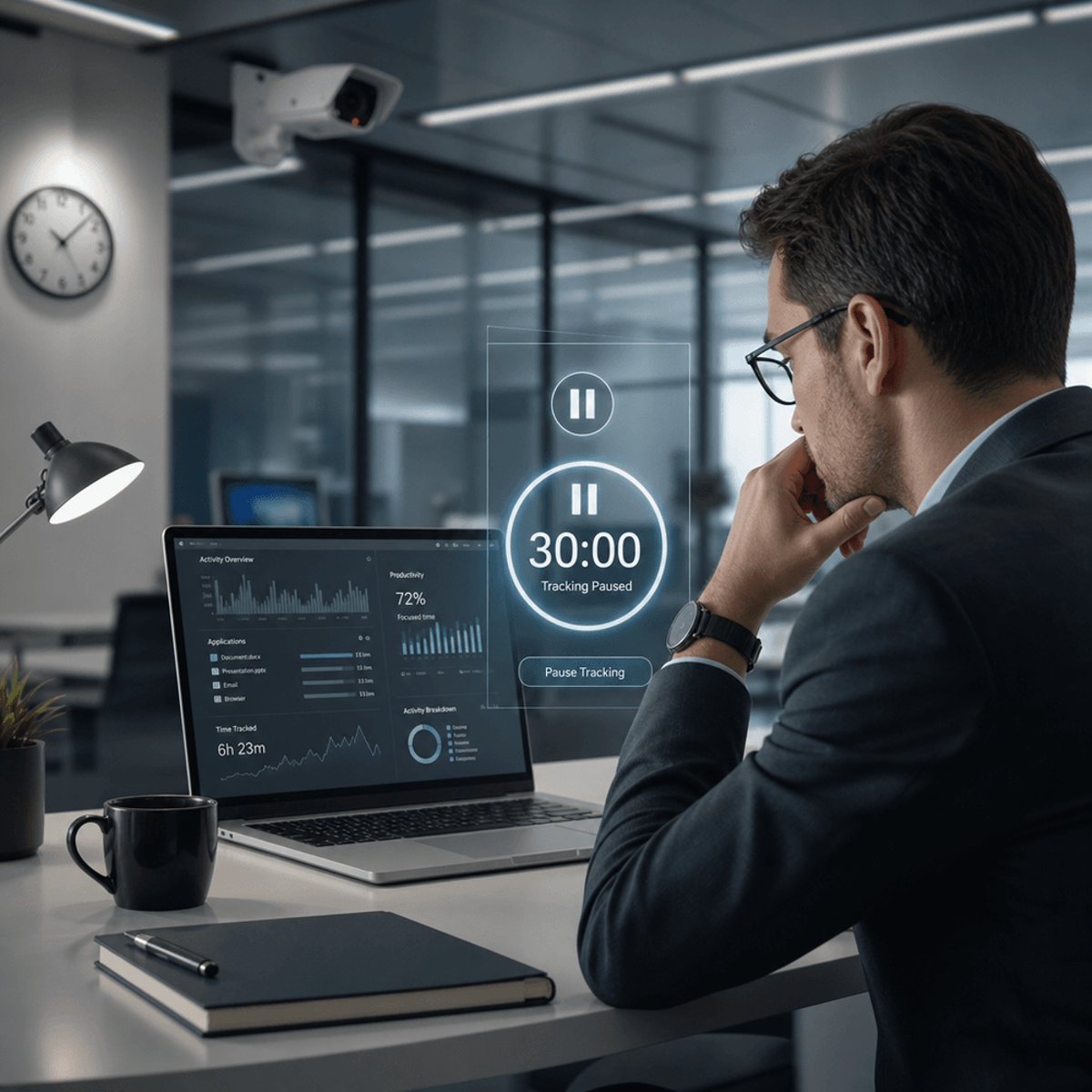
Meta just gave its employees a sliver of digital privacy - but there's a timer on it. According to an internal memo obtained by BBC News, the social media giant is rolling out new controls that let workers pause workplace data collection, but only for up to 30 minutes at a time. The move highlights the tension between employee privacy and corporate surveillance in an era where tech companies track every keystroke of their own workforce.
Meta is giving its employees a new feature they didn't ask for - the ability to pause being watched, but only if they do it in half-hour chunks. The company's latest internal policy, revealed in a memo, introduces controls that let workers temporarily stop data collection on their workplace activities. But the 30-minute limit tells you everything you need to know about how far Meta's willing to go on employee privacy.
The timing is telling. Tech companies have quietly ramped up workplace monitoring over the past few years, tracking everything from keyboard activity to application usage and even email patterns. Meta collects data on employee computer usage as part of what it calls productivity and security measures, though the company hasn't publicly detailed exactly what gets logged or how it's used.
This new pause feature essentially acknowledges what employees already knew - they're being monitored constantly. The 30-minute window offers a brief escape hatch, presumably for personal tasks, sensitive conversations, or moments when workers simply don't want their every click recorded. But the time limit makes it clear this isn't about fundamental privacy rights. It's a pressure release valve.
The memo doesn't specify when the controls will roll out or whether they'll be available to all employees globally. Meta employs over 86,000 people worldwide, many of whom work remotely or in hybrid arrangements where digital monitoring has become standard practice. The company hasn't commented publicly on the policy change.
Workplace surveillance has become a flashpoint issue across the tech industry. While companies argue monitoring helps maintain security, prevents data leaks, and measures productivity, employees and privacy advocates push back against what they see as digital overreach. The pandemic's shift to remote work only accelerated the trend, with employers deploying increasingly sophisticated tracking tools to monitor distributed teams.
Meta finds itself in a particularly awkward position here. This is the same company that built a business empire on collecting user data and has faced repeated privacy scandals over how it handles information. Now it's applying similar data collection practices to its own workforce - and discovering that employees want the same privacy protections Meta's critics have demanded for years.
The 30-minute limit raises practical questions too. What happens when time runs out? Do employees get a warning? Can they immediately start another 30-minute pause, or is there a cooldown period? The memo apparently doesn't address these details, leaving workers to wonder how restricted their privacy breaks really are.
Other tech giants have taken different approaches to employee monitoring. Some companies have dialed back surveillance after employee backlash, while others have doubled down with more invasive tools. Apple, Google, and Microsoft all track employee activity to varying degrees, though few have publicly discussed offering pause features like Meta's.
The policy also highlights a broader shift in how companies think about workplace data. What started as basic security logging has evolved into comprehensive behavioral tracking that can reveal everything from work patterns to personal habits. Employees increasingly find themselves subject to the same data collection regimes their companies deploy on customers - except they can't opt out.
Meta's half-hour pause window feels like a compromise that satisfies no one. It's too limited to address genuine privacy concerns, but significant enough to suggest the company knows its monitoring practices make employees uncomfortable. The policy basically says: we're watching you, but we'll look away for 30 minutes if you ask nicely.
The move could set a precedent for other tech companies grappling with similar tensions. If Meta's approach gains traction, expect to see more employers offering limited privacy controls rather than fundamentally rethinking workplace surveillance. It's easier to add a pause button than to stop collecting data altogether.
Meta's 30-minute privacy pause is less a solution and more a symptom of how normalized workplace surveillance has become. The policy acknowledges employees want privacy without actually committing to it - a half-measure that reflects the uncomfortable reality of modern tech employment. Workers at the company that pioneered behavioral tracking at scale are now subject to it themselves, with only brief intermissions allowed. The real question isn't whether 30 minutes is enough. It's whether companies should be collecting this much employee data in the first place. For now, Meta's answer seems to be: yes, but we'll let you hide occasionally.