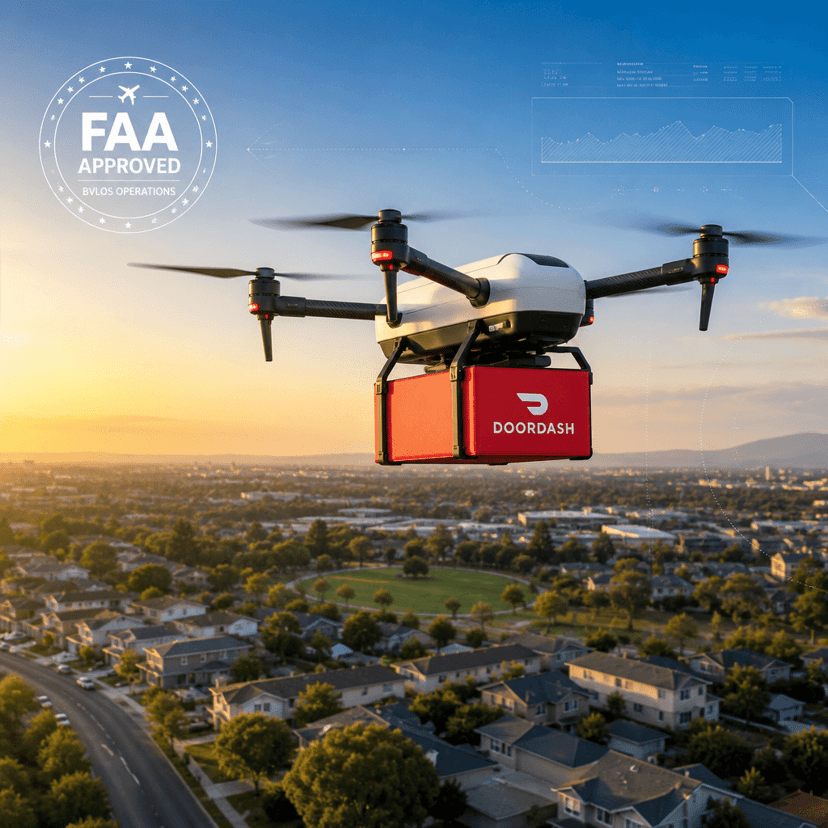
DoorDash just made a major leap into autonomous delivery. The food delivery giant announced it secured Part 135 air carrier certification from the FAA, clearing the way for its new drone program called DoorDash Air. More significantly, the company is ditching its partnership with Alphabet's Wing to build and operate its own fleet of delivery drones, putting it in direct competition with Amazon and Zipline in the race to dominate last-mile aerial logistics.
DoorDash is betting big on the sky. The largest food delivery platform in the US just secured the regulatory green light to launch its own drone delivery operation, marking a dramatic pivot from relying on third-party drone partners to building its own aerial fleet. The announcement positions DoorDash Air as a direct competitor to Amazon Prime Air and signals that drone delivery is moving from experimental pilots to mainstream logistics infrastructure.
The FAA's Part 135 air carrier certification isn't easy to get. According to federal aviation regulations, the designation allows companies to operate small package delivery via unmanned aircraft systems for commercial purposes. It's the same certification that Alphabet's Wing, Zipline, and Amazon fought hard to obtain. For DoorDash, it represents years of groundwork and a significant validation of the company's technical capabilities.
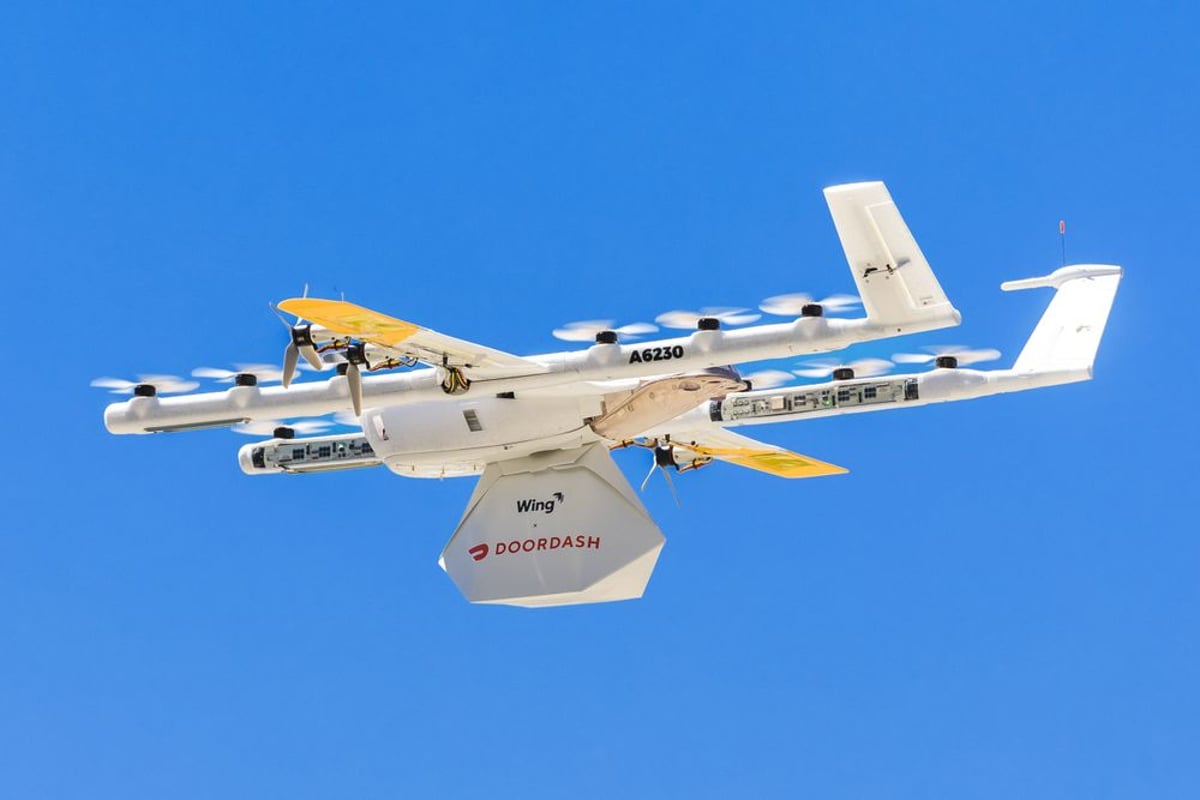
But here's where things get interesting. DoorDash previously worked with Wing on drone delivery pilots across multiple markets, including tests in Dallas-Fort Worth, Virginia, and Australia. Now the company is essentially saying thanks but we'll take it from here. The decision to bring drone operations in-house suggests DoorDash sees aerial delivery as too strategically important to outsource.
The timing makes sense. Drone delivery has been stuck in pilot purgatory for years, with companies running small-scale tests but struggling to achieve meaningful scale. Wing, despite being backed by Alphabet's resources, has faced challenges expanding beyond limited service areas. Amazon's Prime Air has dealt with safety incidents and operational setbacks. Meanwhile, Zipline has focused primarily on medical deliveries and is only recently expanding into food and retail.
DoorDash sees an opening. The company already has relationships with hundreds of thousands of restaurants and retail partners. It has real-time logistics software that manages millions of deliveries daily. Add autonomous drones to that mix, and suddenly you've got a vertically integrated delivery machine that can handle orders faster and cheaper than human dashers in certain scenarios.
The economics are compelling. Drone deliveries eliminate labor costs for short-distance orders, potentially dropping the cost per delivery to just a few dollars once the technology scales. For suburban areas where customers are spread out, drones can fly direct routes that take minutes instead of the 20-30 minutes a driver might need navigating traffic and finding parking. That speed advantage could be decisive in the hyper-competitive food delivery market where customer experience drives loyalty.
But DoorDash isn't abandoning its gig workforce. The company still needs drivers for complex orders, urban environments with restricted airspace, and deliveries requiring human interaction. Instead, drones represent an additional delivery option - one that could handle routine suburban orders for items like coffee, groceries, or quick meals, freeing up dashers to focus on higher-value deliveries.
The competitive landscape just got more complex. Amazon has been investing in Prime Air for over a decade and sees drone delivery as key to its logistics dominance. Walmart has been aggressively testing drone delivery with Wing and Zipline. Now DoorDash brings its massive restaurant network and on-demand delivery expertise into the aerial arena. The next few years will determine whether drone delivery becomes a genuine alternative to ground transportation or remains a niche solution for specific use cases.
Regulatory hurdles remain. The FAA's Part 135 certification allows operations, but local regulations, noise complaints, and safety concerns could limit where drones can actually fly. Weather conditions, battery range, and payload limitations also constrain what drones can deliver. DoorDash will need to prove its technology works reliably at scale before drone delivery becomes a meaningful percentage of its order volume.
Still, the move signals confidence. DoorDash isn't just experimenting - it's building infrastructure. The company is hiring aerospace engineers, developing proprietary drone hardware, and investing in the operational systems needed to manage an aerial fleet. That level of commitment suggests DoorDash believes autonomous delivery isn't a question of if, but when.
DoorDash's launch of its own drone division represents more than just another tech company experimenting with flying robots. It's a fundamental bet on autonomous delivery infrastructure becoming as essential as the software platforms that power on-demand services today. By securing FAA certification and bringing operations in-house, DoorDash is positioning itself to control the full delivery experience - from order placement to aerial fulfillment. Whether that vision materializes depends on solving real-world challenges around regulation, weather, safety, and economics. But one thing's clear: the food delivery wars are going vertical, and DoorDash just claimed its airspace.