Aluminum production has left the world with a toxic legacy - billions of tons of caustic red mud waste sitting in massive lagoons across the globe. Now, Fast Metals thinks it's cracked the code on turning this environmental nightmare into a profitable venture by extracting critical minerals that power everything from electric vehicles to smartphones. The startup's approach treats waste with waste, using one industrial byproduct to neutralize another while pulling out valuable materials that typically require destructive mining operations.
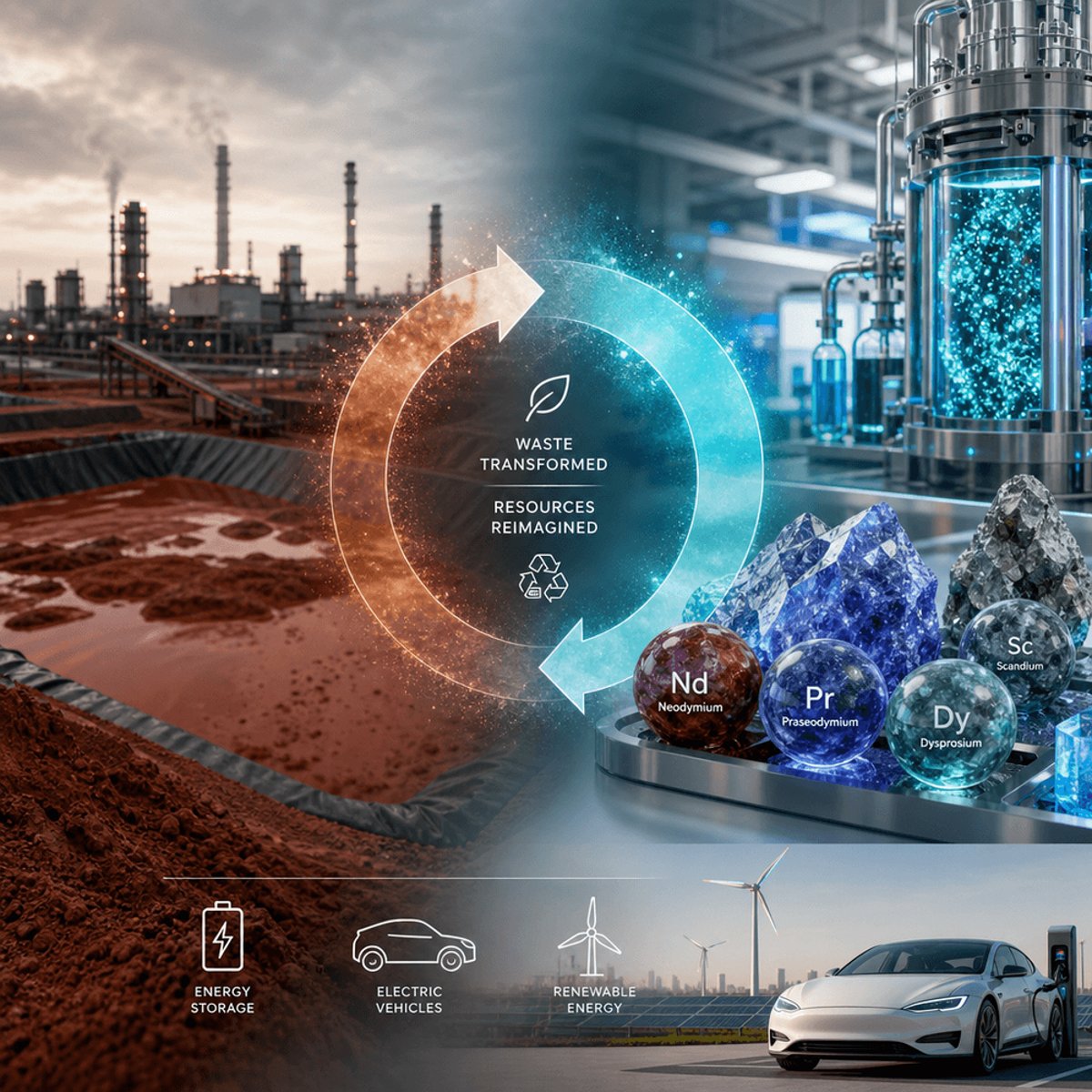
The aluminum industry has a dirty secret that's been piling up for over a century. For every ton of aluminum produced, refineries generate about two tons of red mud - a caustic, alkaline waste that's stored in massive lagoons around the world. We're talking about 4 billion tons of the stuff already accumulated globally, with another 180 million tons added annually, according to international mining data.
Fast Metals is betting it can solve two problems at once. The startup's technology doesn't just neutralize the caustic waste - it extracts critical minerals like rare earth elements, scandium, and other materials that are typically pulled from the ground through environmentally destructive mining operations. It's a circular economy play that could reshape how we think about industrial waste.
The approach centers on treating waste with more waste. Fast Metals uses industrial byproducts - including carbon dioxide and other readily available materials - to neutralize the alkalinity of red mud while simultaneously liberating the valuable minerals trapped inside. The process turns what's essentially a toxic liability into a potential revenue stream.
Red mud gets its name from its rust-colored appearance, caused by high concentrations of iron oxide. But locked inside this caustic sludge are trace amounts of critical minerals that have become increasingly valuable as the world electrifies. Scandium, used to strengthen aluminum alloys in aerospace applications, can sell for thousands of dollars per kilogram. Rare earth elements power motors in electric vehicles and wind turbines. Gallium goes into semiconductors and solar panels.
Traditional mining operations tear up landscapes and generate their own environmental problems to extract these materials from virgin ore. Fast Metals' pitch is that the minerals are already concentrated in red mud - they just need to be recovered efficiently and economically.
The company joins a growing wave of climate tech startups targeting industrial waste streams. Similar ventures are extracting lithium from geothermal brine, recovering rare earths from coal ash, and pulling metals from electronic waste. The common thread is recognizing that yesterday's trash contains tomorrow's critical resources, especially as demand for battery materials and electronics components skyrockets.
Aluminum refineries have wrestled with red mud disposal for decades. The waste is highly alkaline, with pH levels above 13, making it corrosive and toxic to ecosystems. Storage failures have led to environmental disasters, most notably the 2010 Ajka red mud spill in Hungary that killed ten people and devastated local waterways.
Refinery operators currently treat red mud as purely a cost center - something to contain and manage indefinitely. Fast Metals' technology could flip that equation if the recovered minerals generate enough revenue to offset processing costs and potentially turn a profit.
The startup faces significant hurdles scaling from laboratory demonstrations to commercial operations. Mineral extraction from complex waste streams is notoriously difficult to optimize. The concentrations of valuable materials in red mud are relatively low, meaning the process needs to be extremely efficient to make economic sense. And Fast Metals will need to prove its approach works across different types of red mud, which varies depending on the bauxite ore source and refining process used.
Timing might work in the company's favor. Critical mineral prices have climbed as countries race to secure supply chains for clean energy technologies. The U.S., Europe, and other regions are offering incentives for domestic mineral production and processing. Regulations around industrial waste management are tightening, potentially making red mud disposal more expensive and creating additional economic incentives for treatment solutions.
Fast Metals isn't the first to attempt red mud valorization - the technical term for extracting value from waste. Multiple research teams and companies have explored similar concepts over the past two decades. What's changed is the economic landscape. Critical minerals that weren't particularly valuable or in high demand fifteen years ago are now strategic priorities as the energy transition accelerates.
The startup's business model likely involves partnering directly with aluminum refineries, either licensing the technology or operating on-site processing facilities. Refineries get waste management solutions and potentially share in mineral revenues. Fast Metals gets access to feedstock and customers with deep pockets and regulatory pressure to clean up their operations.
If the technology delivers on its promise, the implications extend beyond aluminum. Other industrial processes generate similar waste streams containing trapped valuable materials. Steel slag, mine tailings, and coal ash all contain recoverable minerals. Fast Metals' approach could become a template for an entire category of waste-to-resource ventures.
The climate angle is straightforward - reducing the need for new mining operations cuts habitat destruction, water pollution, and energy consumption. Neutralizing red mud's alkalinity could allow for land reclamation where storage lagoons currently sit. And extracting domestic sources of critical minerals reduces dependence on overseas supply chains, particularly from China, which currently dominates rare earth processing.
Fast Metals represents a potentially transformative approach to one of heavy industry's most persistent environmental challenges. The startup's success hinges on proving the economics work at commercial scale - that the value of recovered minerals outweighs processing costs while genuinely reducing the environmental footprint of aluminum production. With billions of tons of red mud already accumulated and critical mineral demand surging, the market opportunity is massive if the technology delivers. The real test comes in the next phase as Fast Metals moves from concept to commercial operations and demonstrates whether treating waste with waste can actually turn a profit while cleaning up one of the industrial age's most toxic legacies.