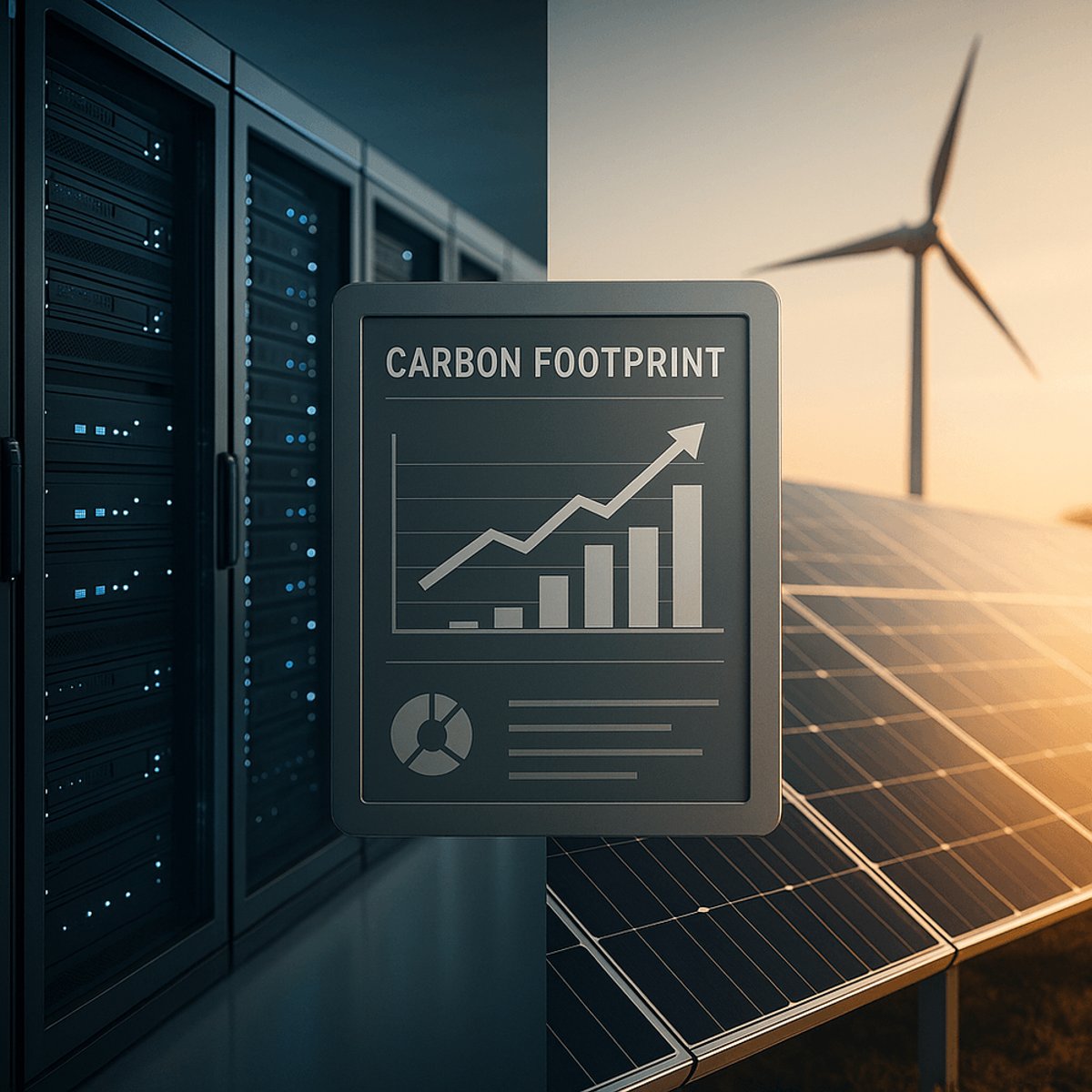
Big Tech's AI ambitions are leaving a massive carbon footprint, and the bill is coming due. Microsoft, Amazon, Google, and Meta collectively skyrocketed their carbon credit purchases in 2023, with Microsoft emerging as the sector's biggest buyer, according to tracked purchase data from CNBC. The surge directly correlates with the explosive growth of AI infrastructure, as power-hungry data centers strain sustainability pledges across Silicon Valley.
The numbers tell a story Silicon Valley didn't want to write. Microsoft topped the carbon credit buying charts in 2023, outpacing Amazon, Google, and Meta as the four tech giants collectively ramped up offset purchases to unprecedented levels. The spike isn't coincidental - it's the direct cost of the AI race transforming the tech industry.
Every ChatGPT query, every AI model training run, every generative AI feature rolling out across consumer products demands compute power at scales that dwarf previous generations of cloud services. Data centers running these AI workloads consume electricity at rates that make traditional web hosting look quaint by comparison. As companies pour billions into GPU clusters and custom AI chips, their energy bills and carbon footprints are climbing in lockstep.
Microsoft's position at the top of the carbon credit buyer list reflects the company's massive AI infrastructure buildout supporting both Azure cloud services and its partnership with OpenAI. The company has committed to becoming carbon negative by 2030, but that timeline is colliding hard with the reality of powering some of the world's largest AI deployments. Carbon credits have become the pressure valve - an admission that current technology can't square the circle between AI ambitions and climate pledges.
Google faces similar math problems. The company's AI investments span everything from cloud infrastructure to consumer products like Bard and AI-enhanced search. Each incremental AI feature adds to baseline power consumption across Google's global data center network. The company has long championed renewable energy purchases and efficiency innovations, but the sheer scale of AI workloads is overwhelming those gains. Carbon credits fill the gap between stated climate goals and operational reality.
Amazon and Meta round out the quartet of mega-buyers, each grappling with their own AI infrastructure demands. Amazon Web Services hosts massive AI training operations for customers while building out proprietary AI capabilities. Meta's pivot to AI-powered feeds, recommendation systems, and the metaverse vision all translate to more servers burning more electricity. Both companies have published ambitious sustainability roadmaps that now look increasingly dependent on carbon offset markets.
The carbon credit market itself has become a flashpoint for climate policy debates. Critics argue that offsets allow polluters to continue business as usual while claiming environmental progress through accounting maneuvers. Quality varies wildly across different credit types - some represent genuine carbon removal projects, while others fund forestry initiatives that may not deliver promised climate benefits. Tech companies insist they're buying high-quality credits while simultaneously working to reduce actual emissions, but the 2023 purchase surge suggests those reduction efforts aren't keeping pace with AI growth.
Industry insiders watching the data center construction pipeline expect the trend to accelerate. Plans for new AI-focused facilities are proliferating across the U.S. and internationally, each requiring power grid connections that utility companies are scrambling to provide. Some regions are seeing data center developers negotiate directly for nuclear and natural gas power plant capacity, bypassing renewable sources entirely when baseload reliability matters more than carbon intensity.
The financial implications extend beyond carbon credit costs. Investors are starting to ask harder questions about how companies will deliver both AI leadership and climate commitments without one undermining the other. Sustainability reports that once highlighted progress toward net-zero targets are now featuring more complex narratives about AI infrastructure trade-offs. The carbon credit purchases represent a quantifiable acknowledgment that something has to give.
What remains unclear is whether this represents a temporary gap that better technology will close, or a fundamental incompatibility between current AI architectures and aggressive climate timelines. More efficient chips, renewable energy buildouts, and novel cooling systems are all in development. But they're racing against AI models that keep getting bigger and more computationally expensive with each generation. The companies buying carbon credits at record rates are essentially betting that offsets can bridge the gap until breakthrough efficiency gains materialize.
The 2023 purchase patterns also reveal competitive dynamics. Microsoft's lead position correlates with its aggressive AI strategy and OpenAI partnership. The company is simultaneously the most exposed to AI infrastructure costs and the most publicly committed to ambitious climate targets. That combination creates maximum pressure to buy offsets at scale. Competitors watching Microsoft's approach are calibrating their own strategies accordingly, creating a feedback loop that's expanding the carbon credit market alongside the AI boom.
The explosion in Big Tech carbon credit purchases reveals an uncomfortable truth about the AI revolution - it's being built on infrastructure that can't yet reconcile performance demands with climate commitments. Microsoft's position leading the buying spree reflects both the scale of its AI ambitions and the gap between sustainability pledges and operational reality. As AI workloads continue growing faster than efficiency improvements can offset them, carbon credits have evolved from a supplementary tool to an essential component of Big Tech's climate strategy. The question now isn't whether companies will keep buying offsets, but whether the carbon credit market can scale fast enough to match AI infrastructure expansion while maintaining credibility about actual environmental impact.