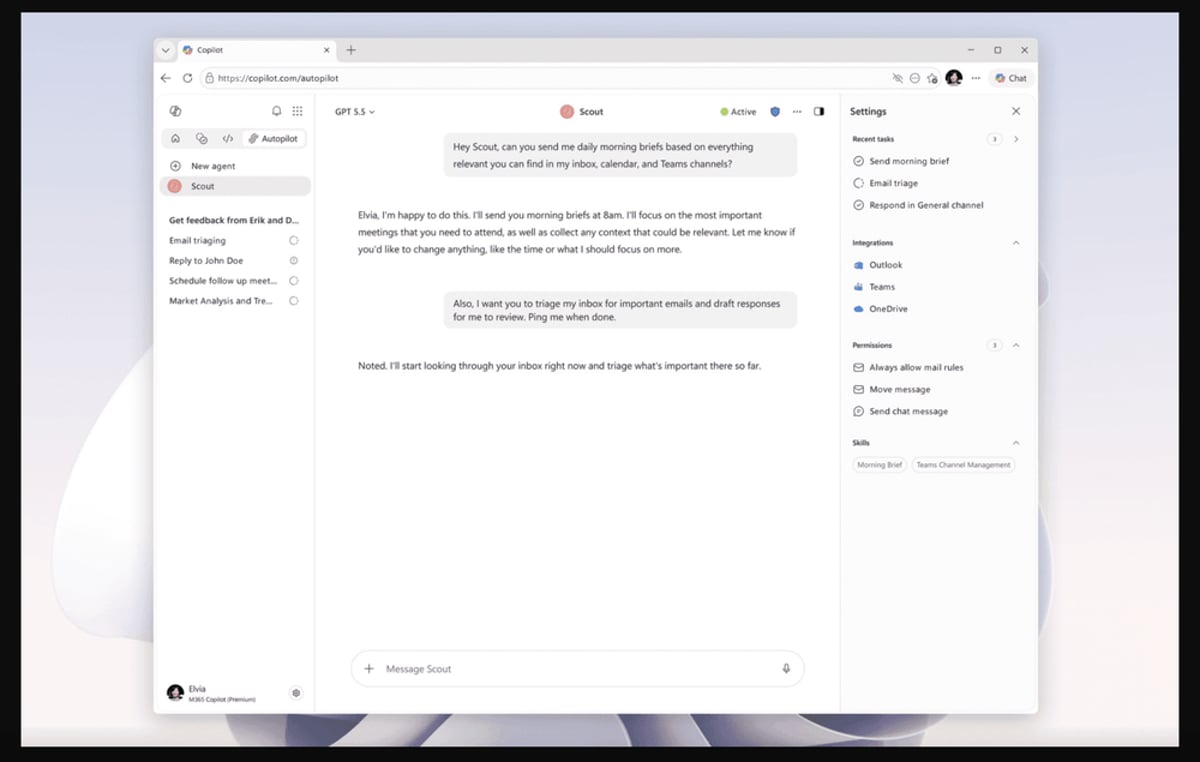
Microsoft just threw down the gauntlet in the AI assistant wars. The company unveiled Scout, an always-on personal assistant built on OpenClaw technology that goes far beyond what Copilot can do. Unlike its predecessor that lives inside individual apps, Scout integrates across the entire Microsoft 365 ecosystem - Outlook, OneDrive, Teams - giving businesses a virtual assistant that can actually see and manage work across platforms. It's Microsoft's first real shot at a true personal assistant, and it lands right as Google rolls out its own OpenClaw-based offering.
Microsoft is making its boldest move yet in the AI assistant space. Scout represents a fundamental shift from the company's existing Copilot tools - instead of living inside individual Microsoft 365 apps, it operates as an always-on presence that can see and act across your entire digital workspace.
"This is a personal assistant, it's the first real personal assistant we've offered customers," Omar Shahine, corporate vice president of Microsoft Scout, told The Verge in an exclusive interview. That distinction matters. While Copilot requires you to summon it within specific apps, Scout runs continuously in the background, monitoring your work patterns and proactively stepping in to help.
The technology powering Scout is OpenClaw, the same AI framework that Google recently adopted for its own assistant offerings. But Microsoft's implementation focuses squarely on enterprise workflows. Businesses can assign Scout to employees as a dedicated virtual assistant, handling everything from calendar management to expense reports to email drafts. It's the kind of administrative grunt work that eats up hours each week for knowledge workers.
What makes Scout different is its cross-platform vision. It doesn't just live in Outlook or Teams - it sees across the entire Microsoft 365 suite. That means it can pull information from OneDrive, reference conversations in Teams, check your calendar in Outlook, and draft documents in Word, all while maintaining context about your broader work priorities. According to Microsoft's announcement, this holistic view enables Scout to make smarter decisions about how to assist users.
The timing of Scout's launch isn't coincidental. Google has been making aggressive moves with its own OpenClaw-based assistant, targeting the same enterprise customers that form Microsoft's core business. The AI assistant market is rapidly becoming a key battleground for workplace productivity, with companies betting that whoever builds the best digital assistant will lock in the next generation of enterprise software customers.
For Microsoft, Scout represents a significant evolution in its AI strategy. The company has invested billions in OpenAI and rushed to integrate AI features across its product line through Copilot. But those efforts have largely been about augmenting existing apps with chatbot functionality. Scout is different - it's a persistent presence designed to actively manage your work rather than just respond to queries.
The enterprise focus is deliberate. Unlike consumer AI assistants that struggle with privacy concerns and limited permissions, Scout operates within the controlled environment of corporate IT systems. Businesses can set permissions, define workflows, and ensure Scout only accesses data that employees are already authorized to see. That makes it far more practical for the kinds of sensitive tasks - expense reporting, calendar management, confidential email drafts - that professionals actually need help with.
But the announcement also raises questions about how Scout will coexist with Copilot. Microsoft now has two distinct AI assistants in its lineup, each with different capabilities and use cases. Shahine's emphasis on Scout being a "personal assistant" suggests the company sees clear differentiation - Copilot as an in-app tool, Scout as an always-on manager. Whether customers will embrace that distinction or find it confusing remains to be seen.
The broader competitive landscape is heating up fast. Google is pushing its OpenClaw assistant as part of Workspace, while OpenAI continues to expand ChatGPT's capabilities for enterprise users. Amazon has its own AI assistant ambitions through AWS. The race is on to define what an AI personal assistant should be - and who gets to provide it to the world's businesses.
Microsoft Scout marks a pivotal moment in the enterprise AI wars. By building an always-on assistant that operates across the entire Microsoft 365 ecosystem, the company is betting that businesses want more than chatbots embedded in apps - they want true digital assistants that can manage work proactively. The OpenClaw foundation gives Scout serious technical chops, but the real test will be whether IT departments trust it with the kind of cross-platform access it needs to be truly useful. With Google pushing its own version and the enterprise productivity market up for grabs, Scout's success or failure could reshape how millions of workers interact with their digital tools. The assistant wars just got very real.