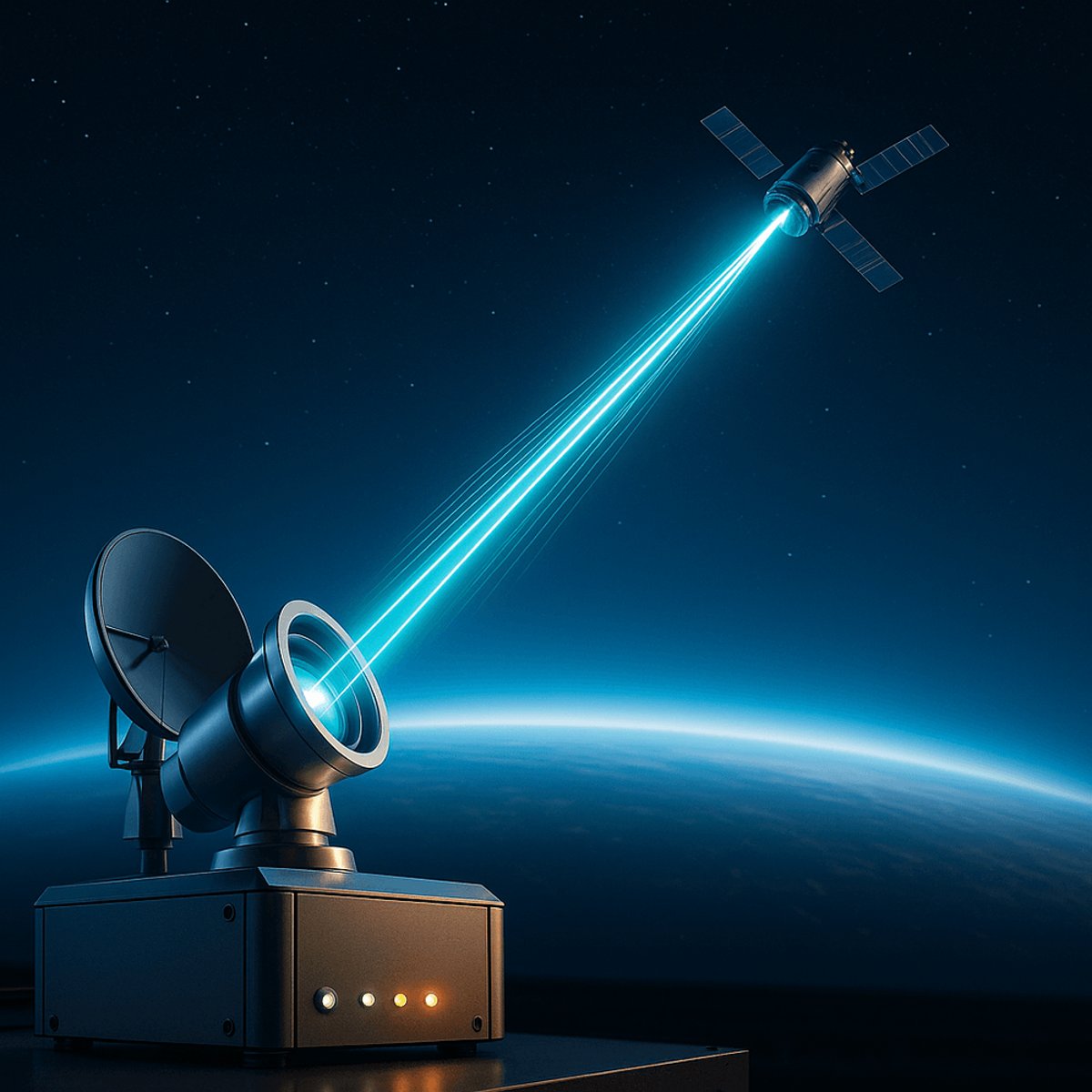
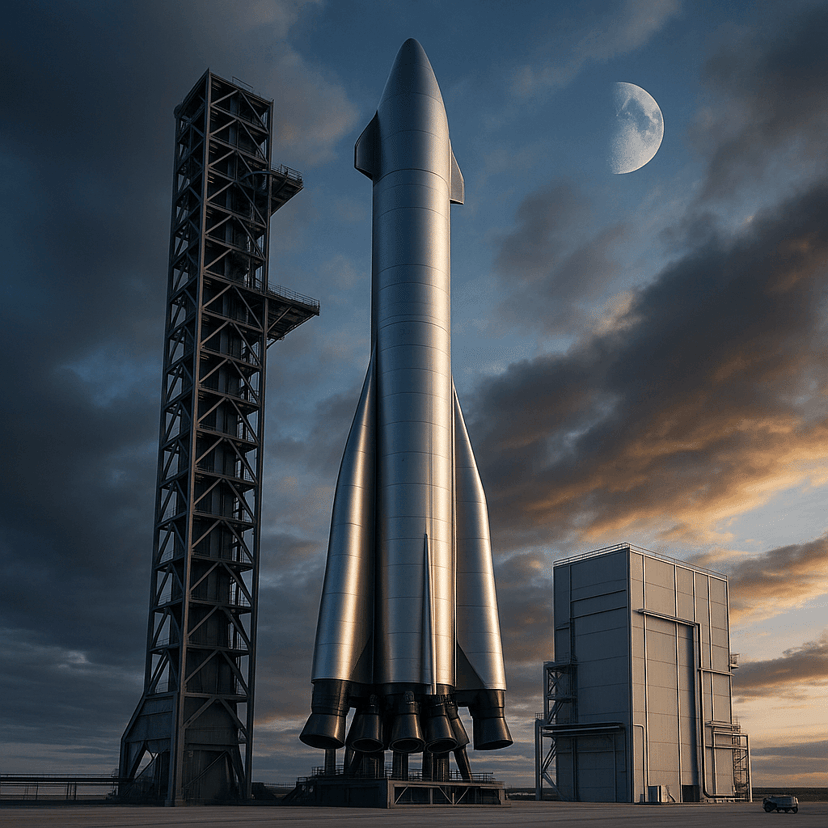
NASA's Artemis II moon mission just validated what could become the backbone of future space communications. In a first-of-its-kind demonstration, startups Observable Space and Quantum Wave successfully teamed up to capture laser-transmitted data beamed back from the mission, proving that optical communications can scale beyond theoretical lab tests to real-world deep space operations. The breakthrough signals a potential shift away from traditional radio frequency systems that have bottlenecked space data transmission for decades.
NASA's Artemis II mission just delivered an unexpected win for the commercial space sector. While the crewed lunar flyby grabbed headlines, a quieter experiment happening in the background proved that laser communications between deep space and Earth aren't just viable - they're ready to scale.
Observable Space and Quantum Wave, two startups building ground station infrastructure for optical communications, successfully captured data transmitted via laser from the Artemis II spacecraft as it traveled beyond Earth orbit. The demonstration marks the first time commercial partners have validated laser comms at lunar distances, according to TechCrunch.
The timing couldn't be better. Traditional radio frequency systems that have powered space communications since the 1960s are hitting their bandwidth limits just as satellite operators and deep space missions demand exponentially more data. Laser-based optical communications promise data rates 10 to 100 times higher than RF systems, but they've remained largely experimental - until now.
"This wasn't a controlled lab environment. This was a real mission with real stakes," explains the significance of testing on Artemis II rather than a dedicated tech demo satellite. The mission's crew safety requirements meant communication systems had to work flawlessly, making the laser comms test a high-pressure proving ground.
Observable Space has been building a network of ground stations optimized for optical communications, betting that the space industry will pivot from radio to laser as bandwidth demands explode. Quantum Wave brings expertise in quantum-enhanced receivers that can detect incredibly faint laser signals - critical when you're trying to capture photons that have traveled hundreds of thousands of miles through space.
The partnership strategy makes sense. Space-to-Earth laser communications face a chicken-and-egg problem: satellite operators won't invest in laser terminals without ground infrastructure to receive signals, and ground station companies won't build optical networks without customer satellites to serve. NASA's Artemis program just provided the proof point both sides needed.
This builds on NASA's earlier Laser Communications Relay Demonstration, which tested optical links from low Earth orbit starting in 2021. But lunar distances introduce new challenges - atmospheric interference, precision pointing across 240,000 miles, and signal degradation all intensify. The Artemis II success suggests those obstacles are manageable with current technology.
For the commercial space industry, the implications ripple outward quickly. Companies like SpaceX, Amazon's Project Kuiper, and OneWeb are deploying massive satellite constellations that generate terabytes of Earth observation data, internet traffic, and telemetry. Getting that data down to Earth fast enough has become the bottleneck. Laser communications could be the relief valve.
The defense sector is watching closely too. Military satellites increasingly rely on high-resolution imaging and real-time data links that strain existing RF infrastructure. Optical communications offer not just higher bandwidth but also tighter beams that are harder to intercept or jam - a significant security advantage.
What makes this demonstration particularly telling is the commercial partnership model. Rather than building proprietary systems, NASA is validating technologies that startups can commercialize and scale. It's the same playbook that worked for commercial crew and cargo programs, where SpaceX and other companies took NASA-proven concepts and turned them into businesses.
Observable Space and Quantum Wave now have something priceless: flight heritage. In the risk-averse space industry, proving your technology worked on a NASA moon mission opens doors to commercial contracts and investor confidence. Expect both companies to tout this validation in every pitch deck and customer presentation going forward.
The broader test also de-risks optical communications for the entire industry. When startups or satellite operators evaluate whether to invest in laser terminals, they can point to Artemis II as proof the ground infrastructure exists and works. That lowers the barrier to adoption significantly.
Next up, watch for NASA's planned Deep Space Optical Communications experiments on future Artemis missions and Mars spacecraft. If laser comms can handle the 140-million-mile distance to Mars reliably, it becomes the de facto standard for deep space exploration. The Moon mission just showed it's ready for the first step.
The Artemis II laser communications demonstration does more than validate a technology - it kicks off a potential infrastructure shift for the entire space industry. Observable Space and Quantum Wave proved commercial ground networks can handle deep space optical links, solving the chicken-and-egg problem that's slowed adoption. As satellite constellations multiply and deep space missions demand higher data rates, the Moon mission just showed the path forward isn't theoretical anymore. It's operational. The bandwidth bottleneck that's constrained space operations for 60 years might finally have met its match, and it arrived on a beam of light from the Moon.