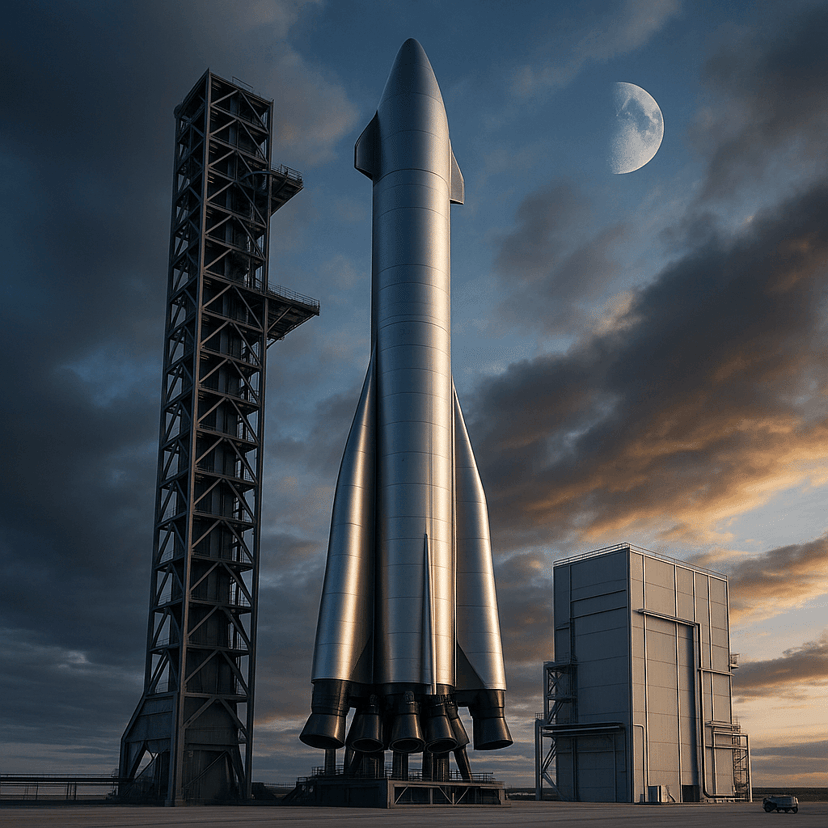
The race to return Americans to the moon just got more intense. SpaceX has pitched NASA a "simplified mission" to accelerate lunar landings after acting administrator Sean Duffy threatened to reopen the Artemis III contract to competitors like Blue Origin. Both companies submitted proposals by NASA's October 29 deadline as China aims to land astronauts on the moon by decade's end.
The moon race just shifted into overdrive. SpaceX is scrambling to salvage its exclusive NASA lunar contract after acting administrator Sean Duffy publicly called out the company for delays on the Artemis III mission. In a company blog post released Thursday, Elon Musk's aerospace giant revealed it had pitched NASA a "simplified mission architecture" designed to get astronauts back on the lunar surface faster while improving crew safety.
The proposal comes after weeks of escalating tensions between SpaceX and NASA leadership. Earlier this month, Duffy told CNBC that SpaceX was behind schedule on its human landing system and threatened to reopen the contract to competitors like Jeff Bezos' Blue Origin. Musk fired back on X, calling Duffy "Sean Dummy" and questioning whether "the person responsible for America's space program can't have a 2 digit IQ."
But the public spat masks deeper concerns about America's lunar competitiveness. China is targeting lunar astronaut landings by 2030, and NASA's current timeline has Artemis III slipping further into the future. SpaceX's massive Starship has completed 11 test flights, with the last two deemed successful, but the company still hasn't demonstrated crucial in-orbit refueling capabilities needed for the lunar mission.
Blue Origin isn't sitting idle either. The company has received approximately $835 million from NASA since its 2023 contract began and is developing its Blue Moon Mark 1 lander. A NASA spokesperson confirmed to CNBC that "the agency has received and is evaluating plans from both SpaceX and Blue Origin for acceleration of HLS production."
The financial stakes are enormous. According to USA Spending, NASA has already paid SpaceX roughly $2.7 billion of a potential $4.5 billion human landing system contract. SpaceX claims it has "self-funded" over 90% of the program, implying total spending exceeding $30 billion.
NASA's evaluation process reflects the urgency of the moment. Following the government shutdown, the agency plans to issue a request for information to the broader aerospace industry. "A committee of NASA subject matter experts is being assembled to evaluate each proposal and determine the best path forward to win the second space race given the urgency of adversarial threats to peace and transparency on the Moon," the NASA spokesperson said.
The pressure is building from multiple directions. In September, during an all-hands meeting with NASA employees, Duffy expressed frustration with "shade thrown" during Senate hearings where lawmakers questioned whether America could beat China to the moon. Meanwhile, some NASA employees supporting Artemis missions have been required to work without pay during the federal shutdown, highlighting budget constraints.
China's space program adds another layer of urgency. Beyond lunar ambitions, the country announced it's sending a new crew to its Tiangong space station this week. China built the station after being excluded from the International Space Station due to U.S. national security concerns, demonstrating its commitment to independent space capabilities.
The simplified mission SpaceX is proposing could represent a strategic pivot from the company's typical approach of developing comprehensive, reusable systems. While details remain confidential, the architecture likely streamlines complex orbital refueling operations that have become a bottleneck for the current Artemis timeline.
For NASA, the choice between maintaining SpaceX's exclusive contract or opening competition reflects broader questions about how America approaches space leadership. The agency's milestone-based payment structure means SpaceX only gets paid as it achieves specific goals, providing some protection against delays. But with China's deadline approaching and political pressure mounting, NASA may need multiple providers to ensure mission success.
The next few months will determine whether America's return to the moon happens through SpaceX's streamlined approach or a new competitive landscape with multiple providers. With China's lunar program advancing and political pressure mounting, NASA faces a critical decision that could reshape the future of American space exploration. The simplified mission proposal represents SpaceX's attempt to keep its exclusive contract while addressing legitimate concerns about timeline and execution.