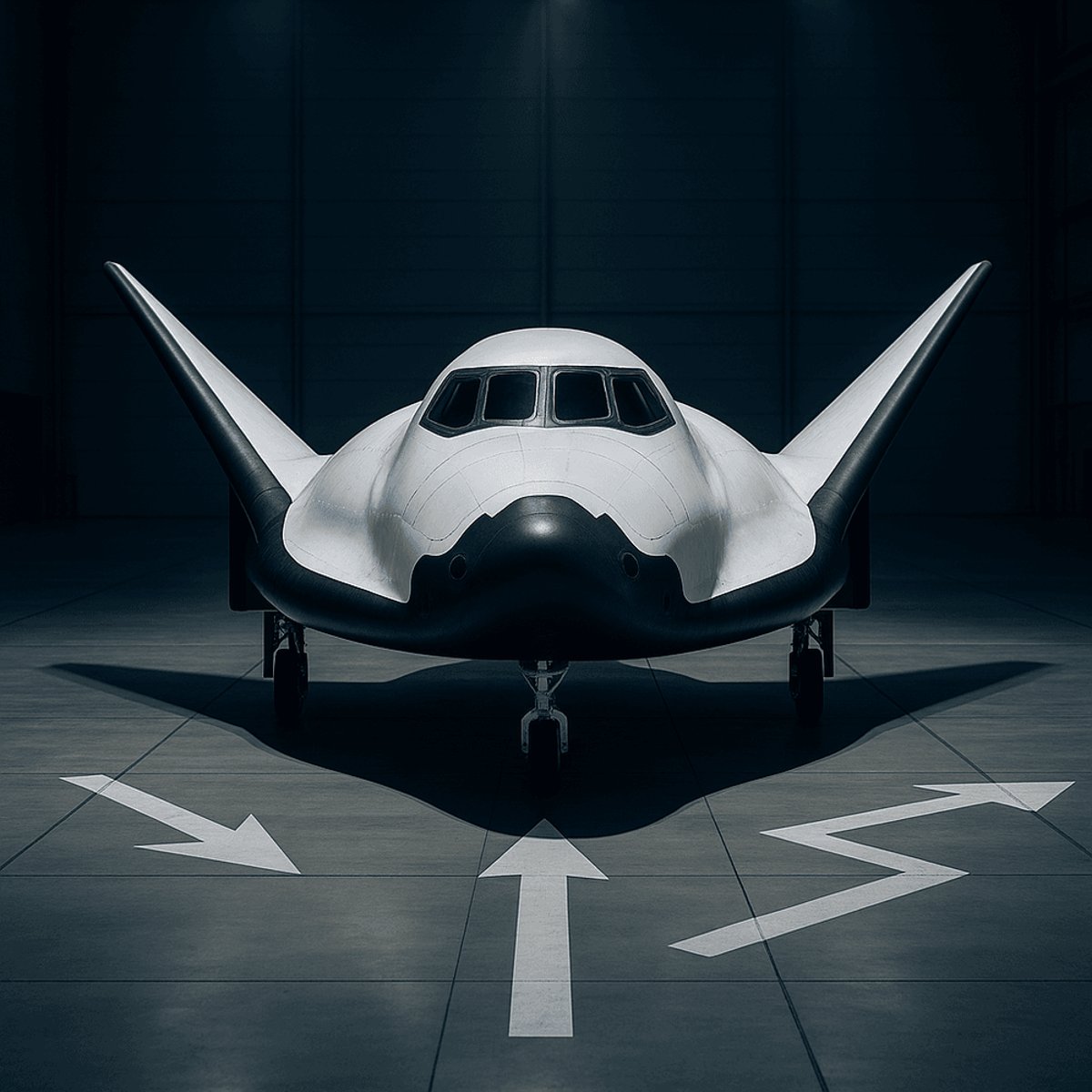
Sierra Space just lost its lifeline. NASA quietly stripped away the guaranteed purchase agreement for Dream Chaser cargo flights to the International Space Station, forcing the spaceplane into an identity crisis that could reshape the entire commercial space market. Instead of ISS missions, Dream Chaser will now fly a solo demo in late 2026 with no docking guarantee.
The aerospace industry just witnessed a rare mid-flight course correction that nobody saw coming. Sierra Space's Dream Chaser spaceplane, once positioned as the winged alternative to SpaceX's Dragon capsule for ISS cargo runs, now finds itself scrambling for a new mission after NASA pulled the rug out from under nearly a decade of development work.
The contract modification announced earlier this week removes NASA's commitment to purchase cargo flights to the International Space Station - a guarantee that was the entire foundation of the Dream Chaser business model. According to TechCrunch's original reporting, the spaceplane will instead debut in a free-flying demonstration mission in late 2026, with NASA providing only "minimal support" before deciding whether to order any ISS resupply missions at all.
This isn't just a contract tweak - it's a fundamental reshaping of the commercial cargo landscape. The Commercial Resupply Services program was supposed to be a three-horse race between Sierra Space, SpaceX, and Northrop Grumman, with a combined contract ceiling of $14 billion. Sierra Space had already secured roughly $1.43 billion in commitments, but that guaranteed revenue stream just evaporated.
The timing couldn't be worse for the commercial space sector. Unlike consumer tech startups that can pivot quickly, aerospace companies face massive upfront development costs that typically require steady government contracts to survive. SpaceX famously received billions through NASA's Commercial Orbital Transportation Services and Commercial Crew programs to develop its Dragon capsule and Falcon 9 rocket - exactly the kind of guaranteed funding that Dream Chaser just lost.
Sierra Space executives are already pushing hard into defense markets, with executive chair Fatih Ozmen telling investors on Thursday that the transition will allow the company to provide "unique capabilities to meet the needs of diverse mission profiles, including emerging and existential threats and national security priorities." The pivot makes strategic sense - defense contracts often provide more stable, long-term funding than commercial space ventures.
But the clock is ticking louder than ever. The ISS faces deorbit around 2030, leaving Dream Chaser just a few years to prove it can deliver cargo in orbit. That narrow window puts enormous pressure on the 2026 free-flying demonstration to showcase capabilities beyond simple ISS docking - everything from payload flexibility to defense applications.
The commercial space station market remains largely theoretical, with companies like Axiom Space and Blue Origin still years away from operational facilities. Dream Chaser's unique selling proposition - the only winged spacecraft capable of runway landings and cargo return - could prove valuable if these commercial stations materialize, but that's a big if in an industry notorious for delayed timelines and funding challenges.
Mid-program pivots like this are becoming more common as space startups grapple with shifting government priorities and the chicken-and-egg problem of proving commercial markets before they exist. Unlike traditional aerospace programs designed for highly specific missions, Sierra Space is betting that Dream Chaser's reusability and runway capability make it flexible enough to serve multiple masters.
The broader implications extend beyond one company's pivot. NASA's decision to remove purchase guarantees signals a shift toward more competitive, performance-based contracting in the commercial space sector. That's good news for innovation and cost reduction, but potentially devastating for smaller players who can't weather the uncertainty like SpaceX or Blue Origin.
The Dream Chaser pivot represents more than one company's strategic shift - it's a canary in the coal mine for the entire commercial space economy. With guaranteed government contracts disappearing and commercial markets still nascent, aerospace startups face an increasingly brutal path to profitability. Sierra Space has roughly four years to prove that winged spacecraft can compete in a market dominated by capsules, while simultaneously building new customer bases that don't yet exist. Success would validate the company's flexible platform approach and potentially open new markets for reusable spaceplanes. Failure could signal the end of an aerospace era that promised routine, airplane-like access to orbit.