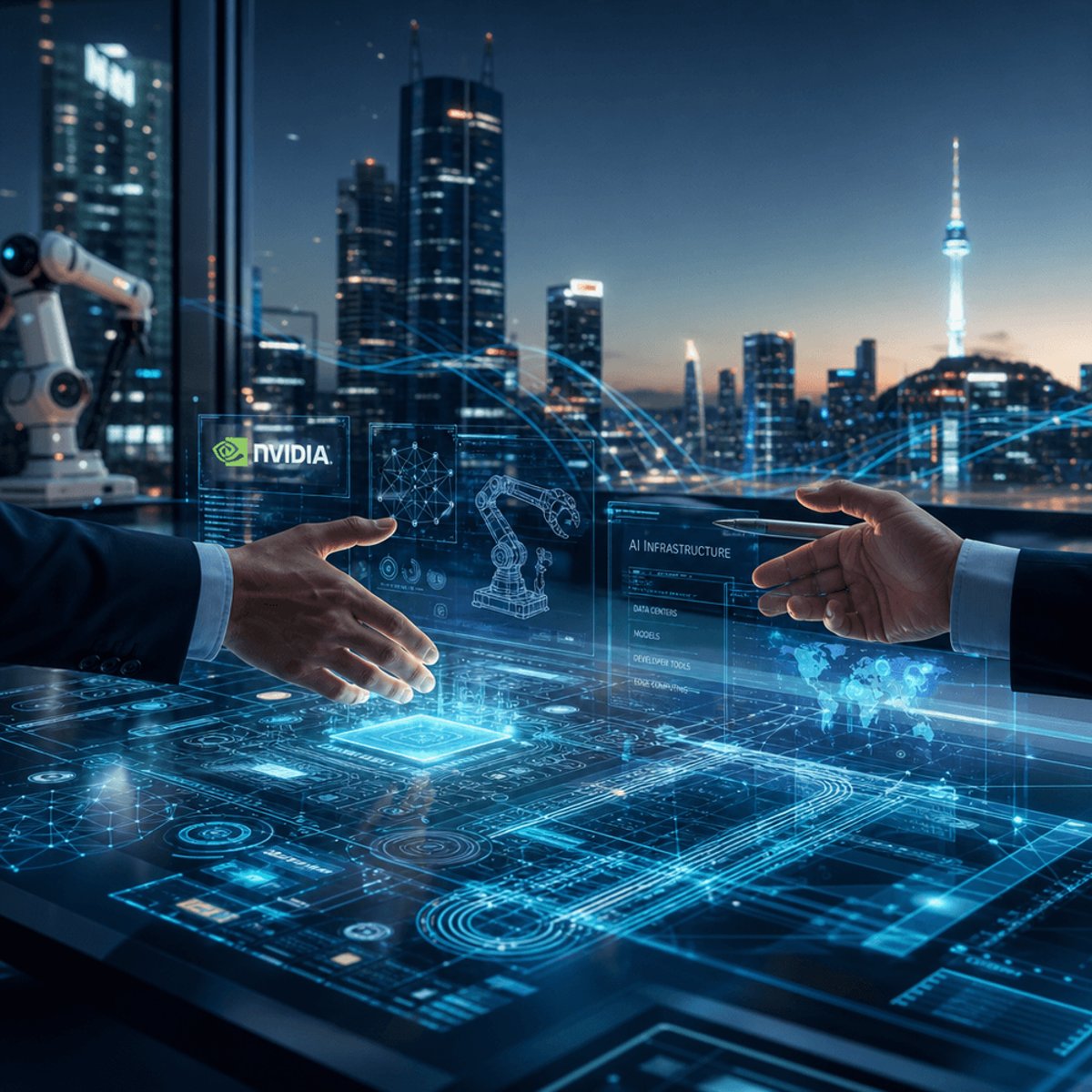
NVIDIA CEO Jensen Huang touched down in Seoul this week for high-stakes meetings with the partners building South Korea into one of the world's most formidable AI ecosystems. The visit signals NVIDIA's deepening commitment to the country's sovereign AI infrastructure ambitions, robotics innovation, and what Huang has called "one of the most passionate gaming communities" on the planet. With South Korea racing to establish itself as an independent AI powerhouse amid escalating US-China tech tensions, this isn't just a courtesy call - it's a strategic power play.
NVIDIA founder and CEO Jensen Huang is spending this week in Seoul, and the timing couldn't be more loaded. South Korea has quietly transformed itself into an AI juggernaut, building sovereign infrastructure that doesn't rely on borrowed technology or foreign cloud providers. The country's robotics sector is exploding, its gaming community drives billions in GPU demand, and its semiconductor giants are increasingly central to global AI supply chains.
Huang's visit comes as nations worldwide scramble to reduce dependency on US hyperscalers and Chinese manufacturing. According to NVIDIA's official blog, the CEO is meeting with "the partners and builders" behind South Korea's AI infrastructure push - a deliberately vague phrase that likely includes everyone from Samsung and LG to Korea's burgeoning AI startup scene and government officials orchestrating the country's tech sovereignty play.
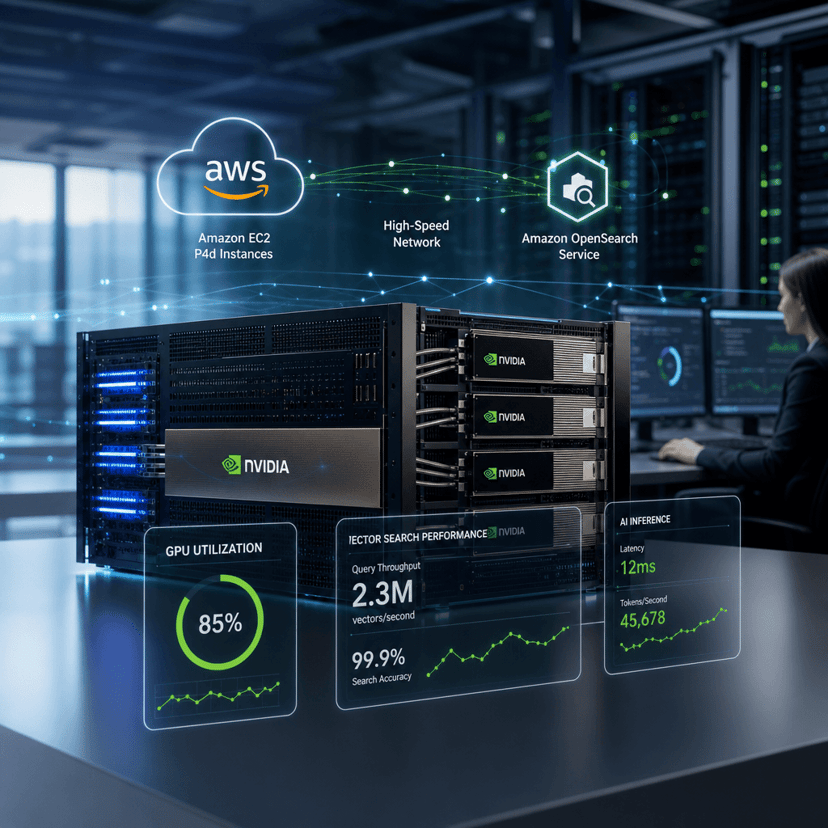
South Korea's sovereign AI strategy has been years in the making. The country isn't content to rent compute from AWS or Azure - it's building its own AI infrastructure from the ground up, powered by locally-developed systems and NVIDIA's chips. This approach mirrors what we're seeing across the EU, Middle East, and Southeast Asia, where governments are pouring billions into homegrown AI capabilities that can operate independently of US tech giants.
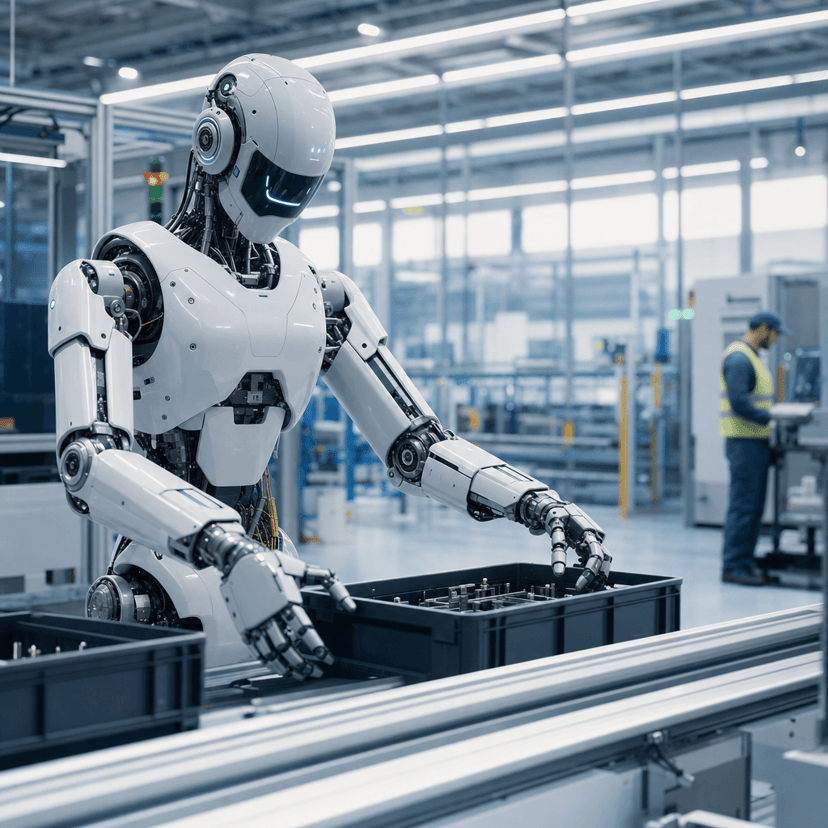
The robotics angle is particularly interesting. South Korea has long been a global leader in industrial automation and consumer robotics, and the AI revolution is supercharging that advantage. Companies across Seoul are deploying NVIDIA-powered systems for everything from warehouse automation to humanoid robots destined for elder care - a critical application in one of the world's fastest-aging societies. The gaming connection, meanwhile, gives NVIDIA a massive consumer GPU market that few other countries can match.
This visit also reflects NVIDIA's evolution from a pure hardware company to something closer to a geopolitical chess piece. As the US tightens export controls on advanced chips to China, NVIDIA has been forced to diversify its partnerships and strengthen ties with allied nations building their own AI capabilities. South Korea fits that bill perfectly - it's a US ally with advanced manufacturing, enormous capital to deploy, and a government laser-focused on tech leadership.
The "stay tuned here for live updates" teaser in NVIDIA's announcement suggests we might see real news coming out of these meetings. That could mean anything from expanded datacenter partnerships to joint robotics ventures or even commitments around next-generation chip supply. South Korea's Samsung is already one of the world's largest memory chip makers and is investing heavily in advanced logic chips that could compete with TSMC. Deeper NVIDIA-Samsung collaboration would reshape the entire AI supply chain.
What makes South Korea's AI push particularly formidable is the coordination between government, corporations, and academia. The country's chaebols - massive family-controlled conglomerates like Samsung, LG, and Hyundai - can mobilize capital and engineering talent at a scale few other countries can match. When the government says "build sovereign AI," these giants don't just nod along - they deploy billions and retool entire business units.
The gaming community angle also shouldn't be overlooked. South Korea pioneered esports, has the world's fastest broadband infrastructure, and maintains a PC gaming culture that drives massive GPU sales. That consumer base gives NVIDIA a revenue stream and testing ground that complements its datacenter ambitions. It's not just about selling H100s to AI labs - it's about dominating every layer of the compute stack.
For context, this visit follows a pattern of Huang's increasingly visible international diplomacy. He's become something of a roving tech ambassador, showing up in Singapore, the UAE, Japan, and now Korea to cement partnerships as countries race to claim their piece of the AI revolution. Each visit telegraphs where NVIDIA sees strategic opportunity - and where it needs to hedge against geopolitical risk.
The sovereign AI infrastructure trend is accelerating faster than most analysts predicted. Countries that once happily outsourced compute to AWS are now viewing AI as a national security priority requiring homegrown capabilities. That shift is creating enormous opportunities for NVIDIA, which finds itself as the essential partner for any nation serious about AI leadership. South Korea is betting it can build world-class AI without dependency on foreign clouds, and NVIDIA is betting that helping them succeed will pay dividends for decades.
Huang's Seoul visit isn't just another CEO glad-handing tour - it's a snapshot of how the global AI landscape is fracturing into regional power centers. South Korea's combination of semiconductor muscle, robotics innovation, and government-backed infrastructure spending makes it exactly the kind of partner NVIDIA needs as countries race to build independent AI capabilities. Whatever gets announced this week, the bigger story is clear: the era of centralized, US-dominated AI infrastructure is giving way to something more distributed, more sovereign, and far more complex. South Korea is positioning itself at the center of that transformation, and NVIDIA is making sure it's along for the ride.