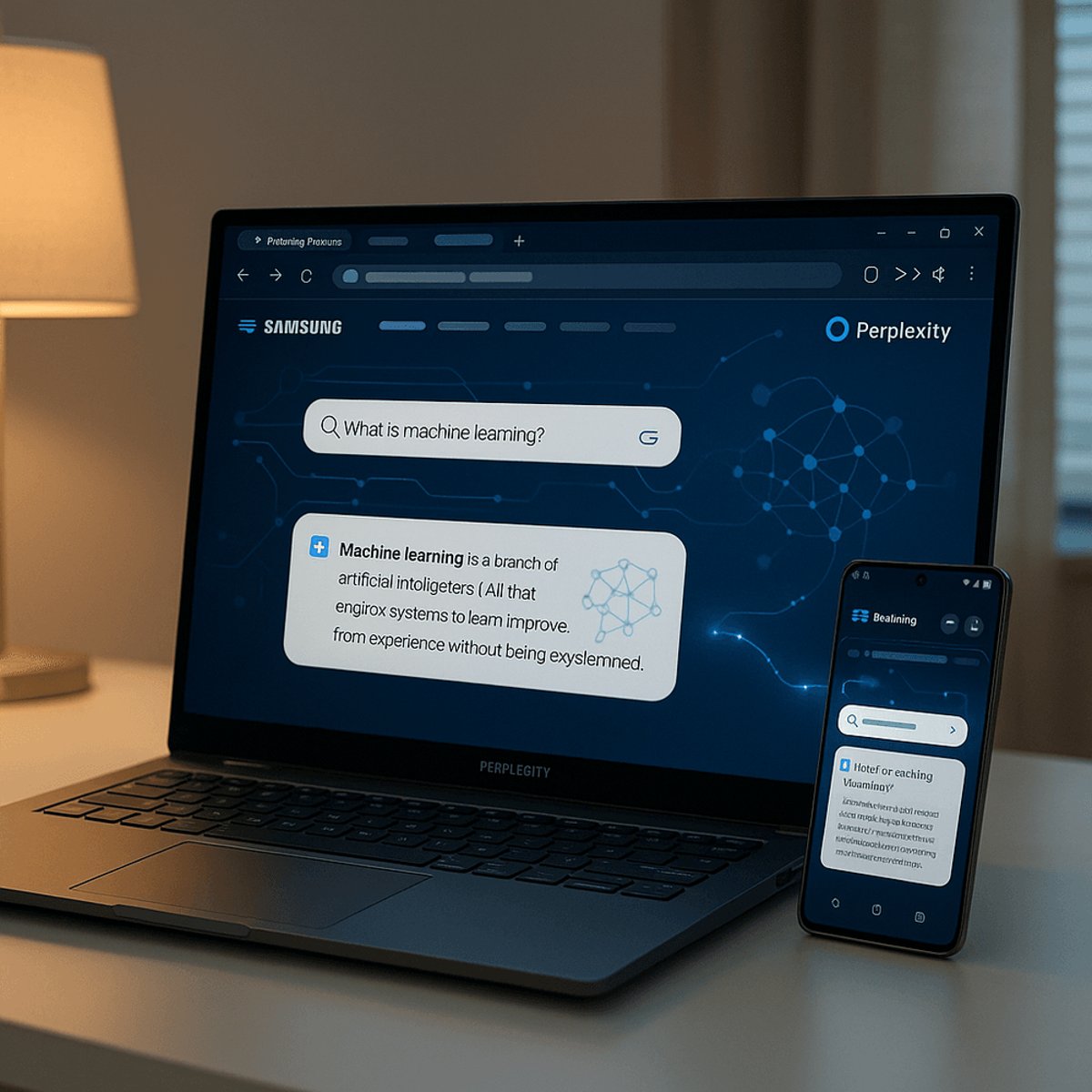
Samsung just made its boldest move yet into desktop computing, launching Samsung Browser for Windows with deeply integrated agentic AI powered by Perplexity. The browser doesn't just sync bookmarks - it uses natural language processing to understand webpage context, search video timestamps, and analyze multiple tabs simultaneously. Available now in the US and South Korea, the launch signals Samsung's push beyond hardware into AI-powered software services.
Samsung is bringing its mobile browser to Windows, but this isn't just another Chrome clone. The company announced today that Samsung Browser for Windows launches with agentic AI capabilities built in partnership with Perplexity, turning the browser into an intelligent assistant that understands what you're looking at and helps you act on it.
The move marks a significant expansion of Samsung's software ambitions beyond its Galaxy devices. While the company already commands a substantial mobile browser user base, the Windows launch puts Samsung in direct competition with Chrome, Edge, and Arc on desktop - armed with AI features that go well beyond autocomplete.
According to Samsung's announcement, the browser's AI assistant can understand natural language queries about the content you're viewing. Planning a trip to Seoul? Ask the browser to create a four-day itinerary based on the page you're reading, and it'll generate a structured plan you can customize. The AI analyzes the webpage context in real-time, pulling relevant details to build actionable responses.
But Samsung's betting on more than just content summarization. The browser introduces multi-tab context awareness, letting you ask questions that span multiple open pages. Instead of manually switching between tabs to compare hotel prices or product specs, the AI can synthesize information across all of them and surface key differences in a single response. It's the kind of workflow enhancement that could genuinely change how people research online.
The video intelligence feature stands out as particularly ambitious. Samsung Browser can parse video content to understand context, then jump to specific moments based on natural language queries. Looking for the part where the presenter talks about battery life? The AI finds it and starts playback from that timestamp. It's a direct challenge to YouTube's chapter system, but automated and conversational.
Cross-device continuity forms the foundation of the experience. Samsung Pass integration means you're not just syncing bookmarks and history - you can literally pick up the exact scroll position of a webpage when moving from your Galaxy phone to your Galaxy Book. The feature requires Samsung's Continuity Service or Galaxy Connect app and currently works on Galaxy Book3 through Book6 series, with broader device support coming later.
Samsung's partnership with Perplexity is notable here. Rather than building its own large language model or defaulting to OpenAI's infrastructure, Samsung chose Perplexity's answer engine - a company that's been positioning itself as the anti-Google with its conversational search interface. The collaboration gives Perplexity a major distribution channel while letting Samsung leverage proven AI tech without massive R&D overhead.
The natural language browsing history search addresses a genuine pain point. Instead of scrolling through endless history entries or trying to remember exact URLs, you can ask for "that smartwatch I was looking at last week" and the AI retrieves it. It's semantic search applied to your personal browsing data, and it could make browser history actually useful again.
Samsung's limiting the initial rollout to South Korea and the United States, with Windows 10 (version 1809 and above) and Windows 11 support. The Android version of Samsung Browser is getting the same agentic AI features through version 29.0.4 and later. Global expansion is planned but unscheduled - likely contingent on how well the US and Korean launches perform and regulatory considerations in other markets.
The browser market has been ripe for disruption despite Chrome's dominance. Arc gained traction with power users by reimagining tab management. Brave built a following around privacy. Opera added built-in VPN and crypto features. Samsung's angle is making the browser itself intelligent enough to reduce the friction in common workflows - research, comparison shopping, content analysis.
There are obvious questions about privacy and data processing. Samsung notes that AI features require a network connection and Samsung Account login, with query limits that vary by region. The company doesn't specify whether webpage content gets processed locally or sent to Perplexity's servers, though the natural language understanding capabilities suggest substantial cloud processing.
For Samsung, this launch represents a strategic shift. The company's historically focused on hardware - phones, tablets, laptops - while treating software as a differentiator rather than a standalone business. Samsung Browser for Windows with agentic AI suggests the company sees software services as a growth opportunity, especially as hardware margins compress and AI becomes table stakes.
The timing aligns with broader industry trends. Microsoft's pushing Copilot throughout Windows and Edge. Google's testing AI overviews in Chrome. Apple's reportedly building AI into Safari. Samsung's entry brings meaningful competition to the desktop AI browser race, particularly for users already invested in the Galaxy ecosystem.
Samsung's Windows browser launch with Perplexity AI represents more than ecosystem expansion - it's a bet that intelligence, not just speed or privacy, will define the next generation of web browsing. The cross-device continuity and natural language features could give Samsung a compelling hook for Galaxy users, while the multi-tab analysis and video search capabilities address real workflow friction. Whether that's enough to pull users away from Chrome remains to be seen, but Samsung's now competing on software innovation rather than just hardware bundling. Watch how Microsoft responds with Edge and whether other Android manufacturers follow Samsung's lead into desktop browsers.