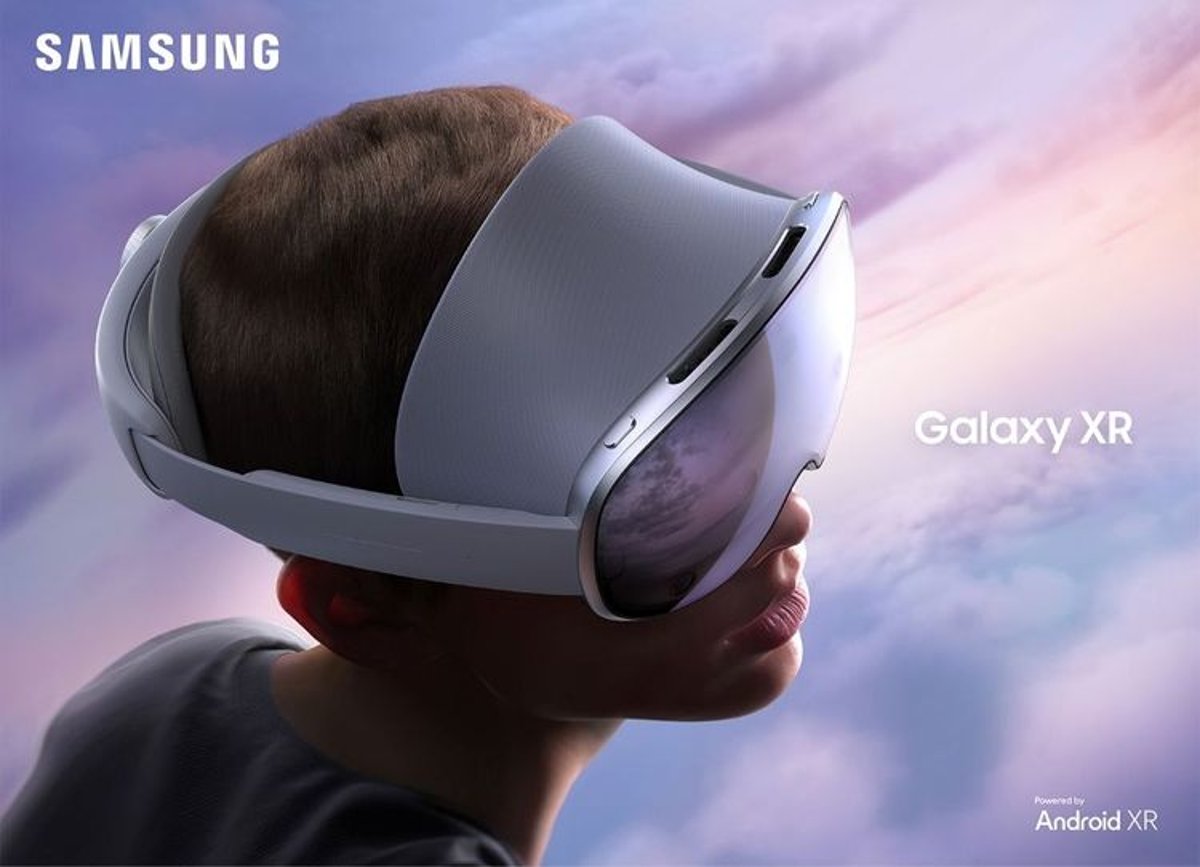
Samsung just dropped its biggest XR play yet. The Galaxy XR headset, unveiled yesterday, marks the first consumer device built on Google's new Android XR platform - a collaboration with Qualcomm that positions AI as the core experience rather than an add-on feature. This isn't just another VR headset; it's Samsung's bet that context-aware AI will redefine how we interact with extended reality.
Samsung isn't playing catch-up in extended reality anymore. The company's Galaxy XR headset, officially unveiled during yesterday's livestream event, represents a fundamental shift in how tech giants are approaching immersive computing - with AI taking center stage rather than being relegated to supporting features.
Built on the newly launched Android XR platform - a joint effort between Google and Qualcomm - the Galaxy XR positions multimodal AI as the primary interface. Users interact with Gemini as a persistent companion that understands context across applications, from providing personalized navigation suggestions in Google Maps to offering real-time gaming coaching and creative insights.
The timing couldn't be more strategic. While Meta doubles down on social VR experiences and Apple focuses on premium productivity use cases with Vision Pro, Samsung's approach democratizes AI-powered XR through Google's ecosystem integration. The Android XR foundation means developers can leverage familiar tools while tapping into Google's AI infrastructure.
"Galaxy XR opens entirely new possibilities for AI-native devices, enabling full immersion that intelligently responds to users with contextual understanding," Samsung stated in official materials. But the real breakthrough isn't the marketing speak - it's the seamless integration of Circle to Search functionality, allowing users to point at real-world objects and receive instant AI-powered information through the headset's pass-through cameras.
The hardware specs tell their own story about Samsung's ambitions. The 4K display delivers crisp visuals that support everything from Netflix binge-watching to simultaneous multi-game viewing for sports fans. Content creators get access to Adobe Pulsar for spatial video editing, transforming traditional 2D workflows into immersive 3D environments.
What sets Galaxy XR apart from competitors is its approach to memory and media. The headset can spatialize existing 2D photos and videos into 3D experiences, breathing new life into personal content libraries. This feature alone could drive adoption among consumers hesitant about creating entirely new content ecosystems.
The broader implications extend beyond Samsung's hardware strategy. Android XR represents Google's most serious attempt to establish platform dominance in extended reality, leveraging its existing services like YouTube, Maps, and Search as native XR experiences. For Qualcomm, the partnership provides another avenue to compete with specialized XR chips from other vendors.
Industry analysts have been watching Samsung's XR moves closely, especially after the company's previous mixed-reality ventures failed to gain significant traction. The Galaxy XR's AI-first approach suggests Samsung learned from those earlier missteps, focusing on practical applications rather than experimental features.
The competitive landscape is heating up fast. Meta's Quest ecosystem continues growing, Apple's Vision Pro targets enterprise and creative professionals, and now Samsung brings Google's vast service ecosystem into the mix. Each company is betting on different interaction paradigms - social presence, spatial computing, and AI companionship respectively.
Pricing and availability details remain under wraps, though Samsung's positioning suggests a consumer-focused price point rather than Apple's premium approach. The company's established manufacturing scale and Google's platform support could enable competitive pricing that brings AI-powered XR to mainstream audiences.
For developers, Android XR opens new opportunities to create experiences that span traditional mobile apps and immersive environments. The platform's integration with existing Google services means developers can build XR extensions of current applications rather than starting from scratch.
Samsung's Galaxy XR launch signals a new phase in the extended reality wars, where AI capabilities matter more than hardware specs alone. By partnering with Google and Qualcomm on Android XR, Samsung positions itself as the bridge between Google's AI ecosystem and mainstream consumers ready for practical XR applications. The success of this approach will depend on execution - whether Gemini's contextual understanding lives up to the demo promises and if developers embrace Android XR as enthusiastically as they have traditional Android. But with the XR market projected to hit $209 billion by 2025, Samsung's timing with AI-native extended reality could prove prescient.