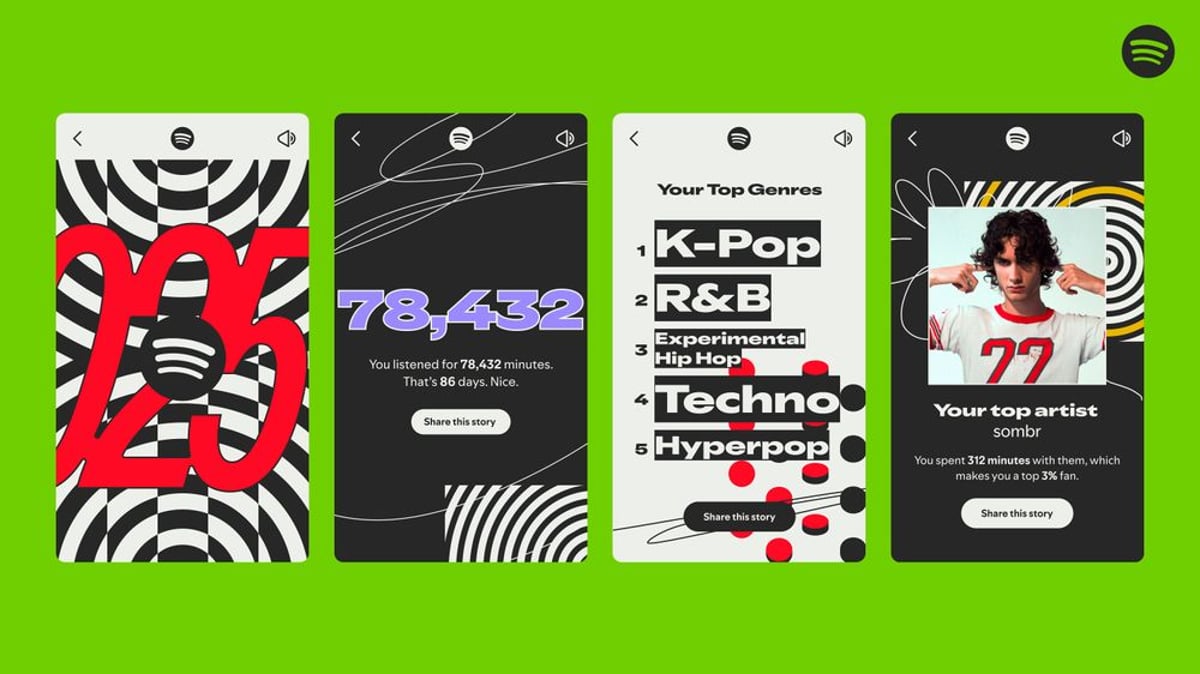
Spotify is turning music listening into a competitive sport this year. The streaming giant just unveiled Wrapped 2025 with "Wrapped Party," a new social feature that pits users against friends to see who has the most obscure taste or deepest listening habits. While Apple Music and Amazon Music launched their year-end recaps earlier, Spotify is betting that gamification will keep its annual tradition the most shareable.
Spotify just dropped its annual Wrapped campaign, and this time it's personal. The Swedish streaming giant is introducing Wrapped Party, turning your yearly music recap into a battlefield where friends compete over who listened to the most obscure tracks or spent the most hours drowning in sad songs.
Wrapped Party creates interactive competitions based on what you've already listened to throughout 2025. You can't retroactively pump up your indie cred or suddenly discover more experimental artists, but the feature awards quirky titles like "The Onion Chopper" for listening to the saddest music. Friend groups get ranked too - "Copy and Paste" crews have eerily similar tastes, while "Chaos Crew" groups don't share a single artist in common.
Beyond the social gaming, Spotify is finally acknowledging how people actually consume music in 2025. For the first time, Wrapped highlights users' top albums, not just individual tracks and artists. According to Spotify's newsroom announcement, this marks a shift toward recognizing that some listeners still experience music as cohesive album journeys rather than playlist shuffles.
The platform's also expanding beyond music with audiobook genre breakdowns, reflecting Spotify's aggressive push into podcasts and spoken word content that began ramping up in 2022. This diversification strategy helped the company weather Apple's privacy changes that disrupted podcast advertising revenues across the industry.
Two standout features this year are "Clubs" and "Listening Age." Clubs transforms generic genre classifications into personality-driven communities. Instead of simply saying you listened to metal most, you're placed in the "Grit Collective" that "believes in rebellion through music." Users get assigned roles like "Scout" for discovering emerging artists early. It's Spotify's attempt to create deeper user identity around music discovery, similar to how Apple Music positions itself around curation expertise.
Listening Age takes a more provocative approach, basically telling users their music taste doesn't match their generation. If you're 38 but still spinning late '90s Nu Metal, expect to be labeled with a Listening Age in your early 40s. Current chart-toppers might earn you a Listening Age of 18. It's a clever psychological hook that's likely to drive social media engagement as users defend or embrace their musical generation gap.
The competitive angle comes as streaming platforms battle for user attention and social sharing. Apple Music Replay launched Monday with enhanced statistics, while Amazon Music Delivered created festival poster-style graphics for users' top tracks. YouTube Music dropped its Recap before Thanksgiving, getting a head start on the year-end rush.
But Spotify's approach reflects its broader strategy of user engagement through social features. The company has consistently invested in communal listening experiences, from collaborative playlists to real-time friend activity feeds. Wrapped Party extends this philosophy by turning personal data into group entertainment, encouraging users to stay within Spotify's ecosystem rather than just consuming their annual stats and moving on.
The timing isn't coincidental. Year-end music recaps have become crucial marketing moments for streaming platforms, generating millions of social media posts and driving user acquisition. According to industry analysts, Wrapped campaigns can boost new subscriber sign-ups by 15-20% in December alone. By adding competitive elements, Spotify is essentially gamifying user retention during a critical growth period.
Interestingly, Spotify wasn't first to market this year, breaking from its usual pattern of setting the industry pace for year-end campaigns. This delayed launch might reflect the company's focus on developing more sophisticated social features rather than rushing to beat competitors on timing.
Spotify's social gamification of music consumption reflects broader industry pressure to keep users engaged beyond just streaming songs. While competitors focused on prettier graphics and earlier launch dates, Spotify is betting that turning listening habits into friend competitions will drive deeper platform loyalty. The real test won't be whether people share their Wrapped results, but whether features like Wrapped Party actually change how users discover and consume music year-round. As streaming wars intensify, these annual campaigns are becoming less about celebrating music and more about psychological user retention.






![[Interview] The Future of Screen Experiences, Part ①: Inside Samsung’s Micro RGB TV, Setting a New Standard for Next-Generation Displays](/cdn-cgi/image/width=128,quality=75,format=auto,fit=cover/https://charming-card-d91ad3487b.media.strapiapp.com/Samsung_T_Vs_and_Displays_Micro_RGB_TV_100_BT_2020_Micro_RGB_Color_Booster_Pro_AI_Soccer_Mode_Pro_Interview_main1_6448e09a2c.jpg)