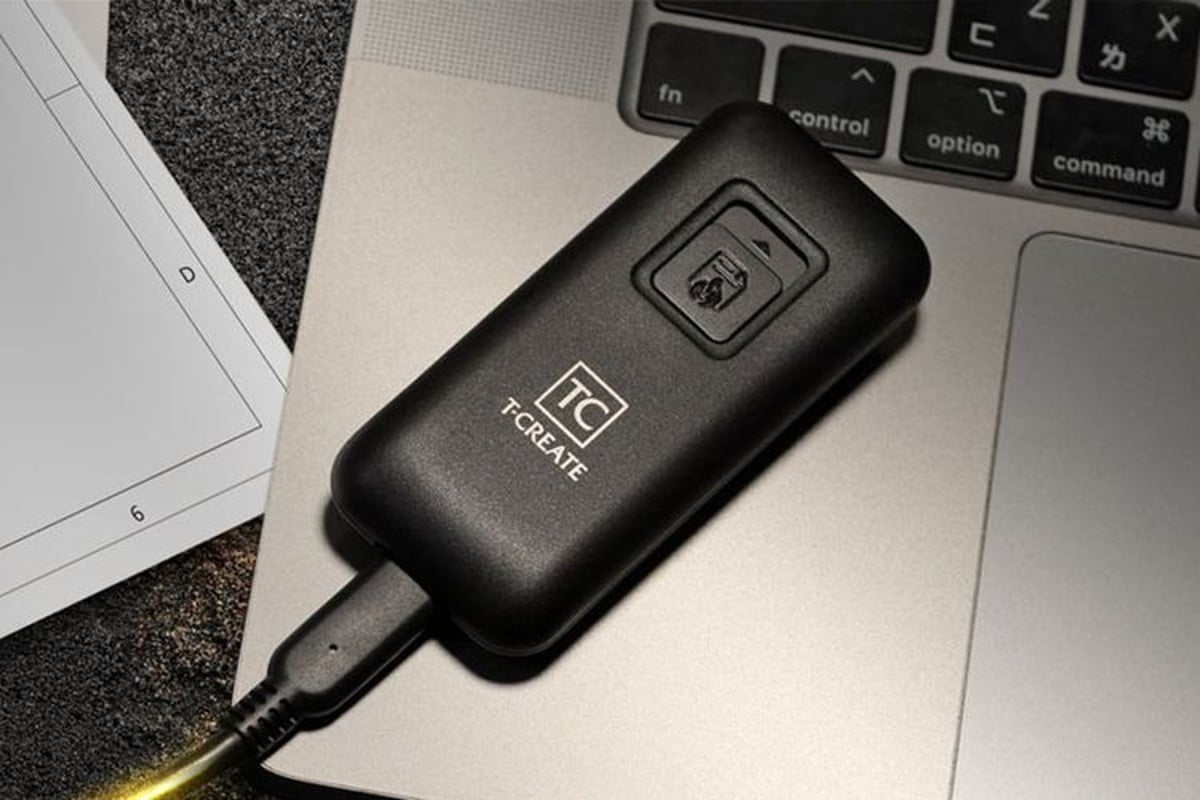
TeamGroup just unveiled something straight out of a spy movie - the T-Create Expert P35S, a portable SSD with a literal self-destruct button. Instead of relying on encryption or software wipes, this drive physically destroys its own chips to ensure data can never be recovered. It's targeted at government agencies and enterprise users handling classified information, with capacities from 256GB to 2TB.
TeamGroup just dropped something that feels ripped from Mission Impossible's playbook. The company's new T-Create Expert P35S portable SSD doesn't just delete your files - it literally destroys itself to make sure your data stays gone forever.
The drive's star feature is what TeamGroup calls a "patented one-click data destruction circuit." Hit the button, and the device uses "chip destruction mechanisms" to achieve what the company promises is a "truly irreversible data wipe." There's no Hollywood smoke and explosions, but the end result is the same - your SSD becomes expensive e-waste.
This isn't some proof-of-concept either. TeamGroup plans to ship the P35S in four capacities ranging from 256GB up to 2TB, though they haven't announced pricing or availability dates yet. The entire package weighs just 42 grams and stretches 3.5 inches long, making it about as portable as any other premium USB-C drive.
But here's where it gets interesting - that self-destruct button isn't just sitting there waiting for an accidental bump. TeamGroup engineered a two-stage sliding mechanism that requires deliberate force at each step. First, you slide the switch partially, revealing a red warning indicator. Then you push harder to reach the second stage, which actually triggers the destruction sequence.
Once you cross that threshold, there's no going back. The drive continues its self-destruction process even if you yank the USB-C cable out of your computer. TeamGroup says this ensures "zero data residue" and makes recovery impossible through any known forensic techniques.
The company is being crystal clear about who this product is for. "The P35S is not intended for general consumers, personal data backup, or everyday storage purposes," according to their official announcement. Instead, they're targeting users who handle confidential or classified data - think government contractors, enterprise security teams, and anyone who needs to transport sensitive information.
This reflects a growing trend in the security hardware space. Traditional encryption relies on mathematical complexity, but physical destruction offers a different kind of certainty. Even if quantum computers eventually crack today's encryption standards, they can't recover data from physically destroyed storage chips.
Beyond its dramatic exit strategy, the P35S performs like a standard high-end portable SSD. It features USB-C 3.2 Gen 2 connectivity with read and write speeds hitting 1,000MB/s - fast enough for 4K video editing or moving large datasets quickly.
The timing feels significant too. As remote work continues and data breaches make headlines regularly, organizations are looking for foolproof ways to protect sensitive information. Software-based secure deletion has always had vulnerabilities - forensic tools can sometimes recover "deleted" data, and encryption keys can be compromised.
Physical destruction sidesteps these concerns entirely, but it comes with obvious trade-offs. Once triggered, your expensive SSD becomes worthless hardware. There's no undo button, no data recovery service that can help, and no second chances.
TeamGroup hasn't revealed how exactly their destruction mechanism works - whether it's electrical, thermal, or mechanical - but the company's confidence in calling it "irreversible" suggests they've found a reliable way to physically damage the NAND flash memory chips beyond repair.
For most users, traditional encryption and secure deletion tools will continue to make more sense. But for organizations where data security outweighs hardware costs, TeamGroup's self-destructing SSD represents a new category of security-first storage solutions.
TeamGroup's self-destructing SSD represents a fascinating intersection of consumer hardware and enterprise security needs. While most people will never need to literally blow up their storage device, the P35S highlights how seriously some organizations take data protection. As cyber threats evolve and data becomes increasingly valuable, expect to see more hardware solutions that prioritize security over convenience. The real question isn't whether this technology will find its niche - it's whether other storage manufacturers will follow TeamGroup's lead in building destruction into their designs.