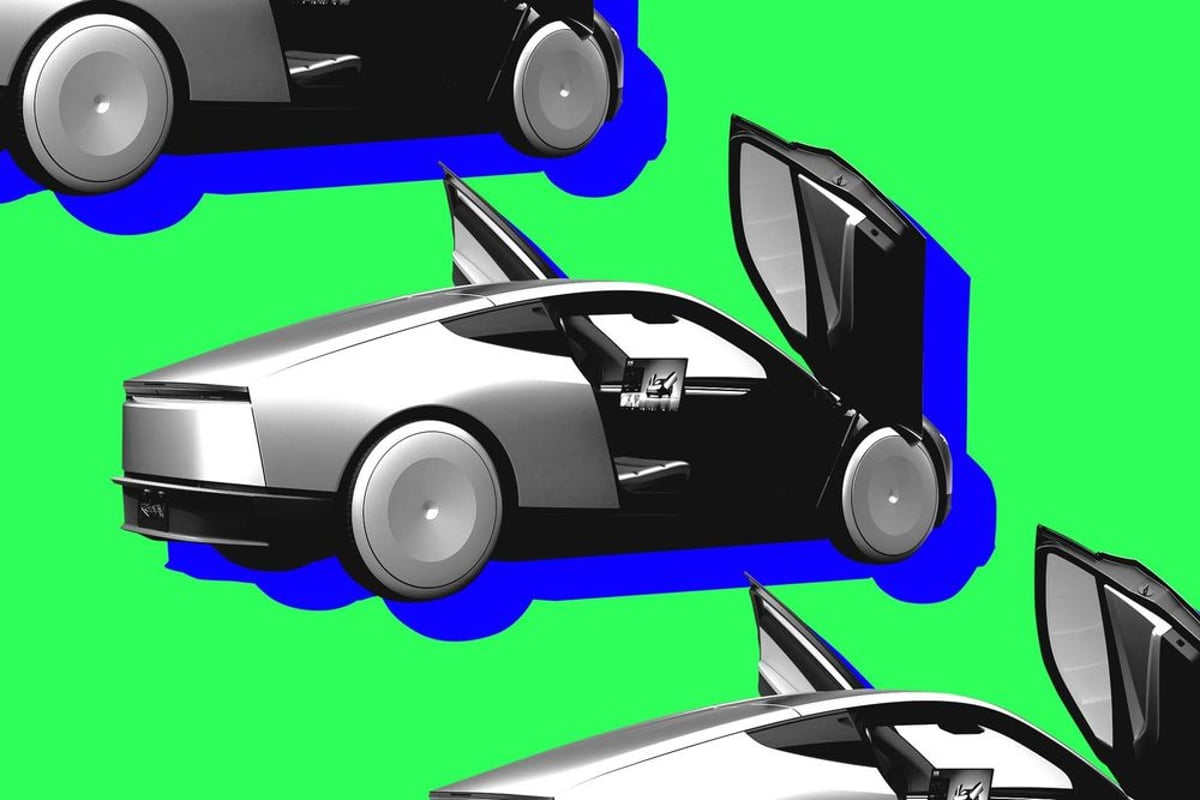
Tesla's long-promised Cybercab is finally hitting the streets. Nearly two years after Elon Musk unveiled the steering-wheel-free, gull-wing two-seater, the company has started giving the public rides in Austin as part of its robotaxi push. But the bigger story here isn't the car itself, it's the massive gamble Musk is making on a stripped-down, camera-only self-driving system while every other player in the space keeps stacking on lidar and radar.
Believe it or not, the Tesla Cybercab is actually here. Nearly two years after Elon Musk first pulled the sheet off the gold-tinted, gull-wing two-seater and called it the future of Tesla's autonomy business, the company has started putting the vehicles into real operation as part of its robotaxi service in Austin, Texas, according to The Verge. Public rides are happening now, no steering wheel, no pedals, just a rider and a machine that's supposed to drive itself.
For Musk loyalists, this is the moment they've been waiting for, the start of what they see as Tesla's inevitable robotaxi dominance. The timing matters too. Tesla has leaned hard on the robotaxi narrative to justify its valuation, and Musk himself has tied his own compensation, a pay package worth potentially over a trillion dollars, to hitting ambitious autonomy and delivery milestones. Getting Cybercab out of concept purgatory and onto actual streets is a signal to investors and skeptics alike that the bet is real.
But here's where it gets interesting, and where the real risk sits. Musk has built Tesla's entire self-driving stack around cameras alone. No lidar, no radar layered in for redundancy, just vision and neural nets doing the work of interpreting the road. That's a sharp departure from basically everyone else racing toward autonomy. Waymo, the current leader in commercial robotaxi miles, leans on a sensor suite that includes lidar, radar, and cameras working together, treating redundancy as a safety feature rather than an unnecessary cost. Musk has long argued that cameras alone are enough, essentially betting that if humans can drive with just their eyes, a sufficiently trained AI system should be able to do the same, arguably better, without the added expense and complexity of extra hardware.
That philosophy has been controversial inside the autonomy world for years, and now it's about to get tested in the messiest way possible: real passengers, real streets, real consequences. Austin isn't a closed course. It's a live city with unpredictable drivers, cyclists, weather, and construction, the kind of chaotic environment where the gap between camera-only systems and multi-sensor setups tends to show up fastest. Tesla has run its Full Self-Driving software on public roads for years already, but running fully driverless rides without a human safety monitor behind the wheel is a different level of exposure entirely.
The stakes go well beyond one city. Tesla's stock has ridden the robotaxi story hard, with bulls pointing to the eventual scale of a software-driven fleet business as justification for a valuation that dwarfs what its car sales alone would suggest. Any stumble, a high-profile crash, a regulatory intervention, a viral video of the car doing something strange, could hit that narrative fast. On the flip side, if the camera-only approach holds up in day-to-day Austin traffic without major incident, it hands Musk a powerful argument against rivals who've spent billions building out lidar-heavy sensor stacks.
Competitors are watching closely too. Waymo has spent years building trust through incremental, heavily monitored expansions city by city, while companies like Cruise have already learned painful lessons about what happens when autonomous systems fail in public view. Tesla's approach is faster and cheaper to scale in theory, since it doesn't require expensive lidar units bolted onto every car, but that speed comes with less margin for error if the vision-only system misreads a scene that a lidar sensor would have caught instantly.
What happens next in Austin will say a lot about which vision of robotaxi economics wins out. Does Tesla expand quickly to more cities on the strength of early data, or does it hit a wall that forces Musk to reconsider the no-lidar stance he's defended so publicly for years? Either way, the industry just got its clearest real-world test yet of whether cameras alone are actually enough to drive a car safely without a human ready to take over.
For everyday readers, this is bigger than a new car hitting the streets of Austin. It's a live experiment in whether Musk's leaner, cheaper approach to self-driving can hold up against rivals who've bet on more sensors and more caution. If it works, expect Tesla to lean into robotaxi expansion fast and loud. If it stumbles, the fallout could reach well beyond Austin traffic and straight into Tesla's stock price and Musk's own pay package.