Uber just won a race that Waymo didn't even know it was losing. The ride-hailing giant flipped the switch on London's first commercial robotaxi service Wednesday, powered by homegrown autonomous driving tech from British startup Wayve. Safety drivers are still behind the wheel for now, but the launch hands Uber a first-mover advantage in a market Waymo has been eyeing for years.
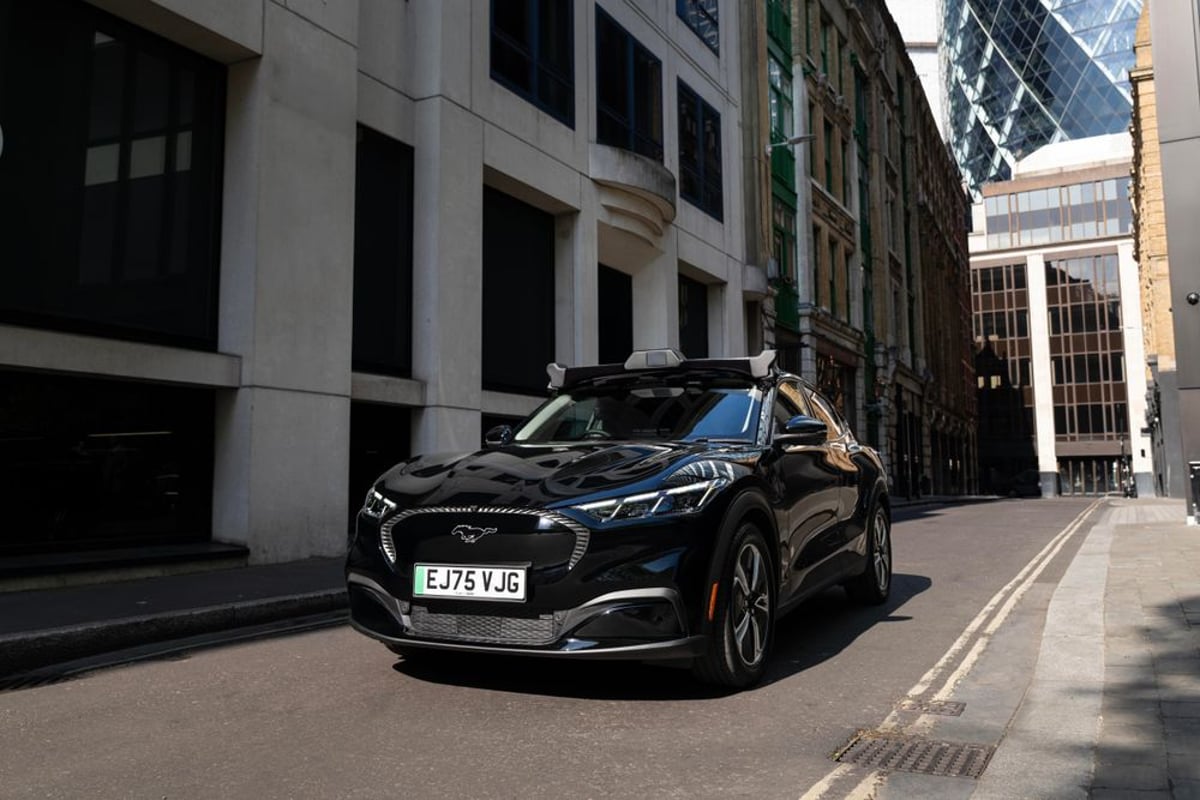
London just got its first taste of driverless ride-hailing, and it's not Waymo that delivered it. Uber launched a commercial robotaxi service in the city on Wednesday, running on autonomous driving technology built by Wayve, a UK-based startup that's been quietly developing its self-driving stack for years. For now, the cars still have safety drivers sitting behind the wheel, a standard precaution as the system proves itself on London's notoriously tricky streets, roundabouts, narrow lanes, and all.
The timing matters more than it might seem at first glance. Uber has been working toward this moment with Wayve for several years, part of a broader push to diversify its autonomous vehicle partnerships beyond the usual US players. By getting to London first, Uber effectively gets to define what the robotaxi experience looks like for thousands of Londoners before Waymo, or anyone else, gets the chance. First impressions stick, and in a market this size, that's not a small advantage.
It's also a meaningful data point for the industry at large. Nearly every commercial robotaxi operating today is clustered in the US or China. Companies like Waymo have built their reputations and their safety records on American roads, from Phoenix to San Francisco. Whether that same appetite exists in European cities, with their older infrastructure, tighter streets, and different regulatory posture, has remained an open question. London, with its dense mix of pedestrians, cyclists, and centuries-old road layouts, is about as tough a proving ground as it gets.
[embedded image: Uber Wayve robotaxi vehicle in London]
Wayve's approach has always set it apart from competitors like Waymo, which rely heavily on high-definition mapping and lidar-heavy sensor suites. Wayve has instead bet on an end-to-end AI system that learns to drive more like a human would, generalizing from data rather than depending on pre-mapped routes for every street it operates on. That approach, the company has argued, should make it easier to scale into new cities without the years-long mapping process that's slowed down rivals. London is the first real test of that thesis at commercial scale.
For Uber, this is also a hedge. The company doesn't build its own self-driving cars, and instead has stitched together a growing patchwork of partnerships, Waymo in some US markets, Wayve in the UK, and others in different regions. That strategy lets Uber move fast in whichever market has a willing autonomous vehicle partner, rather than waiting on a single company's rollout schedule. It's a pragmatic bet, but it also means Uber's robotaxi experience will vary wildly depending on which underlying technology is powering the ride in any given city.
The safety driver requirement won't last forever, and how quickly Uber and Wayve move to remove that safeguard will be the next thing worth watching closely. Regulators in the UK have been notably more cautious than their US counterparts about greenlighting fully driverless operations, so the timeline for removing human oversight could stretch out longer than either company would like. There's also the matter of public trust. Londoners haven't had years of exposure to robotaxis the way residents of Phoenix or San Francisco have, so how riders react to sharing the road with driverless cars, and how they feel about hailing one themselves, will shape how fast this expands.
Waymo, for its part, hasn't said much publicly about its own UK ambitions being delayed, but losing the first-mover title in a market as high-profile as London is still a notable blow. The company has spent years building a reputation as the safety-first leader in autonomous vehicles, and ceding the European debut to a smaller, less established rival raises questions about how it's prioritizing international expansion versus doubling down on its home turf. Expect Waymo to respond with more urgency in Europe, even if a formal announcement hasn't landed yet.
What happens next in London will likely set the tone for how robotaxis expand across other major European cities. If Uber and Wayve can pull off a smooth rollout, complete with removing safety drivers and building rider trust, it could accelerate a wave of similar launches in cities like Paris, Berlin, or Madrid. If it stumbles, it could just as easily give ammunition to skeptics who argue autonomous vehicles aren't ready for the chaos of old-world city streets.
For riders in London, this is the first real chance to experience driverless ride-hailing outside the US and China, and for Uber, it's a chance to prove that betting on multiple autonomous vehicle partners rather than building its own tech in-house can still pay off with genuine wins. Whether Wayve's AI-first approach can scale safely and win over skeptical Londoners will determine if this launch becomes a blueprint for the rest of Europe or a cautionary tale for the industry.