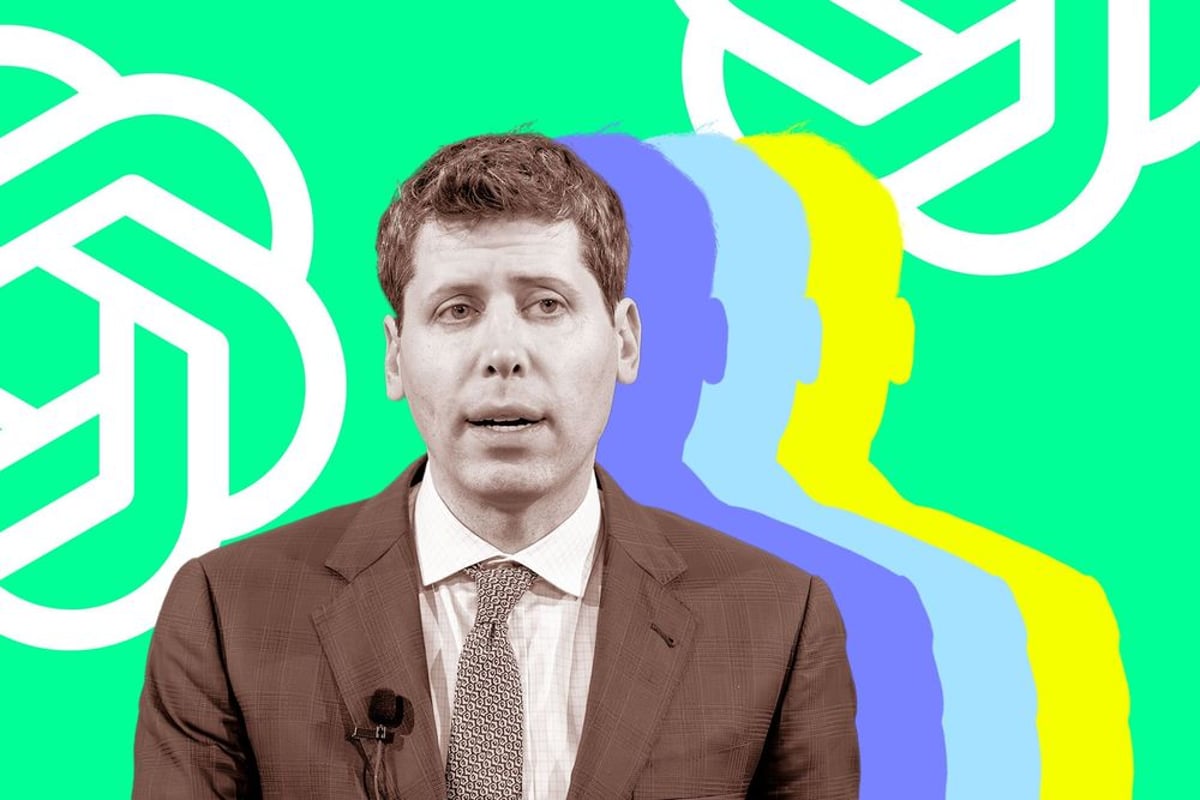
Senator Elizabeth Warren is demanding answers from OpenAI CEO Sam Altman about whether the company plans to seek a government bailout as it burns through cash on a trillion-dollar spending spree without turning a profit. In a letter sent today, the Massachusetts Democrat warns that OpenAI appears to be setting up taxpayers for the classic move of privatizing profits while socializing losses, just as fears mount that the AI bubble might be ready to pop.
OpenAI is facing its toughest Congressional scrutiny yet. Senator Elizabeth Warren just put CEO Sam Altman on notice, demanding he guarantee the company won't come crawling to taxpayers for a bailout if its massive spending bets go sideways.
In a letter sent today, Warren pulls no punches. She's worried OpenAI "has committed to more than a trillion dollars in spending despite not yet turning a profit" and "appears to be seeking government assistance should it prove unable to pay its bills," according to the letter obtained by The Verge. The Massachusetts Democrat, who serves as ranking member on the Senate Committee on Banking, Housing, and Urban Affairs, warns that the company is preparing to fall back "on the classic strategy of privatizing profits and socializing losses."
It's a legitimate concern given the scale of money flowing through Silicon Valley's AI infrastructure boom right now. Companies like OpenAI are pouring billions into data centers, chips, and computing power with no clear path to profitability. Warren specifically calls out the company's relationship with CoreWeave, noting the cloud provider is "saddled with debt" to fulfill its contract with OpenAI, which has "comparatively little debt on its own balance sheet." That kind of circular spending arrangement, Warren argues, creates systemic risk for the entire US economy.
This whole mess traces back to November, when OpenAI CFO Sarah Friar accidentally said the quiet part out loud. During an interview, Friar suggested taxpayers should "backstop" the company's hefty infrastructure investments. The backlash was immediate and fierce. Friar quickly backpedaled on LinkedIn, and Altman jumped on X to stress that OpenAI does "not have or want government guarantees for OpenAI datacenters."
But Warren isn't buying it. She notes in her letter that these "statements do not appear to reject federal loans and guarantees for the AI industry as a whole." And that's the real issue here. Even without a targeted bailout specifically for OpenAI, the company would benefit massively from industry-wide government support "given the scale of its financial commitments and the mismatch between its spending and revenues."
The Trump administration has tried to draw a line in the sand. White House AI and crypto czar David Sacks tweeted shortly after Friar's comments that "there will be no federal bailout of AI." But actions speak louder than words, and tech companies have been working overtime to cozy up to the new administration. Amazon, Apple, Google, and Meta all donated to Trump's ballroom project. Executives like Mark Zuckerberg, Altman, and Tim Cook have made pilgrimages to DC and Mar-a-Lago. OpenAI president Greg Brockman and his wife Anna were recently revealed to be Trump mega-donors.
Warren and other lawmakers have suggested some of these contributions could be considered bribes. She wrote to Sacks back in November asking the administration to confirm it won't use taxpayer dollars to "prop up" major AI companies. "He has yet to reply," Warren notes in her letter to Altman.
Now Warren wants specifics from OpenAI. She's asking Altman to provide details on any conversations the company has had with the US government about loan guarantees. She wants to know what kind of federal support for the AI industry OpenAI actually favors. She's demanding information on the specific infrastructure projects the company is seeking tax credits for.
Most importantly, Warren wants the financial receipts. She's asking for projected yearly finances through 2032, including worst-case scenarios where AI models plateau and demand for AI tools fails to materialize. She also wants to know if OpenAI is earning a profit on any of its ChatGPT subscription plans right now, or if it anticipates doing so within the next three years.
That last question cuts to the heart of the matter. Despite all the hype around ChatGPT and the AI revolution, nobody really knows if these companies can make money at scale. OpenAI is burning through cash to train increasingly expensive models while charging consumers $20 a month for ChatGPT Plus. The math doesn't add up yet, and investors are starting to get nervous.
Warren has given Altman until February 13th to respond. That's a tight deadline, and it signals she's serious about getting answers before OpenAI and its partners commit even more capital to infrastructure projects that might never pay off. The senator's letter represents the most direct Congressional challenge yet to the AI industry's spending spree and its assumption that the government will be there to catch them if they fall.
For OpenAI, this is more than just political theater. Warren sits on the Banking Committee, which oversees financial regulation and has jurisdiction over the kind of loan guarantees and federal support programs the AI industry might seek. Her questions aren't going away, and neither is the scrutiny on whether Silicon Valley's biggest AI bet is built on a foundation of taxpayer-backed guarantees.
Warren's letter marks a turning point in how Washington views the AI spending boom. For months, tech executives have been making trillion-dollar commitments while cozying up to the Trump administration, betting they can build first and figure out profitability later. Now Congress is demanding proof those bets will pay off without sticking taxpayers with the bill. Altman has until mid-February to provide answers, but the real test will be whether OpenAI can demonstrate a viable path to profitability before the AI hype cycle turns into a full-blown financial crisis.