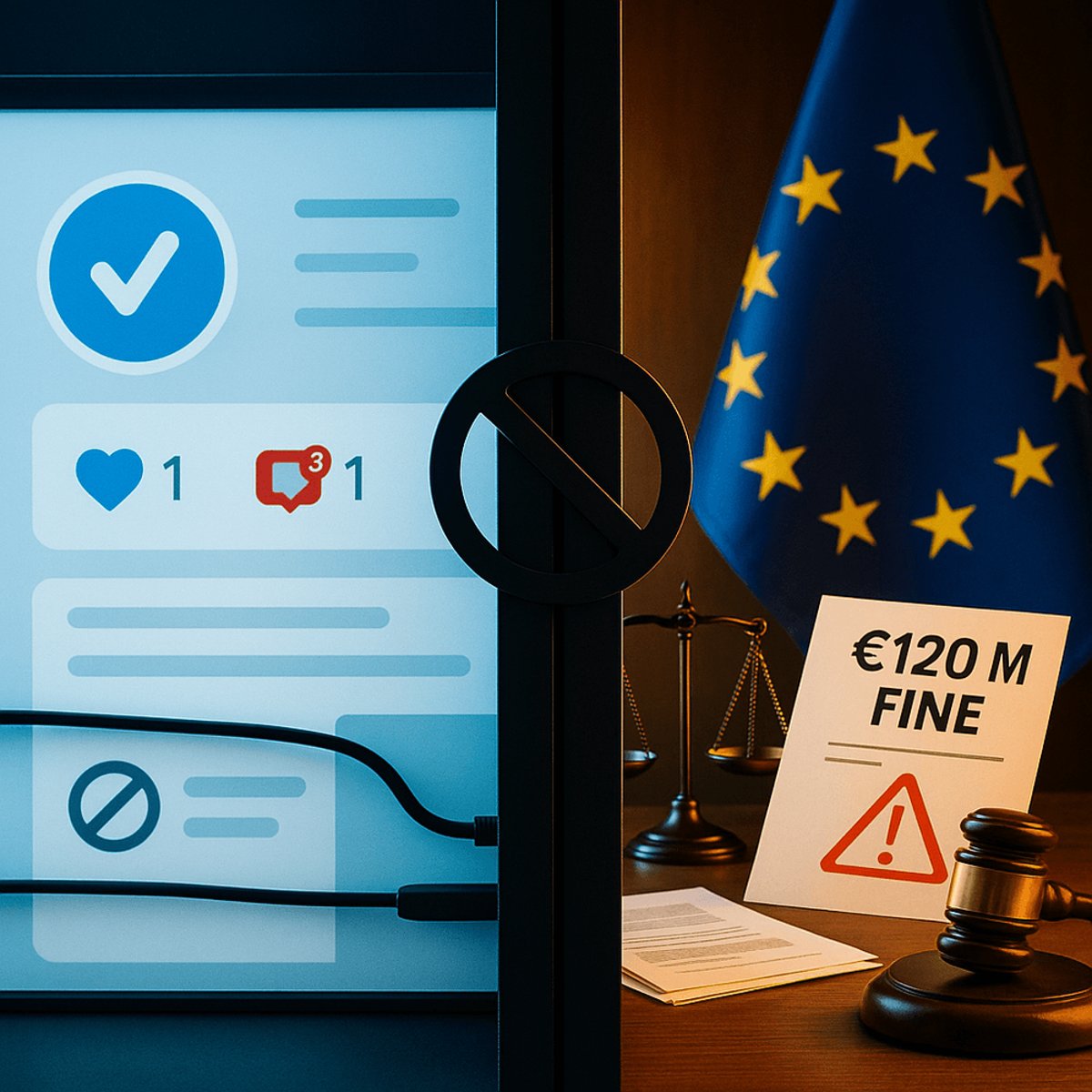
X just escalated its regulatory feud with the European Union in dramatic fashion. The social media platform terminated the European Commission's advertising account this weekend, claiming the EU exploited an ad system loophole - just days after Brussels slapped X with a record €120 million fine for deceptive verification practices. The move marks an unprecedented corporate retaliation against EU regulators.
X just threw down the gauntlet against European regulators in the most direct corporate retaliation we've seen since the platform's acquisition by Elon Musk. The company terminated the European Commission's advertising account over the weekend, escalating tensions that started with the EU's first-ever Digital Services Act penalty - a hefty €120 million fine announced Thursday.
The timing couldn't be more pointed. X's Head of Product Nikita Bier fired back at the Commission, but not quite how you'd expect. Rather than cite the fine directly, Bier accused EU officials of exploiting a vulnerability in X's Ad Composer system to artificially boost reach on their fine announcement post.
"As you may be aware, X believes everyone should have an equal voice on our platform," Bier wrote in a pointed response. "However, it seems you believe that the rules should not apply to your account." The accusation centers on the Commission allegedly using a "dormant ad account to take advantage of an exploit" that made their post appear as a video to deceive users and increase visibility.
The €120 million fine represents Brussels' first major enforcement action under the Digital Services Act, targeting what regulators called X's "deceptive" blue checkmark system. The Commission argued that X's paid verification model makes users vulnerable to impersonation and scams, fundamentally different from the trust signal blue checks once provided when they indicated actual verification.
European regulators also dinged X for failing to meet DSA requirements around advertising transparency. The platform's ad repository allegedly lacks the accessibility and transparency standards mandated under the new law, which aims to force tech giants to be more accountable for content moderation and user safety.
Musk's reaction was characteristically blunt. The billionaire owner described the fine as "bullshit" before posting an even more inflammatory message: "How long before the EU is gone? AbolishTheEU." The comments signal just how far relations between X and European authorities have deteriorated since Musk's acquisition.
But X's response goes beyond social media posts. Bier claimed the alleged exploit "has never been abused like this" and said it's since been patched. The account termination effectively strips the European Commission of its ability to purchase promoted content on the platform, though their organic posts remain visible and their grey government verification checkmark stays intact.
The dispute highlights the fundamental tension between Musk's vision of X as a "free speech" platform and European regulatory frameworks designed to combat misinformation and protect users. Since acquiring Twitter for $44 billion, Musk has consistently pushed back against content moderation requirements and transparency measures that conflict with his ideological stance.
Industry observers see this as a test case for how far tech companies can push back against EU enforcement. The Digital Services Act gives Brussels sweeping powers to fine platforms up to 6% of global revenue for non-compliance, making X's defiant stance particularly risky given its reported financial struggles.
The Commission now has 60 days to respond to X's blue checkmark concerns and 90 days for ad transparency fixes, or face additional penalties. But X's account termination suggests the company isn't interested in quiet compliance - it's preparing for a very public regulatory fight.
What happens next could reshape how global platforms interact with EU oversight, especially as other major tech companies watch to see if Brussels backs down or doubles down on enforcement.
X's decision to terminate the European Commission's ad account represents more than corporate pettiness - it's a high-stakes bet that defying EU regulators won't backfire spectacularly. With the Digital Services Act giving Brussels the power to fine platforms up to 6% of global revenue, Musk's confrontational approach could either force regulators to reconsider their enforcement strategy or trigger an escalating cycle of penalties that X can ill afford. The next 90 days will reveal whether this standoff ends in compromise or becomes the defining regulatory battle of the post-Twitter era.