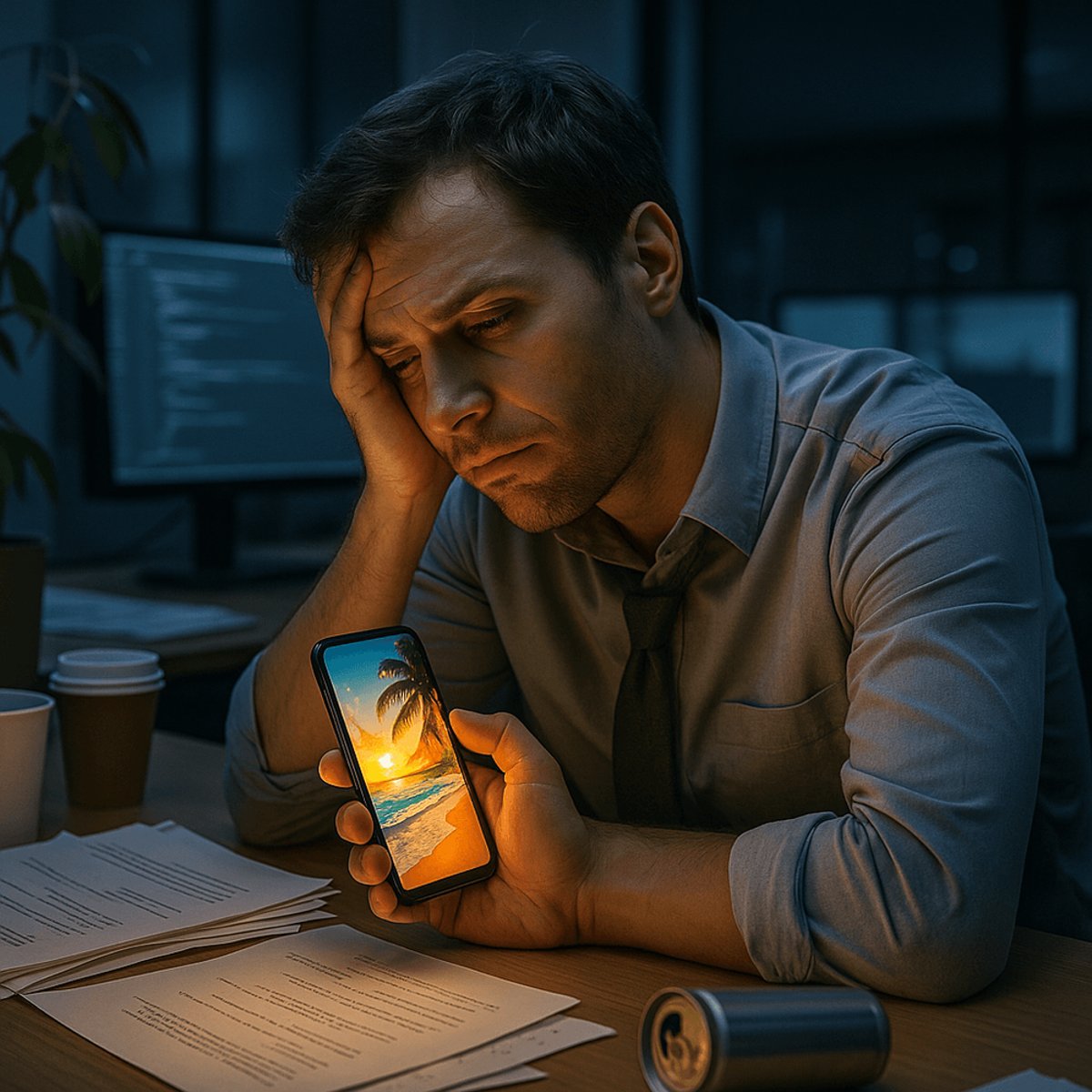
The tech hustle culture has gotten so intense that there's now an app for when you're too burned out to actually take a vacation. Endless Summer, launched by Meta product designer Laurent Del Rey, uses AI to generate photorealistic vacation photos starring you in destinations worldwide - no travel required. It's peak 2025: when you can't live life, just fake it with AI.
The dystopian reality of Silicon Valley's return to "996" work culture - 9 am to 9 pm, six days a week - has spawned what might be the most depressing app of 2025. Meta product designer Laurent Del Rey just launched Endless Summer, an iPhone app that generates AI vacation photos when you're too burned out to actually travel.
The timing couldn't be more telling. As startup hustle culture roars back and "locked in" founders embrace extreme work schedules, Del Rey's solution is simple: if you can't take a vacation, why not fake one?
"Burnout hits and you need to manifest the soft life u deserve," Del Rey explained on X when announcing his "first app 100% made by me." The designer, who recently joined Meta's Superintelligence Lab, reverse-engineered the entire experience from that feeling of summer nostalgia.
The app works with unsettling simplicity. Tap a camera button, and Google's Gemini Nano-Banana image model generates photos of an AI version of you exploring beach towns, dining with friends, or overlooking European cities from your balcony. Each image has a vintage film aesthetic that mimics the casual lifestyle photos flooding social media.
But this isn't just about convenience - it's about what we've lost. The photos show AI versions of users looking "fairly content" while supposedly exploring the world, notably without anyone "talking about AI or entrepreneurship or a lack of sleep," as Del Rey put it. It's a digital escape from the very culture that created the need for it.
The business model reflects the desperation. After six free images, users hit a paywall: $3.99 for 30 photos, $17.99 for 150, or $34.99 for 300. There's even a "Room Service" mode that auto-delivers two fake vacation photos every morning, complete with your latest synthetic escapades.
Del Rey told TechCrunch he was inspired by his love for summer and "how life feels during that time of year." The irony is thick - using AI to recreate feelings of a season when life supposedly slows down, delivered to people too busy to experience it themselves.
The app's privacy approach is refreshingly straightforward: it doesn't save selfies unless auto-generation is enabled, and users can delete everything with two taps. But the deeper privacy concern isn't about data - it's about what happens when we outsource even our vacation memories to algorithms.
This trend extends beyond Endless Summer. The app's vintage aesthetic taps into broader social media movements where Gen Z carries disposable cameras and posts intentionally blurry Instagram dumps, seeking less-curated content. But there's something jarring about AI delivering that authenticity.
The app recently added Halloween costume generation, expanding beyond summer themes. It's a logical evolution - if you're too busy for vacation, you're probably too busy for costume shopping too.
What makes Endless Summer particularly unsettling isn't the technology - Google's image generation capabilities are impressive. It's the cultural moment it represents. We've created work environments so demanding that people are paying for AI-generated memories of experiences they can't have.
Del Rey's background adds another layer to the story. As someone now working at Meta's Superintelligence Lab while launching consumer apps on the side, he embodies the exact hustle culture his app seeks to address. The designer who's too busy building the future to live in the present has created an app for others facing the same dilemma.
The market response will reveal whether this resonates beyond novelty. Early social media reactions range from fascination to horror, with many noting the dystopian implications of needing AI to fake basic life experiences.
Yet there's undeniable appeal in the concept. For workers trapped in endless cycles of meetings, deadlines, and "locked in" mentality, Endless Summer offers a brief escape. Even if it's completely artificial, it provides something increasingly rare in tech culture: permission to imagine a different pace of life.
Endless Summer represents more than just another AI consumer app - it's a mirror reflecting Silicon Valley's unsustainable work culture. When we need algorithms to generate memories of experiences we can't have, perhaps it's time to question whether we're building the right future. The app's success will depend less on its technical capabilities and more on how many people recognize themselves in its dystopian premise.