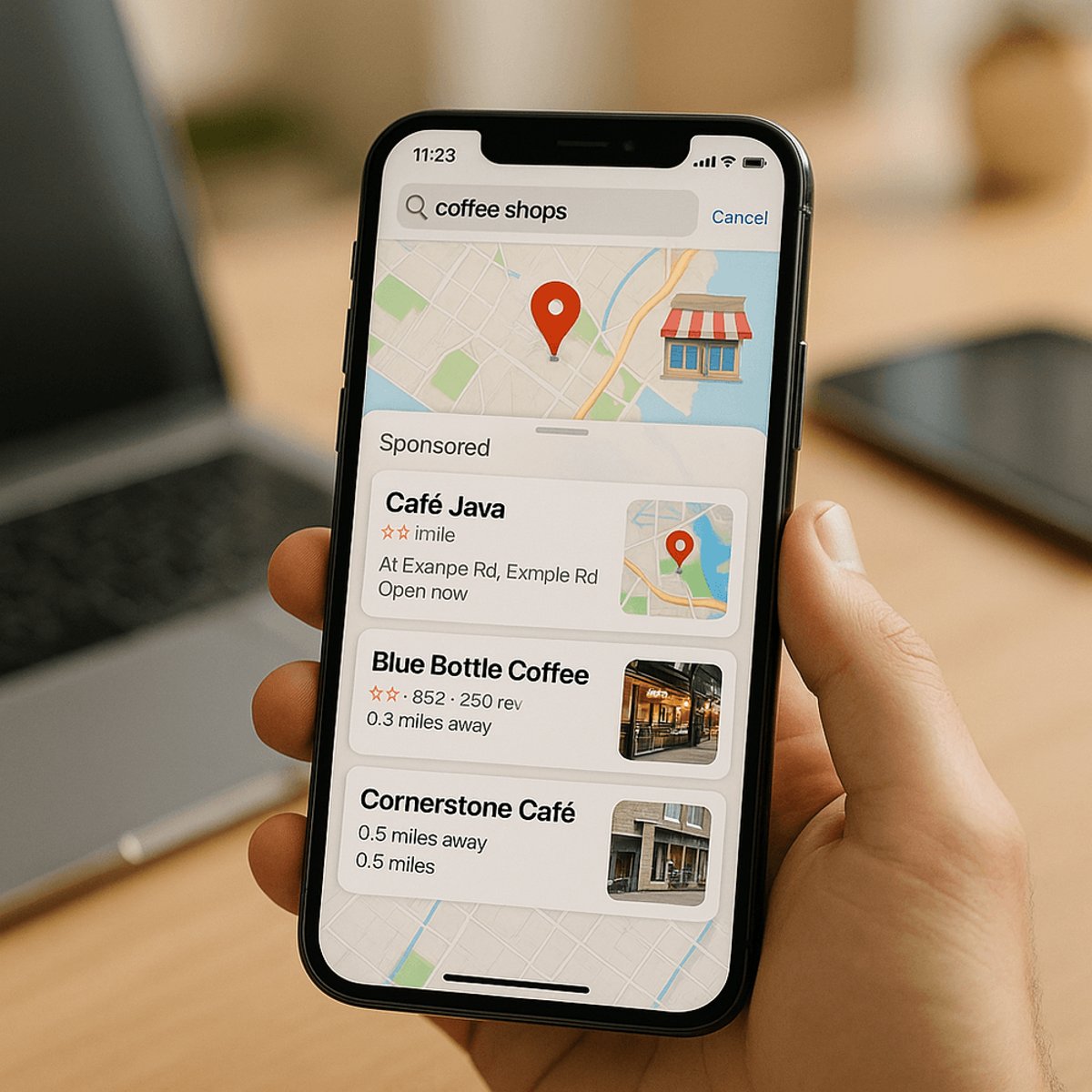
Apple is preparing to introduce advertising into Maps search results, according to a TechCrunch report. The move would place sponsored listings at the top of results when users search for terms like "restaurants," marking a significant expansion of Apple's advertising footprint beyond the App Store. For a company that's long positioned privacy as a competitive advantage, the decision signals how seriously Apple is taking its services revenue growth as iPhone sales plateau.
Apple is about to blur another line it once drew in the sand. The company is preparing to serve advertisements within Maps search results, a move that transforms one of its core native apps into another revenue stream while edging closer to the ad-driven model it's criticized competitors for embracing.
The ads will surface when users search for generic terms like "restaurants" or "coffee shops," placing sponsored business listings at the top of results. It's a familiar pattern for anyone who's used Google Maps, which has long monetized local search through prominent ad placements. But for Apple, it represents a notable philosophical shift for a platform that's remained largely commercial-free since its rocky 2012 launch.
The timing isn't coincidental. Apple's services division has become the company's growth engine as iPhone sales mature. The segment generated over $85 billion in revenue last fiscal year, with advertising representing one of the fastest-growing pieces. The company's ad business has already expanded from App Store search ads into the Today tab, Apple News, and Stocks app. Maps represents the next logical frontier, and potentially the most lucrative one given its integration into daily routines and local commerce.
Google has proven the model works at scale. Local search ads have become a massive business for the search giant, allowing restaurants, retailers, and service businesses to bid for prominent placement when potential customers are actively looking. With over a billion iPhone users worldwide, Apple Maps offers comparable reach, particularly in the US where it commands significant market share among iOS users who default to the native app.
But the move creates tension with Apple's carefully cultivated privacy positioning. The company has spent years touting how Maps doesn't track users the way Google does, using on-device processing and anonymization to protect location data. CEO Tim Cook has repeatedly positioned privacy as a fundamental human right and a key differentiator from ad-driven competitors. Introducing ads into Maps doesn't necessarily compromise those privacy protections, but it does muddy the messaging around being the anti-advertising alternative.
The bigger question is what this means for the user experience. Google Maps users have long complained about the difficulty distinguishing ads from organic results, with sponsored pins and listings sometimes cluttering the interface. Apple's design sensibility typically favors cleaner aesthetics, but ad revenue creates inherent pressure to maximize visibility and engagement. How the company balances monetization with usability will determine whether this becomes a seamless addition or an intrusive annoyance.
For local businesses, Apple Maps ads could offer a valuable channel, particularly for reaching higher-income iOS users. The platform already supports business listings and reviews, but paid promotion would let establishments jump to the front of the queue during crucial discovery moments. Pricing and targeting capabilities will be critical, and it's unclear whether Apple will build its own ad platform for Maps or extend its existing Apple Search Ads infrastructure.
The broader trend is unmistakable. Apple is systematically monetizing every surface area where it controls distribution, from the App Store to News to now Maps. It's a natural evolution for a company seeking to diversify beyond hardware, but it also represents a gradual erosion of the ad-free experience that once defined Apple products. Each new ad placement chips away at the premium, distraction-free environment users have traditionally paid a premium to access.
Competitors will be watching closely. If Apple can successfully monetize Maps without triggering user backlash, it opens the door to advertising in other native apps. Messages, Photos, and even Safari could theoretically follow, though each would face unique challenges and sensitivities. The company's ability to thread the needle between revenue growth and brand preservation will be tested with every expansion.
Apple's decision to introduce ads into Maps search results represents more than a product update. It's a strategic bet that the company can expand its advertising footprint without alienating users who've chosen its ecosystem partly to escape the ad-heavy experiences elsewhere. The move puts Apple squarely in competition with Google's local search business while testing the limits of how much commercialization its user base will tolerate. As services revenue becomes increasingly critical to Apple's growth story, expect more native apps to quietly cross the line from utility to monetization vehicle. The question isn't whether Apple will continue expanding its ad business, but how far it can push before the premium experience that justifies premium pricing starts to feel decidedly less premium.