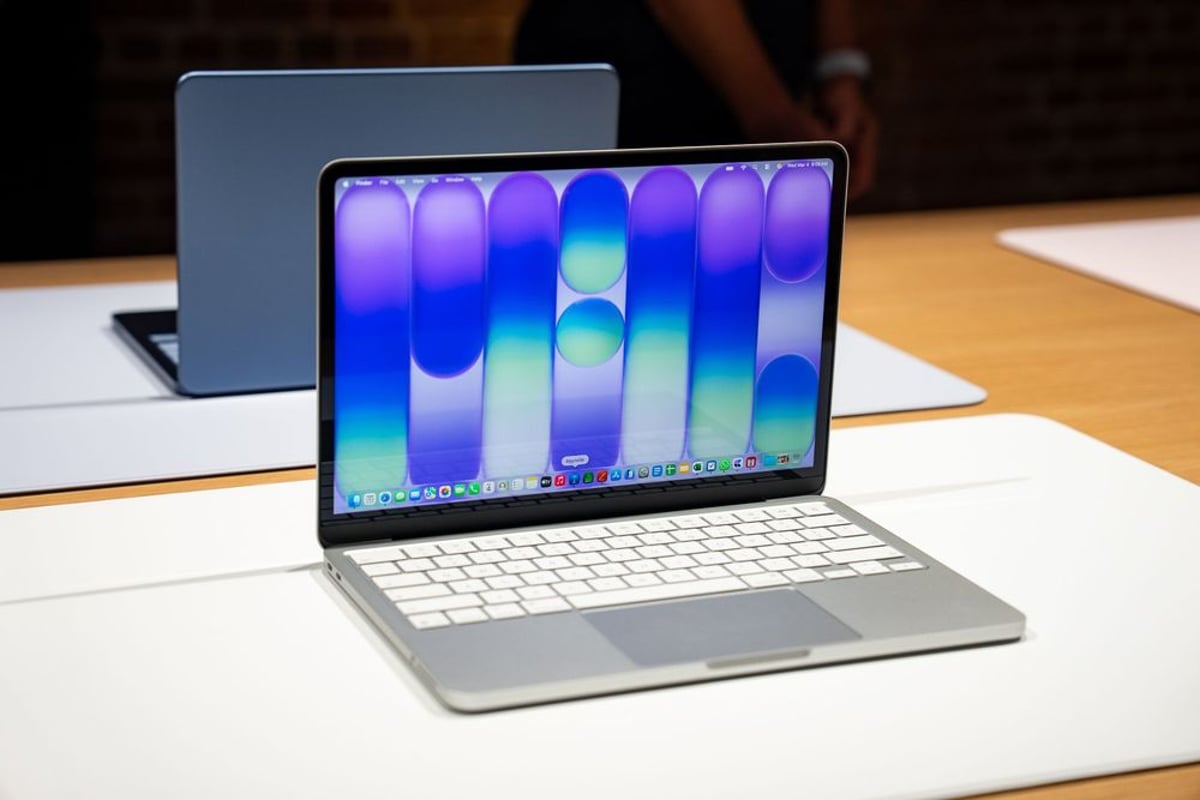
Apple just dropped a bombshell in the budget laptop market. The company announced the MacBook Neo, a $599 entry-level laptop powered by the A18 Pro chip from its 2024 iPhone 16 lineup. It's a bold move that repurposes existing mobile silicon to undercut Windows laptops and Chromebooks, while quietly phasing out aging M-series models. Pre-orders start today, with devices shipping March 11th—signaling Apple's intent to finally compete on price in education and budget markets it's largely ignored for years.
Apple just rewrote the rules for budget laptops. The company unveiled the MacBook Neo today, a $599 notebook that runs on the same A18 Pro chip that powered the iPhone 16 two years ago. It's available for pre-order immediately and ships March 11th, making it the most affordable Mac in recent memory.
The strategy is striking in its simplicity. Rather than develop new silicon for the entry-level market, Apple is leveraging chips already in mass production for its iPhone ecosystem. The A18 Pro debuted in fall 2024 as the flagship processor for the iPhone 16 Pro lineup, and now it's getting a second life in a laptop that costs less than most iPads. That manufacturing scale gives Apple pricing power that few competitors can match.
The specs tell the story of aggressive cost management. The MacBook Neo features a 13-inch display with 2408 x 1506 resolution, 8GB of RAM, and storage options of 256GB or 512GB. There's a Magic Keyboard, multi-touch trackpad, 1080p camera, two USB-C ports, a headphone jack, and newly designed side-firing speakers. It's not revolutionary, but it doesn't need to be—at $599, it undercuts the MacBook Air by nearly $400.
This launch comes as Apple is quietly phasing out older M-series MacBooks, consolidating its laptop lineup around a clearer hierarchy. The M1 MacBook Air, once the darling of the budget-conscious, is being discontinued. The Neo slots in below it, targeting students, schools, and first-time Mac buyers who've historically opted for Chromebooks or entry-level Windows machines.
The timing is deliberate. Google's Chromebook dominance in education has been a thorn in Apple's side for years, capturing market share with devices that often cost $300-500. Meanwhile, Windows laptop makers like Dell and HP have flooded the sub-$600 segment with competent machines. Apple's previous entry point—a MacBook Air at $999—simply couldn't compete in that battleground.
What makes the A18 Pro viable for laptop duty is its performance ceiling. When it launched in the iPhone 16, it featured a 6-core CPU and 6-core GPU, with support for hardware-accelerated ray tracing and AI workloads. That's more than enough horsepower for web browsing, document editing, and media consumption—the core use cases for budget laptops. Battery life should be exceptional given the chip's mobile heritage and efficient architecture.
But there are trade-offs. With just 8GB of RAM, the Neo won't be a multitasking beast. Two USB-C ports limits expandability compared to pricier MacBooks. And the A18 Pro, while capable, won't match the raw performance of Apple's M3 or M4 chips in sustained workloads. This is a machine built for basics, not pro workflows.
The competitive implications are immediate. Microsoft has been pushing Windows 11 SE and affordable Surface models to schools, while Chromebook makers have leaned into cloud-first computing. Apple's bet is that macOS, its ecosystem lock-in through iCloud and iMessage, and brand cachet can win over buyers even at similar price points. The company is essentially saying: you can have a real Mac for Chromebook money.
Analysts will be watching how this plays in international markets, where price sensitivity is even more acute. A $599 MacBook in the US might translate to compelling pricing in India, Brazil, and Southeast Asia—regions where Apple's premium positioning has limited its growth. If the Neo gains traction there, it could meaningfully expand Apple's addressable market.
The education sector is the obvious beachhead. School districts that balked at $999 MacBook Airs might reconsider at $599, especially if Apple bundles software or services. The company already offers education discounts, and the Neo gives it a fighting chance against Google's institutional dominance. Expect aggressive outreach to IT administrators and purchasing departments in the coming months.
What's less clear is how the Neo affects Apple's product matrix long-term. Is this a one-off experiment, or the beginning of a permanent budget tier? If it succeeds, does Apple introduce a MacBook Neo Pro at $799 with the A19 chip next year? The precedent of repurposing older iPhone silicon for laptops opens intriguing possibilities for future product cycles.
The launch also raises questions about component supply chains. The A18 Pro has been in production for two years, meaning yields are mature and costs are low. But Apple will need to balance Neo production against ongoing iPhone commitments. Any supply constraints could limit how aggressively the company can scale this new line, particularly heading into back-to-school season this summer.
The MacBook Neo represents Apple's most aggressive play for the budget computing market in years. By repurposing proven iPhone silicon, the company can hit a $599 price point that directly challenges Chromebooks and entry-level Windows machines—segments it's largely ceded until now. The real test isn't whether the Neo can run macOS competently—it will—but whether Apple's brand and ecosystem can overcome years of institutional inertia in education and international markets where Google and Microsoft have dug in. Pre-orders opening today will provide early demand signals, but the verdict won't be clear until back-to-school season reveals whether IT departments and budget-conscious families are ready to bring Mac into price ranges they've long associated with compromise. If this works, Apple just found a new growth engine. If it doesn't, the Neo will quietly disappear like the 12-inch MacBook before it.