Apple is about to cross a line it's long avoided - adding AI-generated pixels to your photos. In a rare interview with Wired, Jon McCormack, Apple's camera engineering chief, defended the company's upcoming iOS 27 Photos app that uses generative AI to enhance images. But he's pushing back hard against critics who say Apple's chasing AI trends. The reveal marks a philosophical shift for a company that's spent years positioning computational photography as "pure" image capture.
Apple just handed its camera chief the toughest PR job in Cupertino. Jon McCormack, who's spent years perfecting the iPhone's computational photography stack, now has to convince users that adding fake pixels to their photos is actually a good thing.
The admission came during a revealing conversation with Wired, where McCormack pulled back the curtain on iOS 27's Photos app. The update will pack generative AI features that don't just adjust exposure or sharpen edges - they'll synthesize entirely new image data. It's the kind of reality-bending tech that Google has been shipping for years with Magic Eraser and Best Take, but Apple's held back. Until now.
"We're not using AI for the sake of AI," McCormack told Wired, a phrase that's become Silicon Valley's favorite deflection as every company scrambles to ship ChatGPT-style features. But the timing reveals Apple's hand. After watching Google and Samsung dominate headlines with AI photo tricks, Apple's betting it can thread the needle between innovation and authenticity.
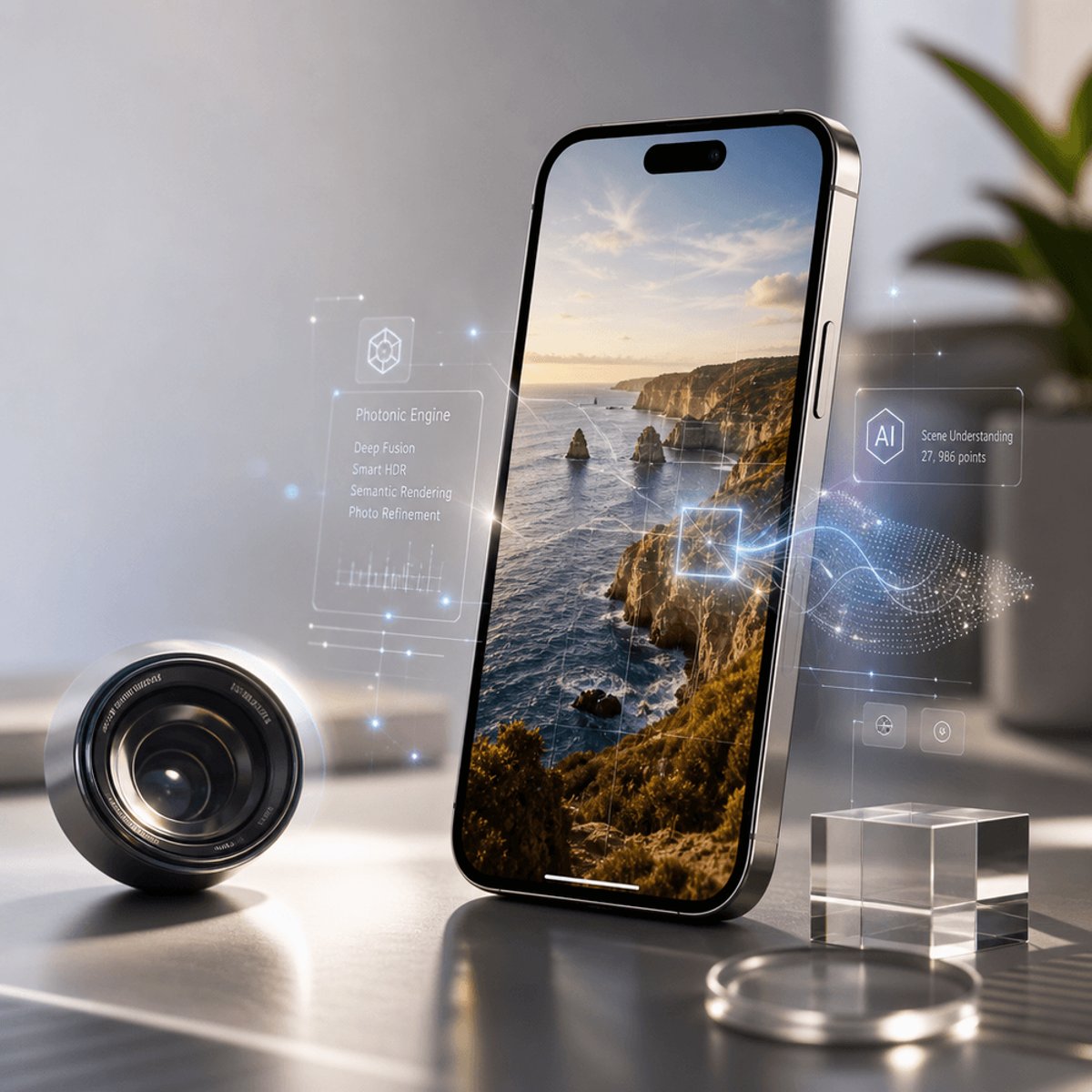
The philosophical shift is massive. Apple spent the better part of a decade positioning its computational photography as "what you saw is what you get" - a counterpoint to the over-processed look of competing phones. The company's Deep Fusion and Photonic Engine technologies merged multiple exposures and applied machine learning, but they worked with captured photons. Generative AI creates pixels that never existed.
McCormack's "superpowers" framing suggests Apple will position these tools as creative enhancements rather than deceptions. Think less "make my ex disappear from this photo" and more "recover detail in blown-out skies" or "add depth where the lens physics couldn't." But the line between helpful and manipulative is razor-thin, especially when users don't understand what's real anymore.
The context matters. Apple's AI push has been notably cautious compared to competitors. While Google shipped Gemini integration across its entire product stack and Microsoft crammed Copilot into everything from Paint to Excel, Apple's been testing the waters with predictive text and Siri improvements. Photos represents the company's most consumer-facing AI bet yet.
But there's a trust problem brewing across the industry. Adobe faced backlash when Photoshop's generative fill started appearing in photojournalism contexts. OpenAI's DALL-E and Meta's AI stickers have already blurred reality on social platforms. Apple's entering a market where users are increasingly skeptical about what's authentic - and the iPhone's reputation for image quality cuts both ways. People trust Apple photos precisely because they've felt "real."
The technical challenge is significant too. Apple's silicon advantage with the A-series chips and Neural Engine gives it on-device processing power that competitors can't match. That means these generative features could run locally instead of pinging cloud servers, addressing privacy concerns that have killed other AI features before launch. If McCormack's team pulls this off, they'll have solved the latency and privacy puzzle that's plagued mobile AI.
Wall Street's paying attention. Apple's stock has been under pressure as analysts question whether the company can compete in the AI era. Microsoft and Nvidia have captured the AI narrative while Apple's been conspicuously quiet about its large language model strategy. Consumer-facing AI in Photos gives the company a tangible story to tell investors who've watched competitors soar on AI hype.
The competitive landscape is getting brutal. Samsung's Galaxy S26 already ships with AI photo editing that can move objects, change backgrounds, and generate missing image areas. Google's Pixel 10 uses AI to merge the best moments from burst shots, creating photos that technically never existed. Apple's late to this party, which means iOS 27 needs to launch with features compelling enough to justify the wait.
McCormack's interview suggests Apple's betting on restraint as differentiation. While competitors let users generate wild edits, Apple will likely gate these features behind careful guardrails - visual indicators showing what's been AI-modified, limitations on how much can be changed, maybe even blocks on using generated images in certain contexts. It's classic Apple: arrive late but claim you did it "the right way."
The WWDC 2026 keynote just got a lot more interesting. Apple typically uses its developer conference to preview iOS updates, and iOS 27's AI photography features will test whether Tim Cook's team can sell this pivot. Expect carefully curated demos showing recovered vacation photos and enhanced family portraits - not the creepy face-swapping and reality-warping stuff competitors showcase.
But questions remain. Will Apple label AI-generated pixels in metadata? Can users opt out entirely? What happens when these "enhanced" photos end up in legal proceedings or journalism contexts? McCormack's Wired interview dodged these harder questions, focusing instead on empowerment language about giving users creative tools. That's a PR strategy, not a policy framework.
Apple's betting its reputation for authenticity on convincing users that AI-generated pixels aren't fake - they're superpowers. McCormack's carefully worded defense suggests the company knows it's walking a tightrope between innovation and trust. If iOS 27's Photos features land well, Apple proves it can compete in the AI era without sacrificing privacy or user confidence. If they backfire, the company risks undermining the iPhone's most valuable asset: the belief that what you capture is real. Either way, the computational photography wars just entered a new phase where the camera doesn't just see reality - it imagines it.