BYD, the world's largest electric vehicle maker, just dropped a battery that charges faster than you can grab coffee. The company's new Blade Battery 2.0 promises to deliver what EV skeptics have been demanding for years: 5-minute charging times that rival gas station fill-ups. The catch? You'll need a charging station that doesn't exist yet.
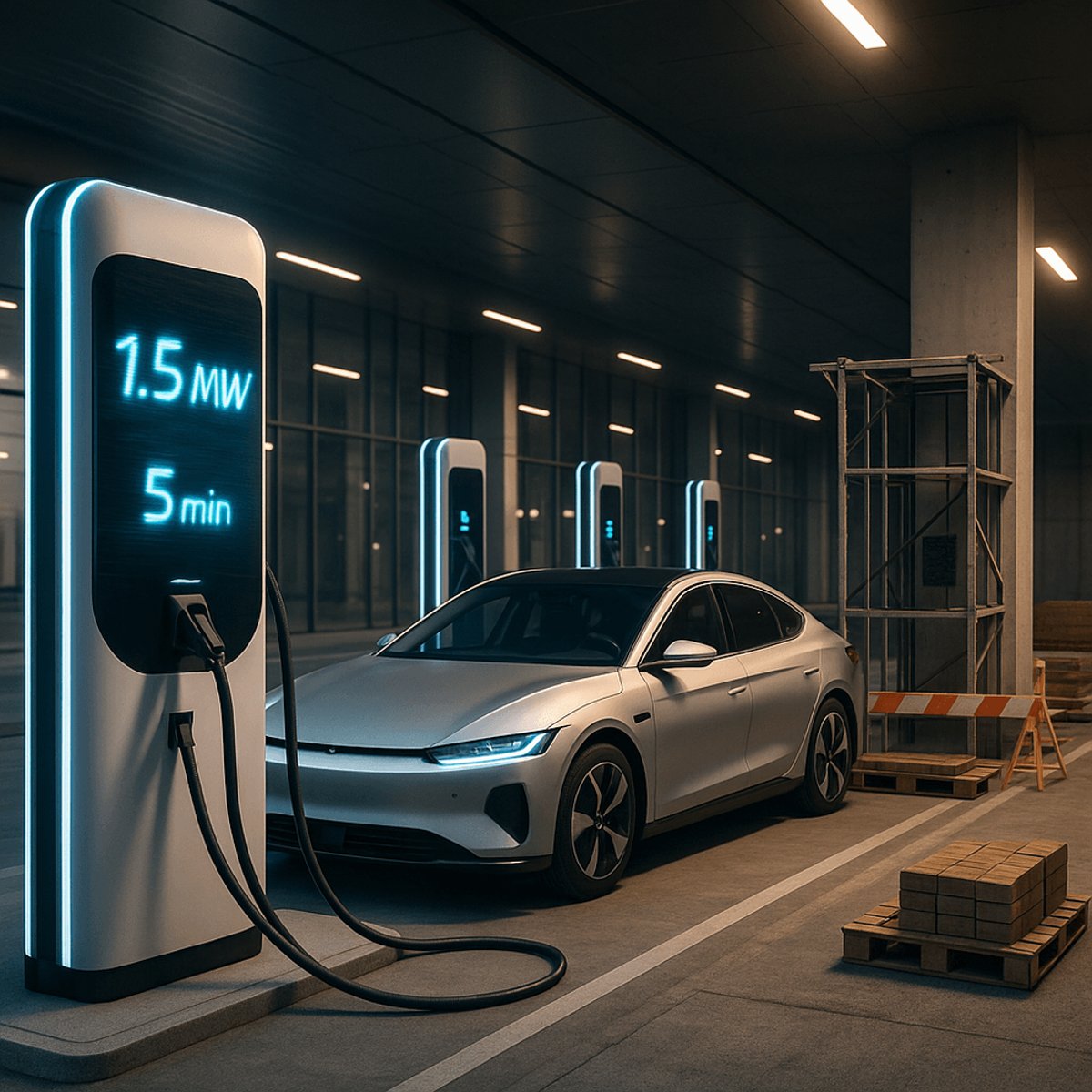
BYD just threw down the gauntlet in the EV charging wars. The Shenzhen-based automaker announced its Blade Battery 2.0 can handle charging speeds up to 1.5 megawatts, slashing typical 30-40 minute fast-charging sessions to just five minutes. It's the kind of breakthrough that could finally silence the "but charging takes too long" crowd.
But here's where reality crashes the party. While BYD's engineering team solved the battery chemistry puzzle, the charging infrastructure to support 1.5MW speeds barely exists. Most of today's DC fast chargers top out at 350 kilowatts, less than a quarter of what Blade Battery 2.0 can handle. Even Tesla's vaunted Supercharger V4 stations max out at 250kW in most locations.
The announcement positions BYD squarely ahead of Western rivals who've struggled to crack the fast-charging code without degrading battery life. Traditional lithium-ion cells suffer when pushed to extreme charging speeds, developing internal resistance and losing capacity over time. BYD's Blade Battery uses lithium iron phosphate (LFP) chemistry, which the company claims handles thermal stress better than the nickel-cobalt battery packs favored by competitors.
"This changes the entire value proposition of electric vehicles," one automotive analyst told industry watchers, though they quickly added the caveat about infrastructure limitations. The gap between what the battery can do and what charging networks can deliver represents both BYD's biggest achievement and its most significant challenge.
BYD isn't just making batteries for its own vehicles anymore. The company supplies cells to Toyota and other major automakers, giving it potential leverage to push the entire industry toward higher charging standards. But building out megawatt-scale charging infrastructure requires massive electrical upgrades that most gas station parking lots can't support without serious grid work.
The timing couldn't be more strategic. BYD overtook Tesla as the world's top EV seller in late 2025, and the company's been aggressively expanding beyond China into Europe and Southeast Asia. Fast charging addresses one of the last major consumer objections to EV adoption, particularly in markets where home charging isn't practical.
Competitors aren't sitting still. General Motors and Samsung SDI have been testing solid-state batteries that promise similar charging speeds, while Tesla continues refining its 4680 cell architecture. But BYD gets to market first with a solution that's actually shipping in vehicles, not stuck in labs.
The infrastructure problem isn't insurmountable. China's already building megawatt charging corridors along major highways, and European charging networks are planning upgrades. ChargePoint and other North American providers have megawatt charging on their roadmaps, but deployment timelines stretch into 2027 and beyond.
What makes Blade Battery 2.0 particularly clever is backward compatibility. The cells work fine with existing slower chargers, they just won't hit those headline-grabbing 5-minute times. BYD's betting that infrastructure will catch up as EV adoption accelerates and utilities realize the revenue potential of ultra-fast charging.
The energy density improvements matter too, though BYD hasn't released detailed specifications yet. LFP batteries traditionally lag nickel-based packs on range, but recent advances have closed that gap. If Blade Battery 2.0 delivers both fast charging and competitive range, it fundamentally reshapes the EV landscape.
For consumers, the message is clear but complicated. BYD's new battery tech works brilliantly in theory and will eventually deliver transformative charging experiences. But "eventually" might mean waiting years for charging networks to upgrade their hardware and local utilities to beef up grid connections. The technology's ready. The infrastructure's not.
BYD's Blade Battery 2.0 represents genuine innovation in a space that desperately needs it, but the company's ahead of the infrastructure curve by several years. Early adopters in China might see those 5-minute charging times soon, but Western markets face a longer wait. The real story isn't just the battery tech - it's whether charging networks and utilities can upgrade fast enough to make BYD's promise a reality before competitors close the gap. For now, it's a brilliant solution waiting for the world to catch up.