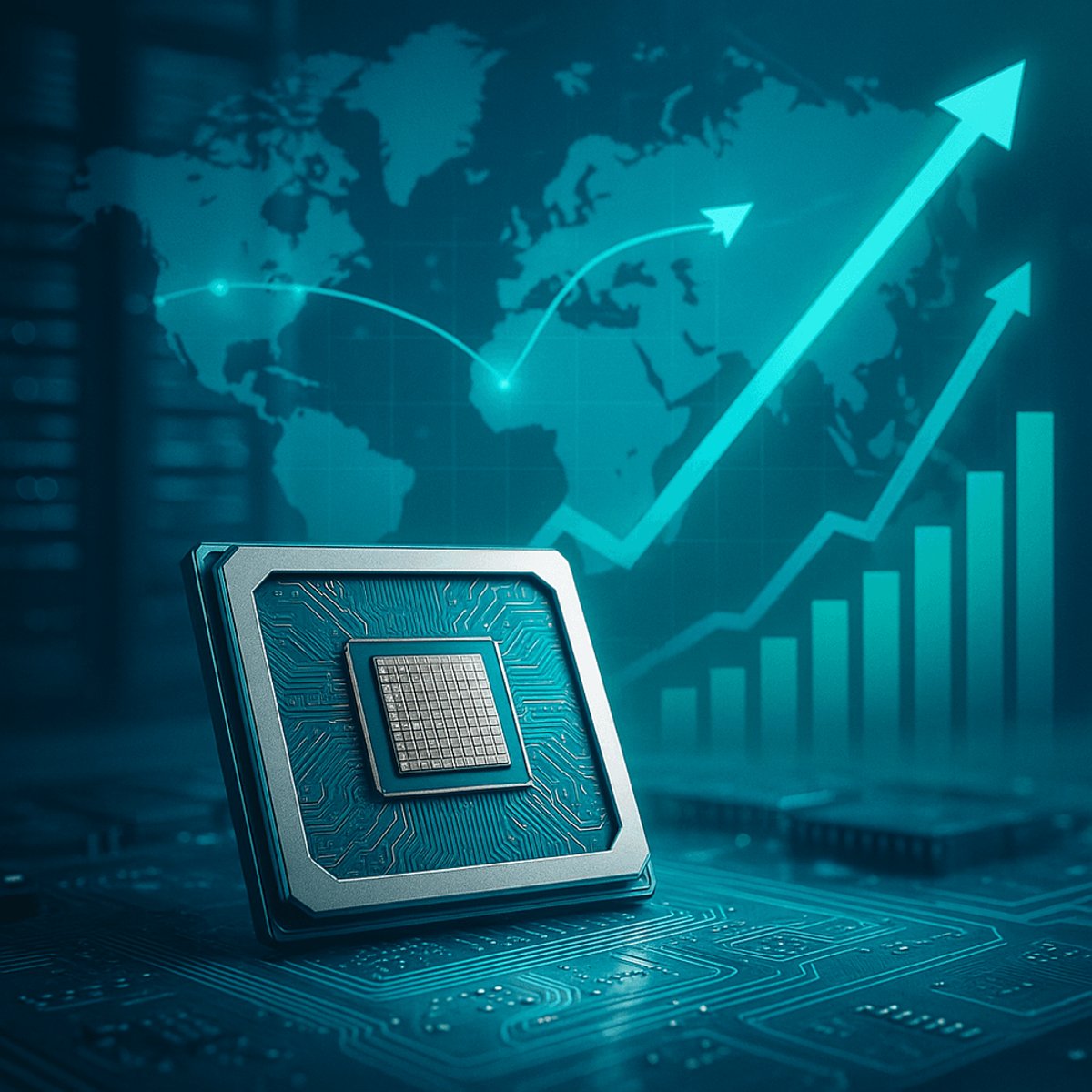
China just handed Nvidia a major win in the ongoing chip war. Beijing approved domestic tech giants ByteDance, Alibaba, and Tencent to purchase Nvidia's H200 AI systems, according to a Reuters report Wednesday morning, reversing months of pressure on Chinese companies to buy local alternatives. The approval sent Nvidia shares up 1.6% in premarket trading and triggered a broader semiconductor rally, with the VanEck Semiconductor ETF jumping more than 3% as investors digest what could be billions in recovered revenue for the AI chip giant.
Nvidia just got the regulatory break it's been waiting months for. China approved sales of the company's H200 AI chip systems to major domestic tech players, according to Reuters sources, marking a significant thaw in the escalating semiconductor trade tensions between Washington and Beijing. The approval covers ByteDance, Alibaba, and Tencent - three of China's most influential tech companies with massive AI infrastructure needs.
The market responded instantly. Nvidia shares climbed 1.6% in premarket trading Wednesday, while the broader chip sector caught fire. The VanEck Semiconductor ETF shot up more than 3%, with European semiconductor stocks like ASML surging 5% and other chipmakers including Infineon and STMicroelectronics trading solidly in the green.
This reversal carries serious financial weight. Back in May 2025, Nvidia warned investors that export restrictions to China would cost the company roughly $8 billion in lost sales - a staggering hit even for a trillion-dollar company. While the U.S. had authorized H200 sales earlier this year, Beijing was reportedly pressuring Chinese firms to choose domestic alternatives instead, threatening to lock Nvidia out of one of its most lucrative markets.
The timing couldn't be better for the chip sector. Wednesday's rally builds on exceptional earnings from two semiconductor heavyweights that underscored surging AI demand. Dutch chipmaker ASML reported bumper fourth-quarter results with €13.2 billion ($15.8 billion) in bookings - well above analyst expectations - while its 2026 sales forecast also beat estimates. The company makes extreme ultraviolet lithography machines, the specialized tools required to manufacture the world's most advanced chips, and the blockbuster orders signal chipmakers are aggressively expanding production capacity.
Meanwhile, South Korea's SK Hynix delivered record full-year profit for 2025, with shares closing more than 5% higher. The memory chip giant is benefiting from an unprecedented global shortage of memory components critical for both consumer electronics and data centers. Prices for these components have skyrocketed, driving massive profit margins for SK Hynix and other memory manufacturers.
The H200 approval represents more than just recovered revenue for Nvidia - it's a strategic validation of the company's position in the global AI race. The H200, Nvidia's latest high-bandwidth memory GPU, offers significant performance improvements over previous generations and has become essential infrastructure for companies building large language models and AI applications. Chinese tech giants have been desperate to secure access to cutting-edge AI hardware as they compete with U.S. counterparts in the generative AI arms race.
But the approval comes with context. China was pushing its companies to buy domestic chip alternatives as recently as December, part of Beijing's broader strategy to reduce dependence on U.S. technology. The sudden policy shift suggests Chinese authorities concluded their domestic chip industry isn't ready to match Nvidia's performance - at least not yet. That gap gives Nvidia a crucial window to cement relationships with Chinese customers before homegrown competitors potentially catch up.
The semiconductor rally also reflects improving fundamentals across the industry. Taiwan Semiconductor Manufacturing Co., the world's largest contract chipmaker, reported record fourth-quarter profit earlier this month, adding to mounting evidence that chip demand is accelerating rather than cooling. As AI workloads expand and hyperscalers build out massive data center infrastructure, the entire semiconductor supply chain is seeing robust orders.
ASML's outsized bookings number tells the story clearly. Chipmakers don't drop €13.2 billion on manufacturing equipment unless they're confident about sustained demand. The company's EUV machines can cost upwards of $200 million each, and lead times stretch for months or years. Those orders represent commitments to dramatically scale chip production well into 2026 and beyond.
For Nvidia specifically, the China approval solves one of the biggest question marks hanging over the stock. Analysts had been pricing in ongoing China revenue headwinds, with some projecting the company might never fully recover that $8 billion. Wednesday's news flips that assumption on its head. If Chinese tech giants can now freely purchase H200 systems, Nvidia's addressable market just expanded significantly.
Still, uncertainties remain. The approval covers specific companies and specific chips, and U.S. export controls continue to evolve. The Biden administration has imposed increasingly strict semiconductor export restrictions aimed at limiting China's access to advanced AI capabilities, and those policies could tighten further or shift depending on political developments. Nvidia will need to navigate that regulatory landscape carefully while maximizing its window of opportunity in China.
The broader chip rally Wednesday also reflects relief that earnings season is delivering. After months of speculation about whether AI chip demand would sustain or fade, concrete results from ASML, SK Hynix, and TSMC confirm the boom is still accelerating. Memory shortages are driving pricing power, manufacturing equipment orders are surging, and foundries are running at capacity. Those are the signs of a healthy, growing market rather than a speculative bubble deflating.
China's H200 approval hands Nvidia a critical victory in the semiconductor trade war and potentially unlocks billions in revenue the company thought it had lost. Combined with blockbuster earnings from ASML and SK Hynix, Wednesday's rally signals the AI chip boom is far from over. Investors are betting Nvidia can capitalize on this regulatory window before either U.S. export controls tighten again or Chinese competitors close the performance gap. For now, the momentum belongs to established chip leaders riding unprecedented demand across data centers, AI infrastructure, and memory components. Watch how quickly Nvidia can convert these approvals into actual shipments to Chinese customers - that'll determine whether this rally has staying power or if it's just a temporary reprieve in an ongoing geopolitical chess match.