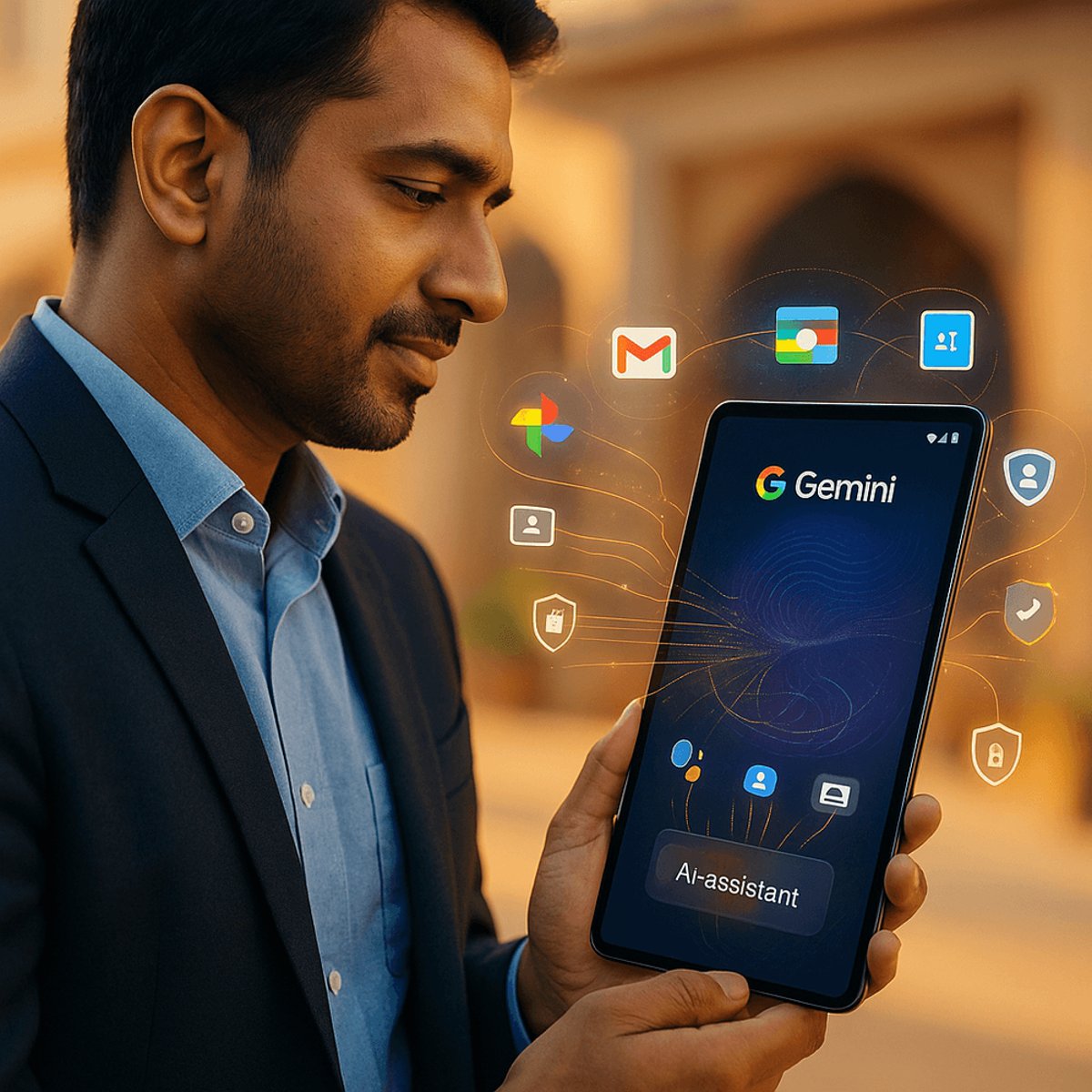
Google just flipped the switch on its Gemini Personal Intelligence feature for users in India, marking a significant expansion of the AI assistant's most personal capabilities beyond its initial markets. The feature lets users connect their Gmail, Photos, and other Google accounts to receive deeply personalized answers - a move that signals Google's confidence in its privacy controls and its ambition to dominate AI-powered productivity in one of the world's fastest-growing digital markets.
Google is betting big on India's appetite for AI. The company's Gemini Personal Intelligence feature, which transforms the chatbot into something more like a digital personal assistant, is now live for Indian users after initially launching in select markets earlier this year.
The feature works by letting users opt in to connecting their Google accounts - Gmail, Photos, Calendar, Drive, and more - so Gemini can pull from actual personal data to answer questions. Instead of generic responses, users can ask things like "What time is my dentist appointment next week?" or "Show me photos from my trip to Goa last summer" and get answers pulled directly from their own information.
It's a significant expansion for Google, which has been racing to prove its AI credentials against OpenAI and Microsoft. India represents one of the world's largest and fastest-growing internet markets, with over 700 million users and a rapidly expanding middle class hungry for productivity tools. The country has become a crucial testing ground for tech giants looking to shape how billions of people will interact with AI.
The timing isn't accidental. Google has been steadily building out Gemini's capabilities since its rocky launch in late 2023, when the model faced criticism for generating historically inaccurate images. The company rebranded its AI efforts under the Gemini name, consolidating what was previously called Bard and various other AI experiments into a single, cohesive product.
Personal Intelligence represents the next evolution - moving from a general-purpose chatbot to something that knows you. It's the same playbook Microsoft is running with Copilot, which taps into Microsoft 365 data, and what OpenAI has hinted at with persistent memory features in ChatGPT.
But there's a catch. Getting users to voluntarily hand over access to their emails, photos, and calendars requires serious trust. Google has to convince privacy-conscious users that its AI won't misuse personal information or inadvertently leak sensitive data. The company says data connected through Personal Intelligence isn't used to train Gemini's models and that users maintain full control over what's connected.
India's regulatory environment adds another layer of complexity. The country recently passed its Digital Personal Data Protection Act, which gives users more control over their information and imposes strict requirements on how companies handle data. Google will need to navigate these rules carefully as it scales Personal Intelligence.
The India launch also reflects Google's broader strategy of tailoring products for local markets. The company has invested heavily in India-specific features across its product lineup, from payments integration in Google Pay to vernacular language support in Search. Making Gemini Personal Intelligence available in India suggests Google sees the feature as mature enough for mass-market deployment, not just early adopters in Western markets.
Competition in India's AI market is heating up fast. OpenAI has been expanding ChatGPT's availability globally, while local players and Chinese companies are eyeing the market. Google has the home-field advantage with its dominant position in search, Android, and cloud services - infrastructure that makes Personal Intelligence more seamless than competitors who don't control the underlying ecosystem.
The real test will be adoption. Google needs to prove that Personal Intelligence isn't just a novelty but genuinely useful enough that users change their behavior. That means answering questions faster than manually searching Gmail, or surfacing photos more intuitively than scrolling through Google Photos. Early user feedback from other markets has been mixed, with some praising the convenience and others finding the feature hit-or-miss.
For developers and enterprises watching closely, the India expansion offers clues about Google's AI ambitions. If Personal Intelligence gains traction with consumers, similar workplace-focused features could follow for Google Workspace customers - potentially putting Google in direct competition with Microsoft's enterprise-focused Copilot offerings.
Google's decision to bring Personal Intelligence to India isn't just about geographic expansion - it's a statement about where the company believes AI is headed. The bet is that tomorrow's AI assistants won't just be smart, they'll be personal. By launching in a market as massive and diverse as India, Google is stress-testing whether users are ready to let AI into their inboxes, photo libraries, and calendars. If Indian users embrace the feature, it'll validate Google's vision and accelerate similar rollouts globally. If they don't, it might signal that the industry is moving faster than user trust can keep up.