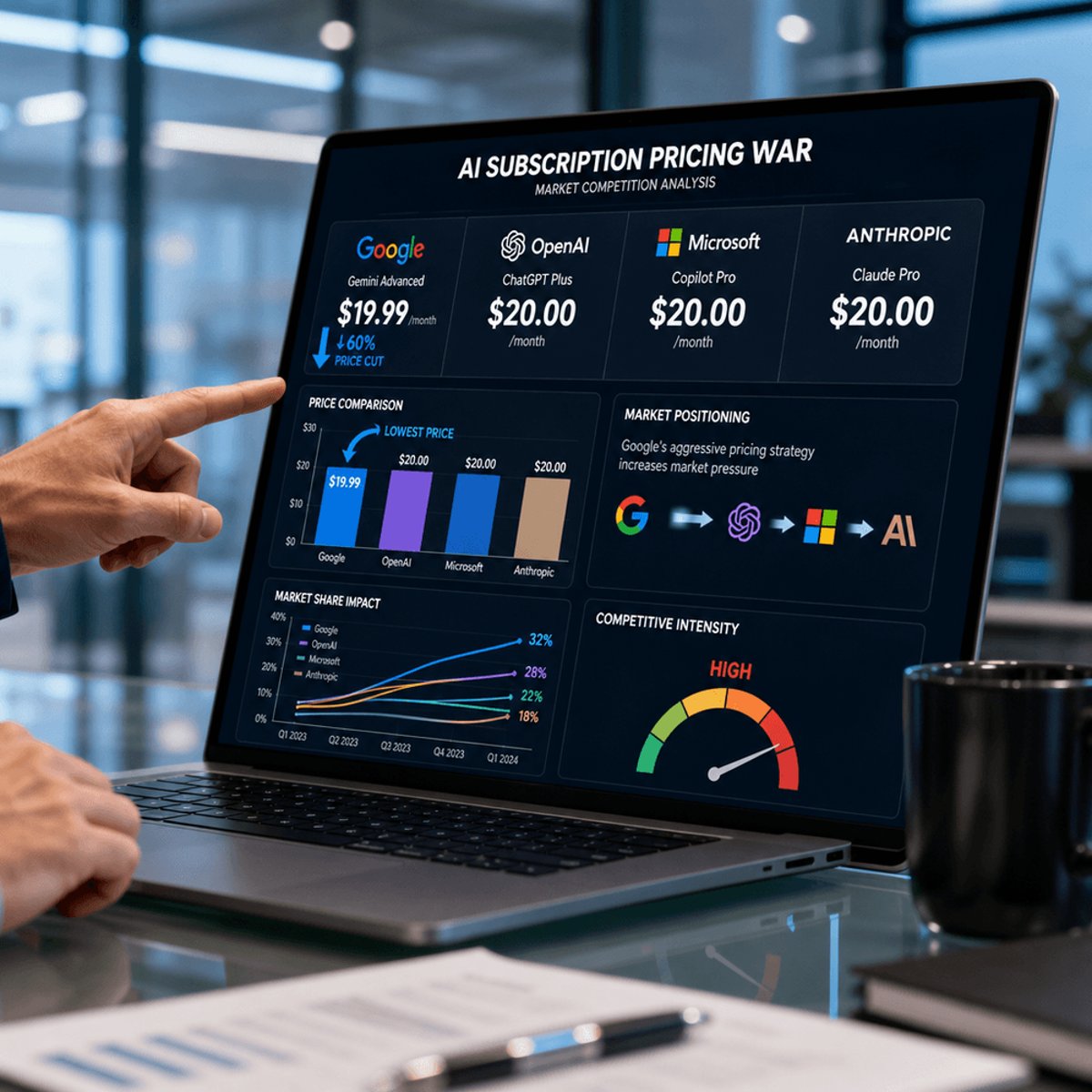
Google just dropped the price on its budget AI subscription tier, marking the first major competitive pricing salvo in what's shaping into an all-out AI subscription war. The move puts immediate pressure on OpenAI, Anthropic, and Microsoft to respond as the fight for consumer and enterprise AI dollars heats up. According to TechCrunch, the price cut signals Google's willingness to leverage its scale to commoditize AI access and grab market share.
Google just made its cheapest AI subscription significantly more affordable, and the timing couldn't be more deliberate. The company's Google AI Plus budget tier now costs less than half what it did last month, positioning it as the most aggressive pricing play yet in the rapidly maturing AI subscription market.
The move comes as OpenAI, Anthropic, and Microsoft have all maintained relatively stable pricing on their respective ChatGPT Plus, Claude Pro, and Copilot subscriptions. By undercutting the market, Google is betting it can use its infrastructure advantages and deep pockets to force competitors into an uncomfortable choice: match the cuts and sacrifice margins, or stick with premium pricing and risk losing users.
According to TechCrunch, the price reduction represents Google's most aggressive consumer AI play since launching its Gemini models earlier this year. The company has been quietly testing different pricing tiers for months, but this marks the first time it's gone significantly below market rate.
The timing is strategic. With AI adoption still in its early innings, capturing users now means locking them into ecosystems before habits solidify. Google learned this lesson the hard way with cloud infrastructure, where it spent years playing catch-up to Amazon Web Services and Microsoft Azure. This time, the company appears determined not to let competitors establish pricing norms it'll later struggle to undercut.
For OpenAI, the pressure is particularly acute. The ChatGPT maker has positioned itself as the premium option in AI, with its $20 monthly ChatGPT Plus subscription remaining unchanged since launch. But with Google now offering comparable capabilities at a fraction of the cost, OpenAI faces questions about whether its brand premium can hold.
Microsoft, meanwhile, finds itself in an awkward spot. As OpenAI's primary investor and infrastructure provider, it has a vested interest in maintaining premium pricing. But its own Copilot subscriptions compete directly with Google's offerings, and enterprise customers are notoriously price-sensitive when evaluating software tools.
The broader implication is that AI access may be commoditizing faster than anyone expected. Just as cloud storage and computing became race-to-the-bottom businesses, AI inference and model access could follow the same path. That would fundamentally reshape the economics of the AI industry, potentially making the real money not in selling access to models but in building specialized applications on top of them.
Industry watchers have been predicting this moment. As models become more capable and infrastructure costs decline, the marginal cost of serving an additional AI query approaches zero. That creates natural pressure toward commodity pricing, especially for players like Google with massive existing infrastructure and multiple revenue streams to subsidize AI development.
What makes this particularly interesting is that Google isn't cutting prices because it has to, it's doing so because it can. The company's advertising business still prints money, giving it runway to invest aggressively in AI market share without worrying about immediate profitability. That's a luxury OpenAI and Anthropic, despite their massive funding rounds, don't quite have.
The next few weeks will reveal how competitors respond. If they match Google's cuts, we'll know the price war is officially on. If they hold firm, they're betting their models and features are differentiated enough to justify premium pricing. Either way, consumers win in the short term with cheaper AI access.
For enterprise buyers evaluating AI tools, Google's move complicates decision-making. Budget-conscious teams now have cover to push harder on pricing negotiations with all vendors. The message is clear: if Google can offer AI at these prices, why should we pay more elsewhere?
The broader question is whether this pricing aggression extends beyond consumer tiers into enterprise contracts. Google has historically been willing to undercut competitors on cloud pricing to win deals. If that playbook extends to AI subscriptions, Microsoft and OpenAI could face pressure across their entire product lines.
Google's aggressive pricing move is the opening shot in what could become a prolonged battle for AI subscription dominance. By leveraging its infrastructure scale and advertising revenue to subsidize cheaper AI access, Google is forcing competitors to choose between margins and market share. For consumers and businesses, that means better pricing and more options. For the industry, it signals that AI access is heading toward commodity status faster than anyone anticipated, potentially reshaping which companies profit most from the AI revolution.