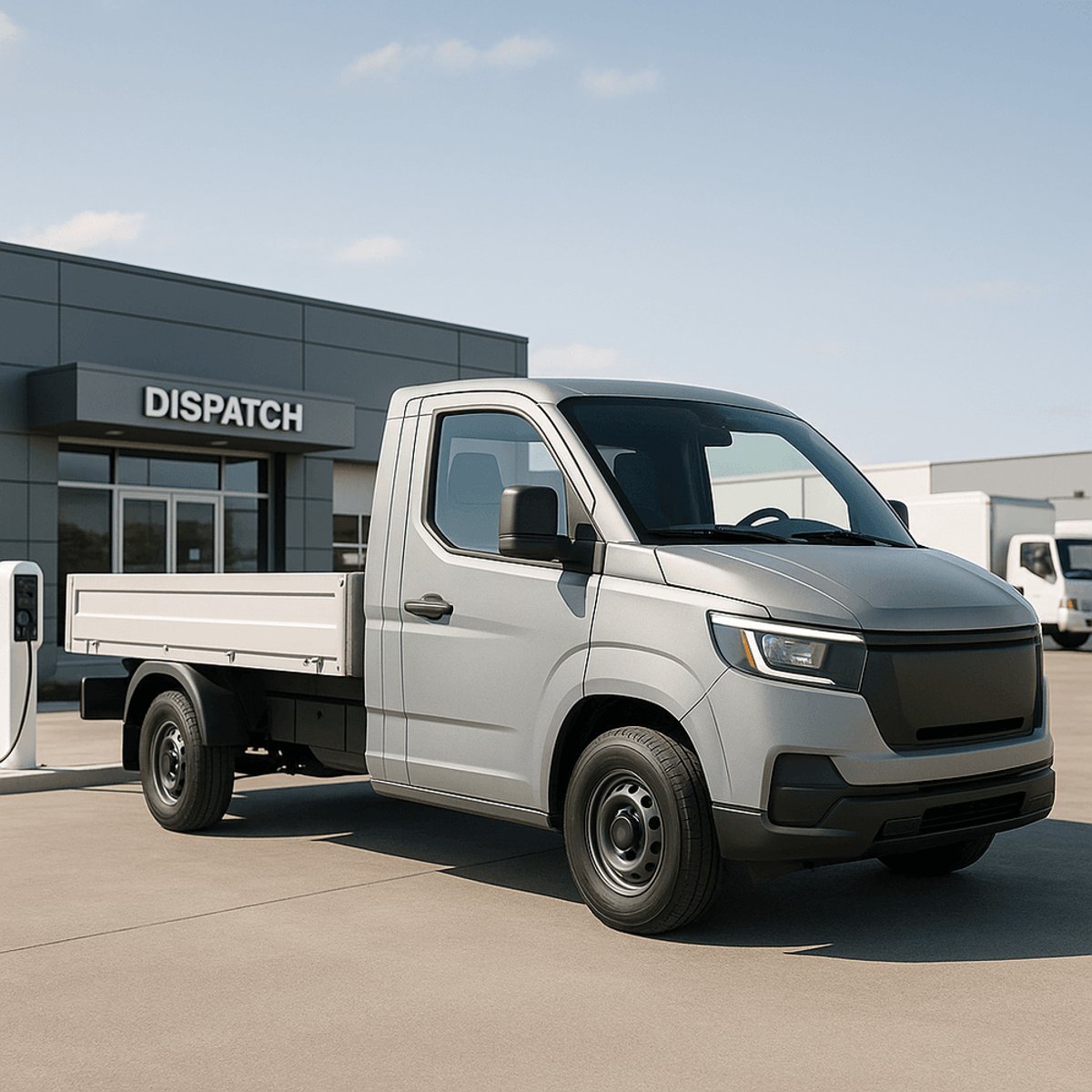
Los Angeles-based EV startup Harbinger just expanded its commercial vehicle lineup with a smaller work truck available in both electric and hybrid configurations. The move signals the company's intensifying push to capture fleet operators looking to electrify without sacrificing range flexibility or breaking budgets. With traditional automakers still struggling to crack the commercial EV code, Harbinger's dual-powertrain strategy could give it an edge in the notoriously cost-sensitive fleet market.
Harbinger is betting that fleet managers want options, not mandates. The startup's newest commercial truck - smaller than its existing medium-duty offering - arrives with a choice that's been notably absent from most EV startups: you can plug it in or fill it up.
The dual-powertrain strategy isn't just hedging bets. It's a direct response to what Harbinger has heard from fleet operators who like the idea of electric but can't stomach the risk of trucks sitting idle at charging stations. By offering both pure electric and hybrid versions of the same platform, the company lets businesses dip their toes into electrification without going all-in on infrastructure buildouts.
"We're trying to corner the commercial truck market with trucks that offer a lower cost of ownership and a better driving experience," according to TechCrunch's report. That's ambitious language for a startup competing against Ford, GM, and a growing pack of EV-native commercial vehicle makers. But the Los Angeles company has a point - traditional work trucks weren't designed with electrification in mind, which means most electric conversions inherit compromises from their gas-guzzling ancestors.
The commercial vehicle market has been slower to electrify than passenger cars, largely because fleet economics are brutally unforgiving. A delivery truck that can't complete its route or costs more per mile than diesel alternatives doesn't get a second chance. Harbinger is addressing this by designing from the ground up for electric powertrains, then offering the hybrid as an on-ramp for cautious fleet managers.
The smaller form factor matters too. While Harbinger already had a medium-duty truck in development, this new model slots into the highly competitive Class 2-3 segment where companies like Amazon, FedEx, and countless contractors operate thousands of vehicles. It's the sweet spot where total cost of ownership calculations can tip dramatically in favor of electric - if the upfront price is right and the trucks can handle real-world duty cycles.
What Harbinger hasn't revealed yet is pricing, specs, or delivery timelines. Those details will determine whether this is a legitimate challenger or just another startup making promises it can't keep. The commercial EV graveyard is littered with companies that underestimated how hard it is to build trucks at scale and at competitive prices.
But the LA startup has one advantage that's increasingly valuable - it's not trying to convert skeptics to pure electric religion. The hybrid option acknowledges that infrastructure, use cases, and fleet economics vary wildly. A landscaping company in rural Texas has different needs than an urban delivery service in San Francisco. One powertrain strategy doesn't fit all.
The timing is notable too. Commercial fleet electrification mandates are ramping up in California and other states, creating artificial demand that's attracting both legacy automakers and startups. Tesla has its Semi in limited production, Rivian is building electric delivery vans for Amazon, and Ford is pushing its E-Transit. Harbinger is entering a suddenly crowded field.
What could set Harbinger apart is its focus on the driving experience - an unusual pitch for commercial vehicles where comfort typically ranks below durability and operating costs. But fleet managers are discovering that better ergonomics and drivability mean less driver fatigue, easier recruitment, and lower turnover. In a tight labor market, a truck that's actually pleasant to drive all day isn't a luxury - it's a competitive advantage.
The company will need to prove it can deliver on both the cost and experience promises. Commercial customers don't care about 0-60 times or sleek designs. They care about uptime, payload capacity, maintenance costs, and whether the truck will still be running in 10 years with 200,000 miles on it.
Harbinger's smaller work truck represents a pragmatic approach to commercial electrification - acknowledging that fleet operators need flexibility more than ideology. By offering both electric and hybrid variants on the same platform, the LA startup is threading the needle between environmental ambition and business reality. Whether it can actually deliver competitive trucks at scale remains the make-or-break question. But in a market where traditional automakers are still figuring out electric commercial vehicles and pure-EV startups are struggling with range limitations, Harbinger's dual-powertrain bet might be the smartest play on the board. Fleet managers will ultimately vote with purchase orders, and those decisions come down to dollars per mile, not powertrains per se.