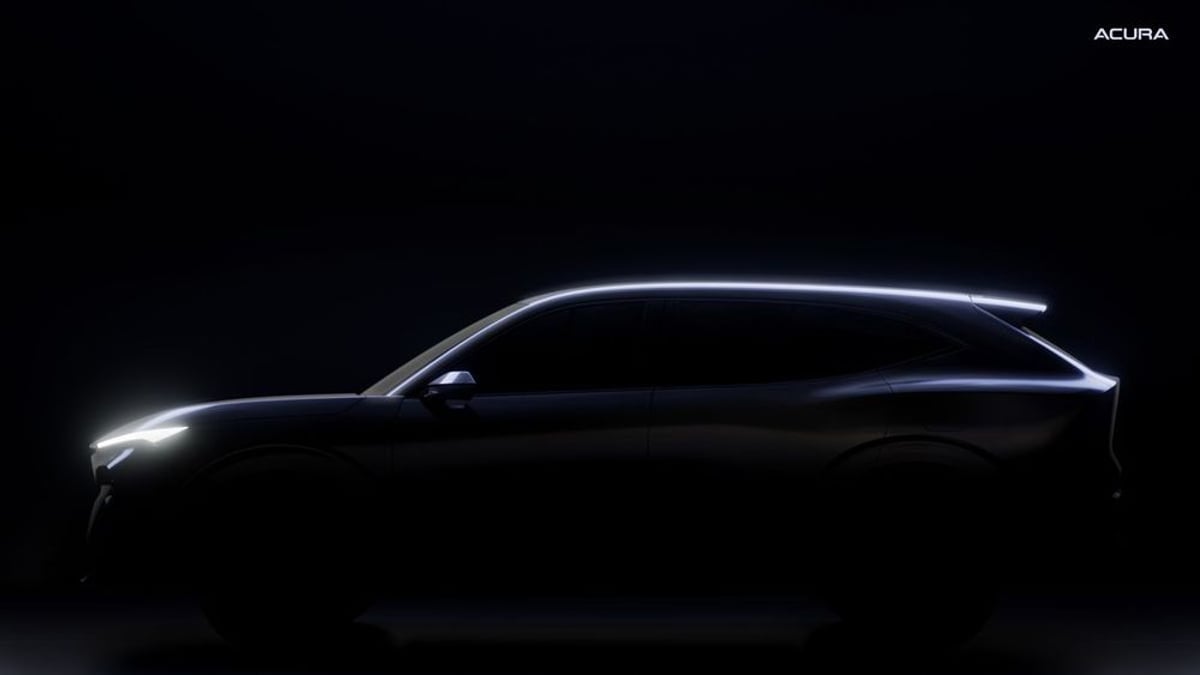
Honda just made a dramatic move that signals how seriously the auto industry is reckoning with the EV slowdown. The company announced the next-generation Acura RDX will launch as a two-motor hybrid SUV, marking a major strategy shift. Meanwhile, production of the current RDX—which has sold nearly 740,000 units since 2018—ends this year. The move shows Honda betting big on hybrids over pure electric vehicles as federal incentives cool and customer demand shifts.
Honda just confirmed what the entire auto industry's been whispering about in boardrooms for months. The next-generation Acura RDX is coming as a two-motor hybrid, marking a seismic shift in the company's EV-first ambitions. The current RDX, which has been a workhorse for Honda since its 2018 debut and racked up nearly 740,000 sales in the US, will stop production this year. Honda wouldn't commit to a timeline for the hybrid replacement, leaving a deliberate gap in the lineup that signals the company's willingness to sacrifice short-term revenue for a more measured long-term strategy.
This isn't just a product shuffle. It's Honda's response to the collapsing economics of electric vehicles. As EV tax credits expired and federal policy shifted under the new administration, automakers across the globe watched their electric vehicle demand dry up faster than morning dew. Acura's VP Lance Woelfer explained that the pivot reflects customer demand for "hybrids and gas-powered vehicles rather than structuring the business solely around EV mandates." Translation: the market has spoken, and it wants hybrids.
But Honda isn't entirely abandoning the EV dream—it's just recalibrating. Production of the all-electric Acura RSX remains on track for the second half of 2026, with the car slated to be built at Honda's newly acquired Ohio factory. The company recently bought out LG Energy's stake in the facility to gain full control, then invested heavily in retooling it to support gas, hybrid, and EV production on the same line—a flexibility play for uncertain times.
The RSX will pack dual-motor all-wheel drive, sport-tuned suspension, Brembo brakes, and Honda's new ASIMO operating system, positioning itself as the brand's first truly homegrown electric SUV. Yet even this launch sits in the shadow of setbacks. Honda already cancelled the Acura ZDX after just one year in production, and the zero-series Saloon got pushed to 2027. For a company that just invested billions in EV infrastructure, that's a harsh reminder that strategy trumps momentum.
Then there's the wild card: the Base Station towable RV. Honda revealed a prototype at its recent press event, and it's a fascinating piece of thinking. The lightweight trailer features rooftop solar panels, a modular interior with options for kitchen, shower, and AC modules, and a programmable exterior light ring for campsite setup. It sleeps up to four with a queen bed and optional bunks, and critically, it's light enough to be towed by compact crossovers like the CR-V as well as electric vehicles like the upcoming Honda Zero Series SUV.
The Base Station was designed by the team that created the Motocompacto electric scooter—and you can see it in the aesthetic DNA. Woelfer positioned it as a disruption opportunity in a category dominated by aging designs. The RV market is fragmented and dominated by established players using outdated architecture. Honda's betting that adventure seekers hungry for modular, EV-compatible camping gear represent white space. The fact that it fits in residential garages and takes minutes to set up suggests Honda's targeting a different demographic than traditional RV buyers.
What's striking about Honda's announcements isn't just the individual moves—it's the portfolio logic underneath. The company is hedging across three distinct futures: a hybrid future (the RDX pivot), an EV future (RSX and Zero Series), and an EV-enabled lifestyle future (Base Station). By holding RDX production, Honda's signaling confidence in the hybrid platform while buying time to see how EV adoption actually evolves in 2026. If demand bounces back as promised, they can accelerate EV launches. If it continues sliding, the hybrid RDX becomes the hero product.
Honda's strategy pivot reveals the deeper truth the industry won't say out loud: the EV transition is messier and slower than anyone predicted. By hybridizing the RDX, pulling the plug on the ZDX, and launching an EV-compatible RV, Honda's betting on pragmatism over ideology. The company's not abandoning electrification—it's just no longer betting the farm on it happening overnight. For consumers, that means more hybrid options hitting dealers sooner and more thoughtful EV launches when they actually arrive. For the industry, it's a signal that the rush to EVs is over. The race for the right mix has just begun.