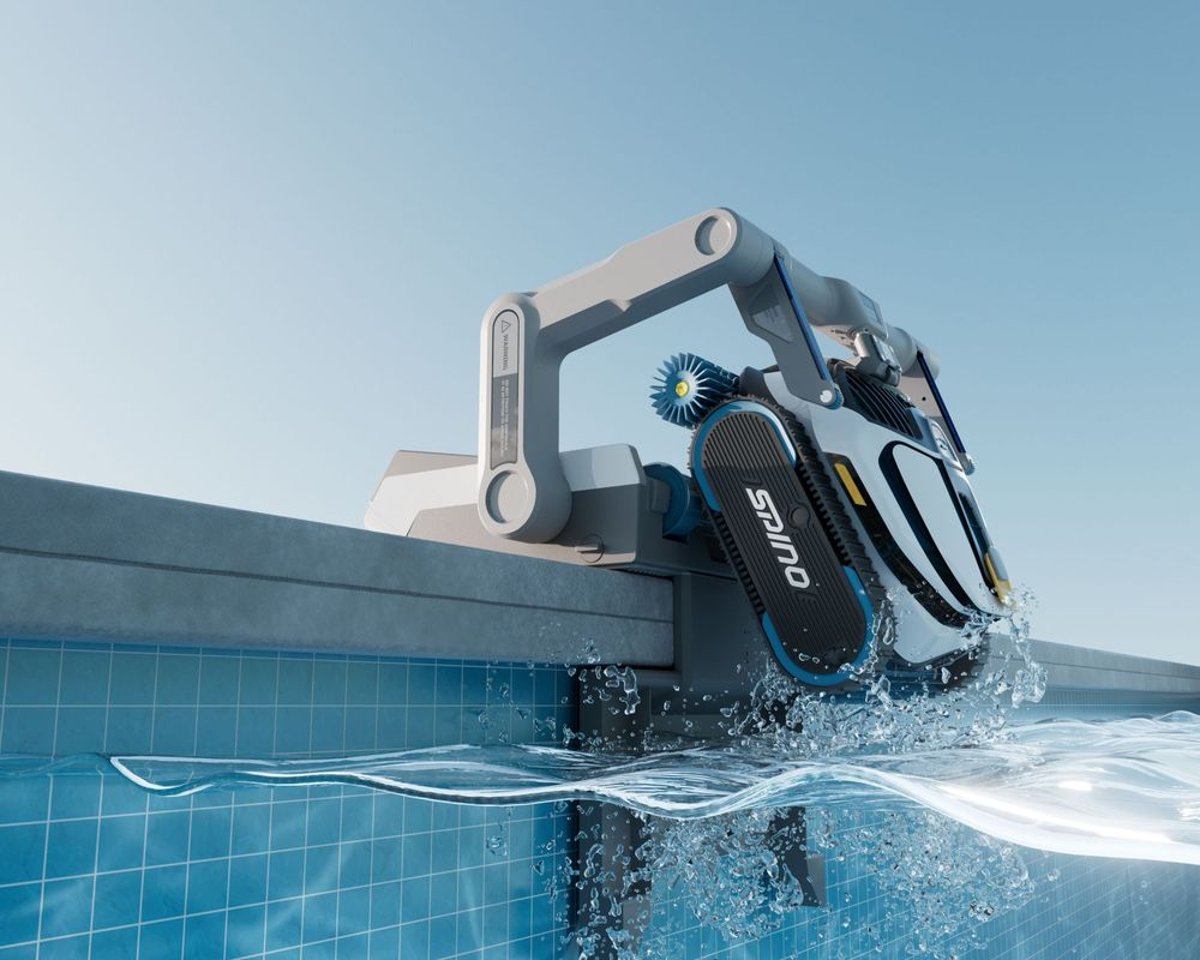
Mammotion's adding another category to its robotics lineup. The company just unveiled the Spino S1 Pro at CES 2026, a pool cleaning robot that doesn't need human hands to get out of the water. Instead, it uses an underwater communication system to guide itself to a docking station equipped with a robotic arm that physically lifts the device onto the deck for charging.
The robotics space just got a bit more convenient. Mammotion, the company already dominating headlines with its line of autonomous lawnmowers, is diving into pool maintenance with a solution that solves one of the biggest pain points of robotic pool cleaners: human effort.
The Spino S1 Pro, shown off at CES 2026, is built around one deceptively simple idea. When the bot finishes cleaning or needs a charge, it doesn't require you to fish it out of the water like some kind of aquatic rescue operation. Instead, the device communicates with its docking station via an underwater communication system, guides itself to the dock sitting at your pool's edge, and lets a mounted robotic arm lift it completely out of the water for charging.
It's the kind of thoughtful engineering that makes you wonder why pool robots haven't done this sooner. Mammotion clearly thought about the full user experience here, not just the cleaning part.
Once in the water, the Spino S1 Pro handles the actual work with five brushless motors and treads designed to grip both the pool bottom and sides. The device moves around while pumping up to 6,800 gallons per hour through its dual-layer filter system, capturing everything from fine silt to sand and larger debris. Navigation relies on an onboard camera and multiple sensors that let the robot identify messy areas, steps, corners, edges, and obstacles as it moves. So it's not just mindlessly bumping around - it's actually mapping and understanding your pool.
Mammotion's worked in consumer robotics long enough to understand what matters to pool owners. The Spino S1 Pro maintains a strong connection within a 10-meter radius of its dock, meaning it won't lose signal and drift off into the deep end. The company is staying quiet on battery life for now, though they did note that the earlier Spino E1 model offers up to 210 minutes of runtime - roughly three and a half hours per charge.
The timing makes sense. CES has become ground zero for home automation announcements, and robot adoption continues climbing as people increasingly delegate household maintenance tasks. The pool cleaning market especially has been ripe for innovation. Most existing options either require manual removal from the water or lack the autonomous smarts that consumers now expect from their robots.
Mammotion's entry builds on the momentum from their robot lawnmower success. The company's already proven they understand how to design machines that earn shelf space in affluent homes. This pivot to pool cleaning, which serves a similar market of homeowners willing to invest in automation, feels natural.
What we don't know yet matters though. Mammotion is keeping pricing and final specifications under wraps until the bot officially launches in the first quarter of this year. That means we're still waiting on concrete details about battery longevity, warranty coverage, maintenance requirements, and most importantly, how much this convenience will cost. In the premium robot market, those details separate the impulse buys from the serious investments.
The underwater communication system is worth noting too. That's not something every pool robot has figured out, which speaks to some genuine engineering work here. It prevents the connectivity issues that plague competing models and ensures the dock always knows where the Spino S1 Pro is positioned.
Mammotion's betting that the future of pool maintenance looks a lot like lawn care automation. The Spino S1 Pro solves a genuine friction point in the current market, and the company's track record with outdoor robots suggests they understand their target buyer. When pricing lands, expect the premium positioning - this is designed for people with nice pools in nice homes who've already accepted that some tasks deserve to be automated. The real test comes after launch: whether the underwater comms hold up reliably, whether the battery lasts through a full cleaning cycle, and whether homeowners will actually prefer this over human cleaning services or simpler, cheaper alternatives.