LG is about to shake up the home robotics game. The company just teased CLOiD, a new household robot designed to handle the chores nobody wants to do, and it's a significant departure from what we've seen from the Korean electronics giant before. With dual articulated arms, individually actuated fingers, and AI built to understand your needs, this thing looks like it could actually do something useful around the house when it debuts at CES in January.
Here's what we know so far: LG is ready to show off CLOiD, and based on the teaser images and specs, this robot is genuinely different from the company's last stab at home automation. Where LG's previous home robot came with a two-wheeled base and a handle sticking out of its head, CLOiD actually has arms that can grab things.
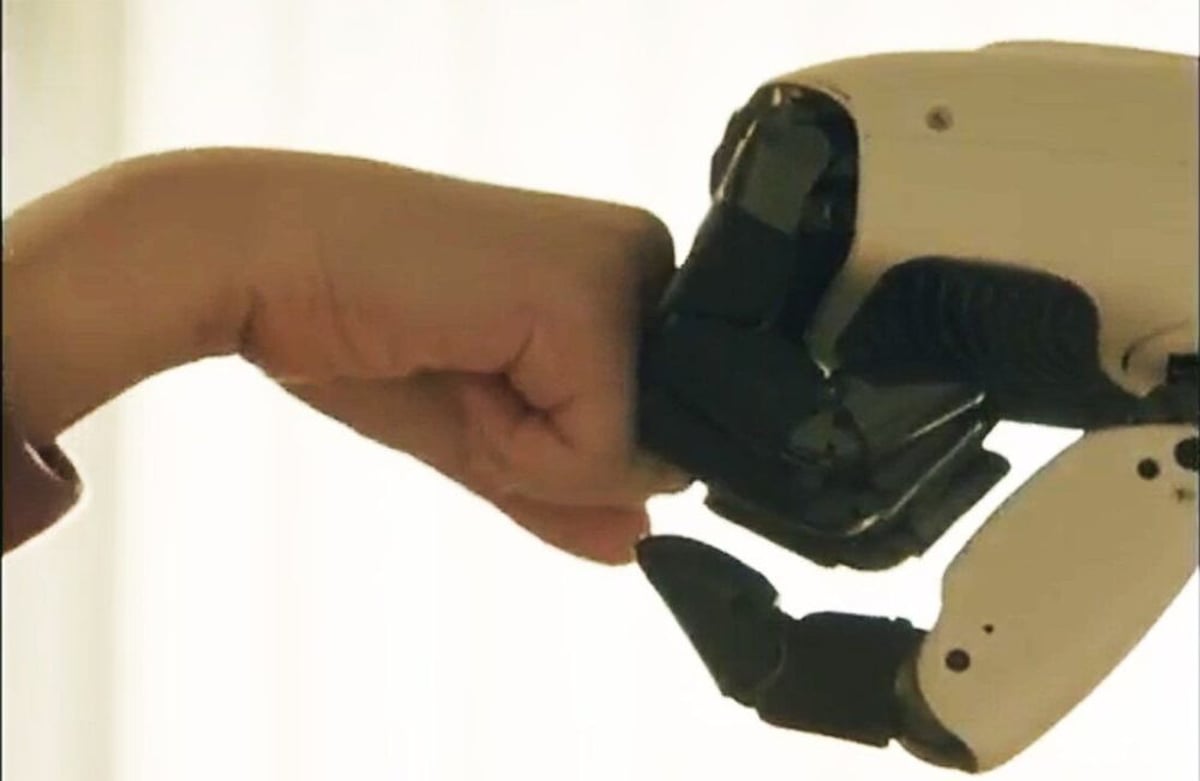
The real technical story here is in those arms. LG says they're equipped with motors that give the robot seven degrees of freedom, which is robotics speak for the ability to move in multiple directions like a human arm would. Each hand has five individually actuated fingers, meaning the robot can theoretically grip and manipulate objects with the kind of dexterity that actually matters for real household tasks. One of the teaser images appears to show CLOiD grabbing a towel, which might sound simple until you realize most home robots can't do that yet.
Beyond the physical design, LG packed CLOiD with a decent amount of smarts. Inside the robot's head is a dedicated chipset running voice interaction, navigation sensors, a camera, a speaker, and a display for what the company calls "expressive communication." That last part is important because it hints at LG's focus on making the robot feel less like a tool and more like a household assistant. The company's been working on something called "Affectionate Intelligence," which LG previously described as AI designed to "better understand and empathize with customers." That's marketing speak, sure, but it shows LG's thinking about how the robot interacts with people, not just what it can physically do.
This is a meaningful pivot for LG in the home robotics space. The company's been dabbling in this category for years, but nothing has really stuck commercially. The two-wheeled model from last year, which one reviewer described as "kinda cute and kinda useless," showed that LG understood the opportunity but wasn't ready to deliver the actual functionality consumers need. CLOiD feels like a step toward addressing that gap.
The timing makes sense too. Home robotics is finally moving beyond novelty. Companies like Tesla with Optimus, Boston Dynamics, and others are showing robots that can actually manipulate objects and learn tasks. Consumer interest is building. There's real money being poured into the space, and every major electronics manufacturer knows they need a play in home robotics if they want to be relevant in the next decade. For LG, with its history in home appliances and consumer electronics, home robots are kind of a natural extension.
We're still in the dark about some pretty crucial details though. We don't know how fast CLOiD moves, what its battery life looks like, how much it costs, or even what it really looks like below the shoulders. We don't have concrete examples of what tasks it can actually handle beyond the towel grab. And most importantly, we don't know if it can do multiple tasks reliably or if it'll be another expensive proof-of-concept that looks cool at trade shows but never ships at scale.
But here's why this matters: CLOiD signals that LG is serious about building a real home robot, not just a gimmick. The engineering work on those articulated arms with individual finger control isn't trivial. The decision to add all that sensor hardware and processing power shows the company is thinking about actual autonomous operation. And the focus on AI for empathy and understanding suggests LG isn't just trying to build a mechanical arm, but an actual household companion.
We'll have to wait until CES in January to see the whole picture. That's when LG plans to fully reveal CLOiD and, hopefully, show it actually doing something useful around a house. If it works half as well as LG's marketing implies, it could be a real contender in the increasingly crowded home robotics market.
CLOiD represents a real turning point for LG's robotics ambitions. After years of experimental home robots that looked nice but couldn't actually do anything practical, LG is finally building something with genuine hardware capabilities - real arms, real hands, real dexterity. Whether it lives up to the hype when it hits the stage at CES remains to be seen, but the engineering here suggests LG is serious about competing in what's about to become one of consumer tech's most competitive spaces. For anyone watching the home robotics race, CLOiD is worth paying attention to.