At CES this week, Roborock has finally answered the market's biggest call: a robot vacuum with a motorized roller mop. The Qrevo Curv 2 Flow marks the company's entrance into the roller mop trend that's been reshaping the cleaning robot category. After falling behind competitors, Roborock is doubling down on wet-cleaning performance with a self-cleaning system and AI-powered mess detection designed to handle both dry and wet messes in a single pass.
Roborock just made a power move at CES, announcing its first robot vacuum equipped with a motorized roller mop. The Qrevo Curv 2 Flow is the company's answer to a market trend it's been slow to capitalize on. While competitors have been cleaning up with roller mop models, the world's largest robot vacuum maker finally has something to show in this category.
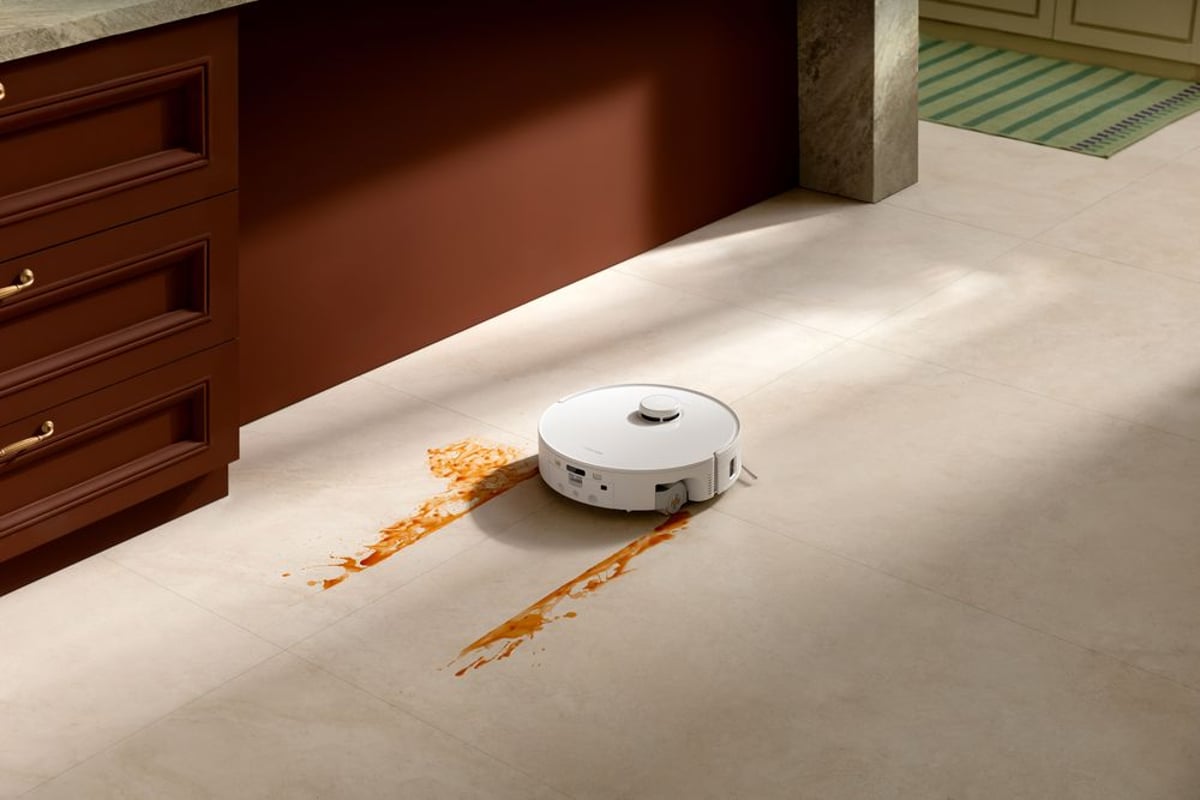
The Flow isn't just any mop setup. The motorized roller spins at 220 rpm with 15 Newtons of downward pressure, making wider passes across your floors than traditional oscillating mop pads. Roborock claims this extra-wide mop head tackles more surface area in one pass, which means faster cleaning in theory. The self-cleaning system uses eight water jets and a built-in scraper, so you're not manually rinsing mop pads between cleanings.
What makes this compelling is how Roborock has engineered around the obvious problem: keeping a wet mop from destroying your carpets. The Flow has a roller shield that automatically activates when it detects carpet, pulling the mop up to prevent water damage. The mop can also extend from the bot's body to reach baseboards and edges, which addresses a real-world complaint many owners have.
The vacuum itself packs 20,000Pa of suction and uses the company's DuoDivide anti-tangle brush system. The real innovation, though, sits in the AI-powered DirTect feature. It identifies what kind of mess it's encountering and adapts on the fly. Detect dirt? Boost the suction. Spot a wet spill? Switch to mop-only mode automatically. This kind of mess-specific adaptation has become the differentiator in this market, and Roborock needed to get this right.
Contextually, Roborock's current flagship Saros line handles mopping through either spinning pads or the company's VibraRise system, which vibrates to simulate scrubbing motions. The Qrevo line sits in the midrange, so this roller mop placement makes strategic sense. It's a move to shore up what's been Roborock's weakest competitive position as the roller mop trend has accelerated across the industry.
The dock design stays true to the Curv line's curved aesthetic, but it's been engineered with wet-cleaning in mind. Hot water cleans the mop with warm-air drying to prevent odor buildup, a feature that's become table stakes in this category. The bin auto-empties into a dust bag that holds enough for 65 days of dirt before you need to swap it out.
Connectivity is modern and expected here. The Qrevo Curv 2 Flow supports Matter, meaning seamless integration with Apple Home, plus voice control through both Amazon Alexa and Google Home. For the smart home crowd, this removes friction.
Pricing puts it at $999 retail, but Roborock is kicking off with an early-bird price of $849 for January 19th launch. That's aggressive positioning that signals the company views this launch as mission-critical for defending market share. Competitors in the roller mop space have been stealing mindshare, and Roborock needed to respond before the gap widened further.
The Qrevo Curv 2 Flow represents Roborock acknowledging a market reality it couldn't ignore anymore. The roller mop trend has moved from niche to mainstream, and the market leader can't afford to cede that category to scrappier competitors. With AI-powered mess detection, a hot-water cleaning dock, and aggressive launch pricing, Roborock is making a calculated bet that it can recapture mindshare in the mopping space. The real question isn't whether this product is competitive—it clearly is. It's whether January 19th launch can close the momentum gap that's built up while Roborock was focused elsewhere.