Apple is drawing a new line in the sand with iOS 27, and not everyone's going to like where it lands. The company's latest mobile operating system brings a wave of AI-powered Siri enhancements, but only certain iPhone models will support the full feature set. It's a familiar pattern for Apple - push hardware requirements forward to enable new capabilities - but this time the stakes feel higher as AI becomes table stakes in mobile computing.
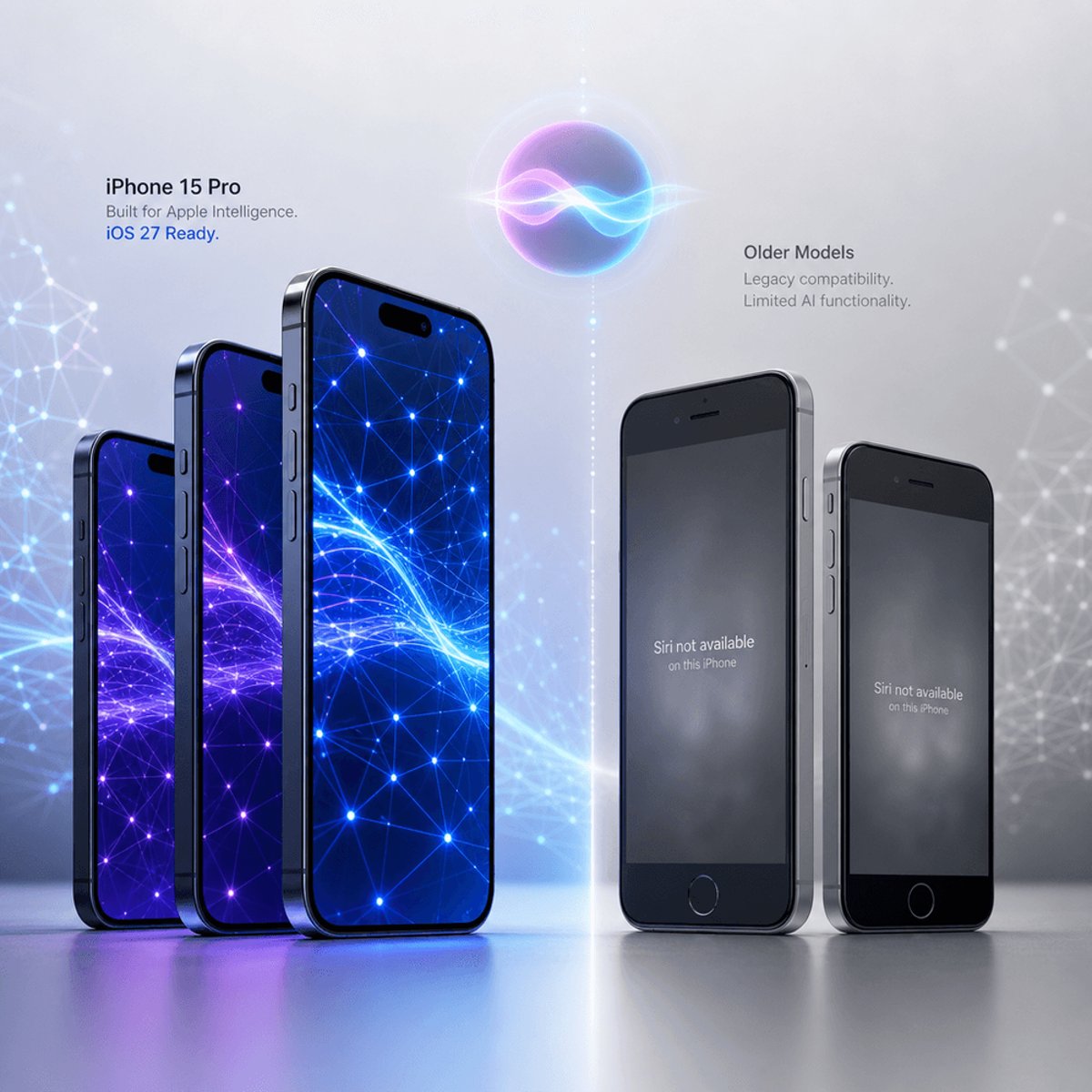
Apple just confirmed what many suspected - iOS 27's most compelling features won't reach every device that can technically run the operating system. The split creates a two-tier ecosystem: iPhones with full AI-powered Siri capabilities, and those relegated to legacy functionality.
This isn't Apple's first rodeo with feature fragmentation. The company has historically gated advanced capabilities behind newer hardware, from Apple Intelligence features requiring A17 chips to computational photography demanding specific image signal processors. But the iOS 27 divide feels different because it's about Siri - the voice assistant that's been a core iPhone feature since 2011.
The compatibility split likely comes down to neural processing power. Modern AI workloads demand serious computational muscle, particularly for on-device processing that Apple has championed for privacy reasons. Older iPhones simply lack the neural engine horsepower to run large language models locally without draining batteries or causing thermal throttling.
Industry observers have been tracking Apple's AI hardware requirements closely since the company announced its pivot toward on-device intelligence. The strategy makes sense from a privacy perspective - keeping personal data on the device rather than sending it to cloud servers. But it also means users need relatively recent hardware to participate in the AI revolution.
The timing is particularly interesting given the competitive landscape. Google has been aggressively rolling out AI features across its Pixel lineup, while Samsung has made Galaxy AI a centerpiece of its flagship marketing. Apple can't afford to fall behind in the AI race, but it also can't compromise on the privacy-first approach that differentiates its ecosystem.
For consumers, the calculation is straightforward but potentially expensive. Anyone with an iPhone that doesn't support full iOS 27 features faces a decision: stick with current hardware and accept limited AI capabilities, or upgrade to a newer model that can handle the processing demands. Given that flagship iPhones now start at $799 and climb past $1,199 for Pro Max models, that's not a trivial consideration.
The fragmentation also raises questions about Apple's device support strategy. The company has historically been praised for supporting older devices longer than Android competitors, with iOS updates reaching phones five or six years old. But if those older devices can only access a subset of features, the value proposition diminishes. You might have the latest iOS version number, but you're missing the capabilities that make it meaningful.
Developers face their own complications. Building apps that leverage iOS 27's advanced Siri features means potentially excluding users on older hardware. That creates tough choices about feature development and user experience consistency across the install base.
The situation mirrors broader industry trends around AI hardware requirements. As machine learning models grow more sophisticated, they demand more computational resources. Companies are betting that consumers will upgrade devices to access AI features, but it remains unclear whether that bet will pay off in a market where upgrade cycles have lengthened considerably.
Apple's approach also highlights the tension between innovation and accessibility. The company wants to push AI capabilities forward, but doing so inevitably leaves some users behind. It's the classic technology dilemma - move fast enough to stay competitive, but not so fast that you fragment your user base beyond recognition.
The iOS 27 compatibility split represents more than just a technical limitation - it's a preview of how AI will reshape consumer technology expectations. As machine learning becomes central to user experience rather than a nice-to-have feature, hardware requirements will increasingly dictate who gets access to cutting-edge capabilities. For Apple, the challenge is maintaining its reputation for long device support while pushing AI innovation forward. For users, it's deciding whether advanced Siri features are worth the upgrade cost. Either way, the days of uniform feature sets across iOS devices appear to be ending, replaced by a tiered system where AI capabilities separate the haves from the have-nots.