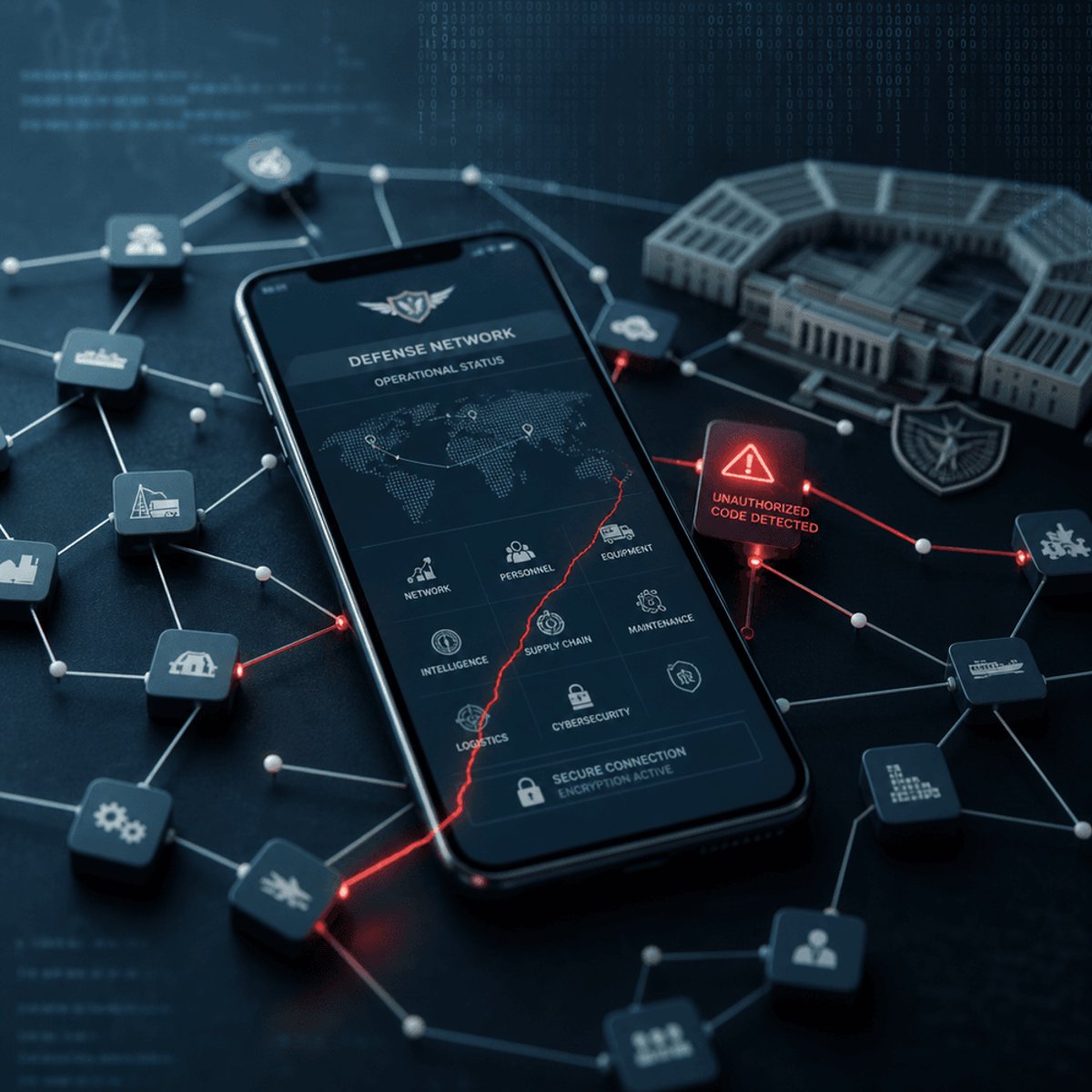
A groundbreaking security analysis has uncovered a significant vulnerability in apps marketed to US service members - more than one in eight applications contain code originating from Chinese and Russian firms, some from nations the Pentagon officially designates as adversaries. The findings raise urgent questions about supply chain security in military-focused software and expose potential surveillance vectors that could compromise national security operations.
The US military just discovered it has a serious software problem hiding in plain sight. A comprehensive security analysis has revealed that apps specifically designed for American troops are riddled with code from Chinese and Russian software firms - some operating in countries the Pentagon officially labels as adversaries.
The investigation, reported by Wired, represents the first systematic examination of military app supply chains. What researchers found should alarm anyone concerned about national security: more than one in eight applications marketed to service members contain foreign code dependencies that create potential surveillance backdoors.
This isn't about consumer apps that soldiers happen to use. These are applications explicitly built for military audiences - fitness trackers for PT requirements, deployment communication tools, benefits calculators, and operational planning utilities. Each one represents a potential intelligence gathering opportunity for adversarial nations.
The security implications cut deeper than most software vulnerabilities. Military personnel use these apps while accessing sensitive networks, communicating about deployments, and managing classified information systems. Code originating from foreign entities - particularly those in nations actively engaged in cyber operations against the US - creates vectors for data exfiltration that bypass traditional security perimeters.
What makes this particularly troubling is how the code got there. Modern app development relies heavily on third-party libraries, open-source components, and software development kits from vendors worldwide. Developers often don't realize they're incorporating code with ties to foreign entities - it's buried several layers deep in the dependency chain. A fitness app might use an analytics library that itself relies on a mapping component maintained by a Chinese firm.
The Department of Defense has spent years warning about supply chain security risks in hardware - particularly concerns about Chinese-manufactured chips and telecommunications equipment. But software supply chains have received far less scrutiny, even though they present equally serious risks. This analysis exposes that blind spot in dramatic fashion.
Cybersecurity experts have long warned about the risks of foreign code in sensitive applications. The issue parallels concerns that led to bans on Huawei equipment and restrictions on TikTok for government devices. But while those high-profile cases grabbed headlines, the ecosystem of military-focused apps continued growing without equivalent oversight.
The timing couldn't be worse. Tensions with China over Taiwan and ongoing cyber operations attributed to Russian intelligence services have elevated concerns about digital espionage. Meanwhile, the Pentagon is pushing rapid modernization initiatives that rely heavily on commercial software and mobile applications. This analysis suggests those efforts may be inadvertently expanding the attack surface.
For app developers serving the military market, this represents a wake-up call about code provenance. Many legitimate American software companies don't actively audit their entire dependency stack or maintain software bill of materials (SBOM) documentation. The practice of simply pulling in convenient libraries without examining their origins has created security debt that's now coming due.
The National Security Agency and Cybersecurity and Infrastructure Security Agency have published guidance on software supply chain security, but enforcement remains inconsistent. Unlike defense contractors building weapons systems, app developers face minimal scrutiny about where their code originates - even when marketing directly to troops.
This investigation will likely accelerate calls for mandatory SBOM requirements and stricter vetting of apps distributed through military channels. The Pentagon may need to establish an approval process similar to what exists for hardware procurement, examining not just the app itself but every component and dependency it contains.
What remains unclear is whether any of this foreign code has been actively exploited. The presence of Chinese or Russian code doesn't automatically mean espionage occurred, but it creates the opportunity - and in the security world, opportunity is threat enough. The Pentagon now faces the uncomfortable task of determining which apps pose actual risks versus which simply reflect the realities of global software development.
The revelation that military apps contain code from adversary nations exposes a critical vulnerability in modern defense operations. As the Pentagon increasingly relies on commercial software and mobile applications for everything from logistics to communications, the lack of supply chain oversight creates intelligence gathering opportunities for foreign powers. This investigation will likely force a reckoning about software procurement standards and dependency vetting - mirroring the scrutiny already applied to hardware. For the thousands of service members who've been using these apps, the bigger question is what data may have already been compromised and what operational security has been inadvertently exposed through code they never knew was foreign.