Raspberry Pi just launched its most premium keyboard computer yet. The new Raspberry Pi 500 Plus ships today at $200 with mechanical switches, built-in SSD storage, and RGB lighting - marking the company's boldest push into enthusiast territory. It costs more than double the standard $90 model, but packs pro-grade features that could reshape the single-board computer market.
Raspberry Pi just made its biggest play yet for the enthusiast market. The company's new Raspberry Pi 500 Plus, available now for $200, transforms their keyboard computer concept from budget DIY project into something that could sit on any power user's desk.
The standout feature? It's the first Raspberry Pi keyboard to include an M.2 2280 SSD slot alongside the traditional SD card reader. The 256GB SSD comes pre-installed, but you can swap it out for larger storage without voiding anything. According to Raspberry Pi's announcement, the company designed the SSD compartment to be "easily accessible" - a refreshing change from laptops that require full teardowns for storage upgrades.
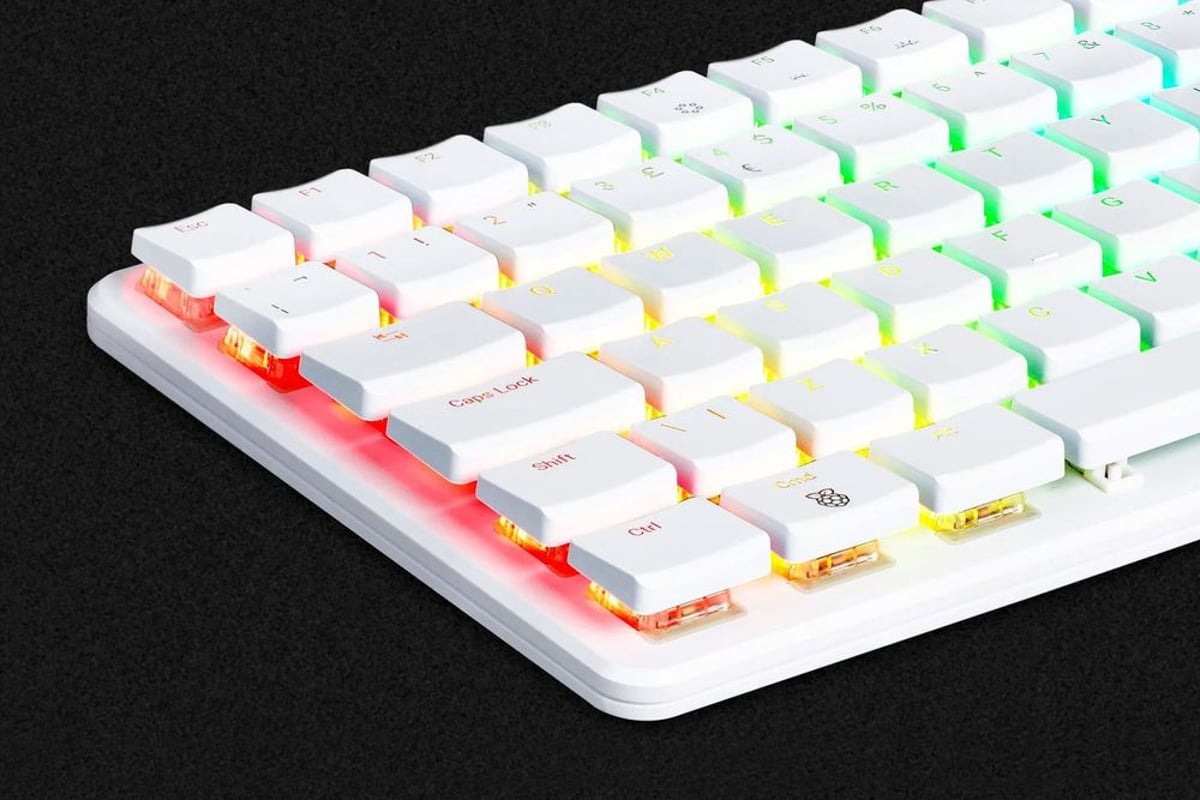
The typing experience gets a major overhaul too. Gone are the membrane switches from the standard Pi 500. Instead, you get Gateron KS-33 Blue mechanical switches that'll satisfy anyone who's spent time in r/MechanicalKeyboards. The custom low-profile keycaps feature a spray-painted finish with laser etching that lets programmable RGB lighting shine through each key.
But here's where it gets interesting for the maker community. The 500 Plus runs QMK open source firmware on a dedicated RP2040 microcontroller just for the keyboard functions. That means full programmability - custom macros, lighting patterns, even complete key remapping. It's like having a premium gaming keyboard that happens to contain an entire ARM computer.
The performance bump is substantial. While keeping the same ARM Cortex-A76 quad-core processor from the Pi 5, Raspberry Pi doubled the RAM to 16GB of LPDDR4x-4267. That puts it in legitimate desktop replacement territory for many users, especially those running multiple browser tabs or development environments.
At $200, the 500 Plus costs more than twice the standard Pi 500's $90 price, but the market positioning makes sense. Custom mechanical keyboards alone often cost $150-300, and you're getting a full computer thrown in. The company also offers a "Desktop Kit" version for $220 that includes power supply, cables, and a mouse.
The timing feels deliberate. As single-board computers have evolved from hobbyist curiosities into legitimate computing platforms, Raspberry Pi is betting there's demand for premium versions. The standard Pi boards still serve the education and maker markets perfectly, but the 500 Plus targets users who want daily-driver performance in a unique form factor.
Connectivity remains robust with Wi-Fi 5, Bluetooth, gigabit Ethernet, dual micro HDMI ports, three USB-A ports, and USB-C power. The company wisely kept all the ports that made previous models popular while adding the premium touches that justify the price jump.
For the mechanical keyboard enthusiast community, this represents something genuinely new. You can't buy another ARM-powered mechanical keyboard with this level of customization and compute power. It's either Raspberry Pi's 500 Plus or building something yourself from scratch.
The bigger question is whether this creates a new product category. If the 500 Plus succeeds, expect other single-board computer makers to follow with their own premium keyboard computers. The combination of mechanical switches, programmable firmware, and desktop-class performance in a keyboard form factor could become the next frontier in computing hardware.
The Raspberry Pi 500 Plus represents a fascinating evolution in single-board computing. By combining enthusiast-grade mechanical switches, programmable RGB lighting, and genuine desktop performance in a keyboard form factor, Raspberry Pi is creating something entirely new. At $200, it's not cheap, but for users who want the flexibility of ARM computing with the tactile satisfaction of premium mechanical keys, there simply isn't another option. Whether this spawns a new category of premium keyboard computers or remains a niche curiosity, the 500 Plus shows Raspberry Pi isn't content to stay in the education market forever.