RJ Scaringe isn't content with just revolutionizing electric vehicles. The Rivian CEO just unveiled Mind Robotics, a new startup that he says will completely rethink how we approach robotics and automation. In a move that echoes his contrarian approach to building EVs, Scaringe is betting the robotics industry has been heading in the wrong direction, and he's putting his reputation on the line to prove it.
Rivian's RJ Scaringe just became the latest high-profile tech CEO to make a bold play in robotics, but he's not following the playbook everyone else is using. The executive known for taking Rivian public during one of the most turbulent periods in EV history is now launching Mind Robotics with a provocative premise: the entire robotics industry is getting it wrong.
The timing is striking. While Tesla pushes forward with its humanoid Optimus robot and companies like Boston Dynamics refine increasingly sophisticated machines, Scaringe is suggesting there's a fundamental flaw in how the industry thinks about robotic systems. It's a classic Scaringe move - the same contrarian thinking that led him to build adventure-focused EVs when everyone else chased Tesla's luxury sedan playbook.
What exactly does Scaringe think the industry is missing? The details remain scarce, but his track record at Rivian offers clues. Rather than compete directly with Tesla on performance specs, Scaringe built vehicles around different use cases entirely - targeting outdoors enthusiasts and commercial fleets with purpose-built platforms. That same philosophy appears to be driving Mind Robotics, suggesting he sees an opportunity where others see a solved problem.
The robotics landscape Scaringe is entering looks nothing like the EV market he disrupted. Tesla's Optimus program leverages years of AI development from Full Self-Driving, while startups like Figure AI have raised hundreds of millions betting on humanoid form factors. Meanwhile, Google's DeepMind continues pushing the boundaries of AI-powered robotic control, and Amazon deploys increasingly sophisticated warehouse automation.
But Scaringe has navigated crowded markets before. When Rivian emerged from stealth in 2018, skeptics questioned whether the world needed another EV startup. The company's current market position - despite well-documented production challenges - proved there was room for a different approach. Mind Robotics appears to be betting on a similar gap in robotics.
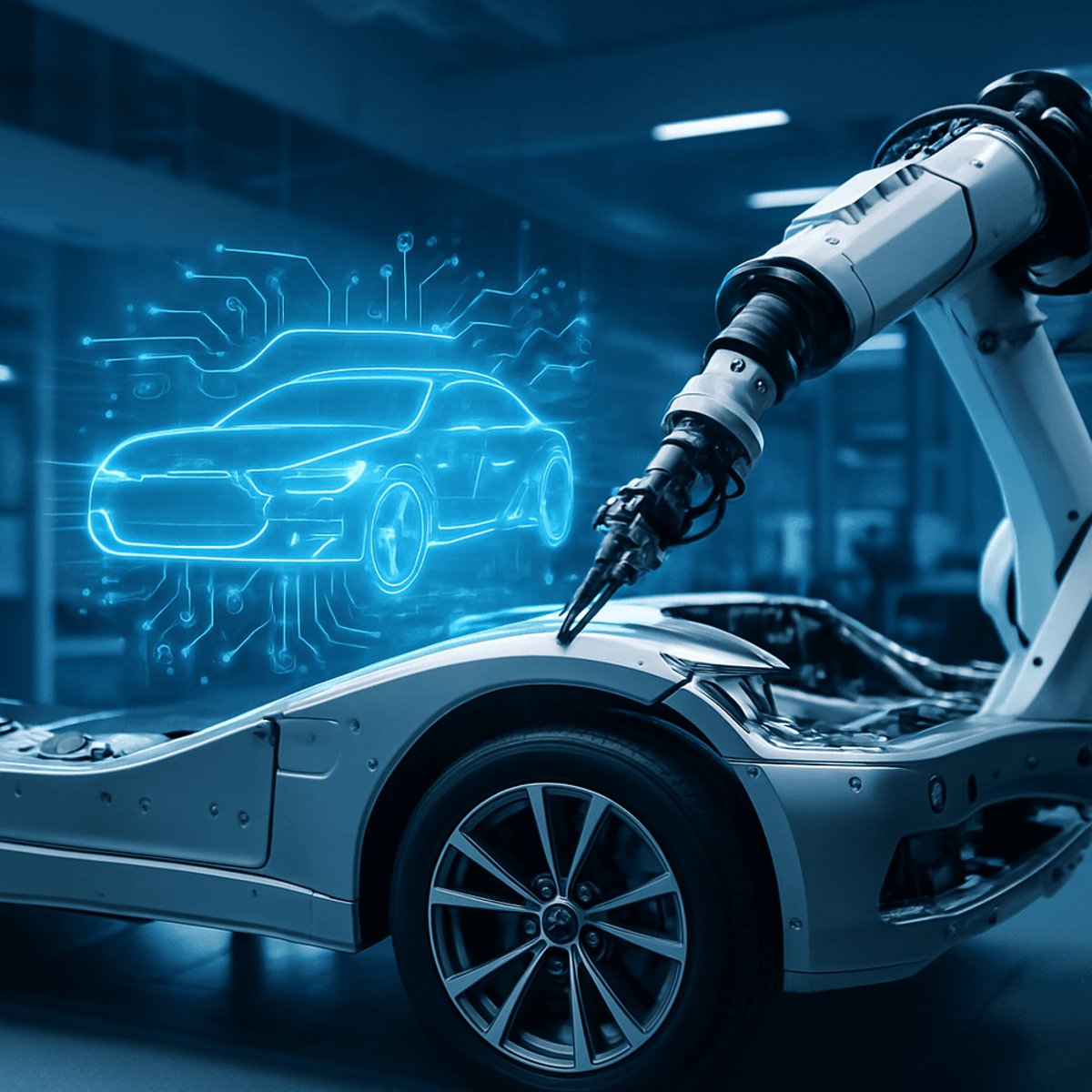
The convergence between automotive AI and general robotics creates natural synergies. Rivian has invested heavily in autonomous driving technology, computer vision, and real-time decision-making systems - all critical building blocks for advanced robotics. Scaringe's dual role could accelerate development in both directions, with learnings from factory automation feeding back into vehicle production.
Industry observers are already drawing parallels to other founder-led moonshots. When OpenAI CEO Sam Altman began exploring robotics applications for large language models, it signaled a broader convergence between AI capabilities and physical systems. Scaringe's move suggests similar conviction that current approaches miss critical opportunities.
The challenge for Mind Robotics will be execution. Building robots at scale requires different expertise than manufacturing vehicles, though both demand mastery of supply chains, manufacturing precision, and software integration. Rivian famously struggled with production ramp challenges, lessons that could prove valuable or cautionary depending on how Scaringe applies them.
What makes this launch particularly intriguing is the mystery around Mind Robotics' actual approach. Is Scaringe targeting humanoid robots, specialized industrial systems, or something entirely different? His criticism of industry norms suggests whatever Mind Robotics builds won't look like existing solutions. That could mean reimagining form factors, rethinking AI integration, or focusing on entirely different applications.
The robotics market is projected to exceed $200 billion by 2030, driven by labor shortages, advances in AI, and falling component costs. Every major tech company is placing bets - Microsoft through AI software, Amazon via warehouse automation, and Tesla with humanoid ambitions. Scaringe's entry adds another well-funded, visionary founder to an increasingly competitive landscape.
For Rivian shareholders, the news raises questions about focus and resource allocation. Scaringe remains CEO of the publicly-traded EV maker, which continues working toward profitability while ramping production of its R1T truck and R1S SUV. Running two hardware-intensive startups simultaneously is ambitious even by Silicon Valley standards, though Elon Musk's parallel ventures at Tesla, SpaceX, and elsewhere prove it's possible.
The real test will come when Mind Robotics reveals its first products. Until then, the startup exists primarily as Scaringe's bet that his outsider perspective on robotics - informed by years building complex electromechanical systems at scale - can spot opportunities incumbents have missed. It's worked before.
Scaringe's Mind Robotics launch signals a broader trend of cross-pollination between automotive AI and general robotics, with battle-tested founders betting their reputations that existing approaches leave room for disruption. Whether his contrarian vision proves as prescient in robotics as it did in EVs remains to be seen, but the move adds another high-stakes player to a market that's rapidly evolving from science fiction to commercial reality. For now, the robotics industry has a new challenger who thinks everyone else is building the wrong thing - and if Rivian taught us anything, it's that Scaringe's contrarian bets are worth watching.