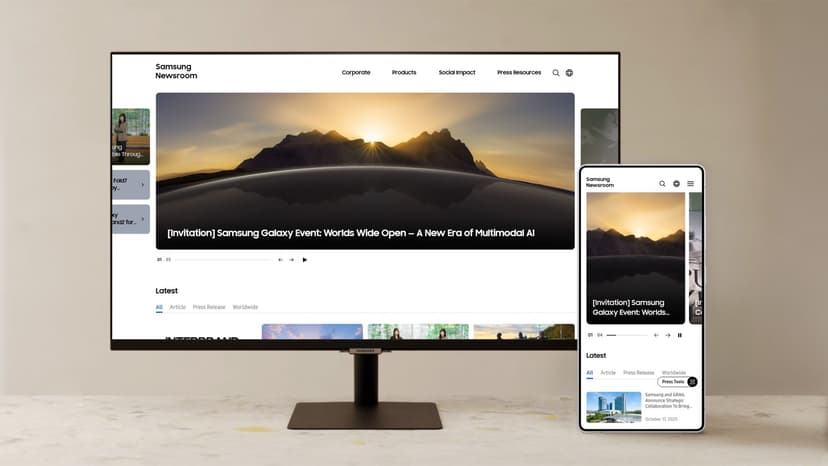
Samsung just unveiled a complete overhaul of its decade-old newsroom platform, transforming what was once a traditional corporate communications channel into a multimedia-driven experience powered by AI. The redesign signals how major tech companies are rethinking corporate storytelling in an era where visual content dominates and attention spans shrink.
Samsung is betting big on visual storytelling. The Korean tech giant just rolled out a comprehensive redesign of Samsung Newsroom, its official communications platform that's been running since 2015. But this isn't your typical corporate website refresh - it's a complete reimagining of how companies can engage with both media and consumers in 2025.
The most striking change hits you immediately: a dynamic content carousel that dominates the homepage, featuring horizontal slideshows packed with videos, shorts, and multimedia content. Users can now play videos directly without additional clicks, while hover interactions reveal quick text summaries for rapid content scanning. It's a stark departure from the text-heavy layouts that have dominated corporate communications for decades.
Samsung's timing couldn't be better. As traditional press releases lose their punch and journalists face increasing pressure to produce content faster, the company is essentially building a one-stop media shop. The new "Press Tools" quick menu bundles high-resolution images, videos, and full article text into single-click downloads - a feature that'll save journalists and content creators precious time during news cycles.
But here's where it gets interesting: every article now includes AI-powered summaries. While Samsung hasn't detailed which AI technology powers these summaries, the move reflects a broader industry trend toward automated content processing that we've seen from Microsoft with Copilot and Google with Bard integration across its platforms.
The search functionality received a major upgrade too, introducing tag-based and image-based search capabilities alongside auto-suggestions and keyword highlighting. Users can sort results by "Latest" or "Title" while exploring content through themed browsing - features that mirror consumer expectations shaped by social media algorithms.
What makes this particularly noteworthy is how Samsung is positioning itself against competitors in the attention economy. While Apple maintains its minimalist approach to corporate communications and Google focuses heavily on developer-centric content, Samsung is going all-in on multimedia storytelling that works equally well for tech journalists and everyday consumers.
The platform now seamlessly adapts visual content across smartphones, tablets, and desktop PCs - a technical achievement that sounds simple but requires significant backend engineering. This responsive design philosophy aligns with Samsung's hardware ecosystem strategy, where consistent experiences across devices drive brand loyalty.
Industry observers note this redesign comes as corporate communications teams face unprecedented challenges. Traditional media coverage is shrinking while demand for authentic, engaging content explodes. Companies that can tell their stories effectively through multiple formats and channels gain a significant advantage in mind share and market positioning.
The new Samsung Newsroom also incorporates content filtering for different audience types - feature articles for consumers, press releases for media, and regional news from Samsung offices worldwide. This segmentation strategy acknowledges that one-size-fits-all corporate communications no longer work in today's fragmented media landscape.
Perhaps most importantly, Samsung is treating this as just the beginning. According to the company, this redesign "marks the beginning of a broader transformation" focused on delivering "impactful stories about the company, its products and its technologies in new, differentiated ways."
That forward-looking statement suggests we might see Samsung experiment with emerging formats like interactive content, AR experiences, or even real-time collaboration tools for journalists. If successful, this approach could become the blueprint for how major tech companies communicate in an increasingly crowded and noisy digital environment.
Samsung's newsroom redesign represents more than a visual refresh - it's a strategic bet on multimedia storytelling as the future of corporate communications. By integrating AI summaries, streamlined media tools, and video-first design, Samsung is positioning itself ahead of competitors who still rely on traditional press release formats. The real test will be whether this approach drives deeper engagement from both journalists and consumers, potentially setting a new standard for how tech companies communicate in an increasingly crowded digital landscape.