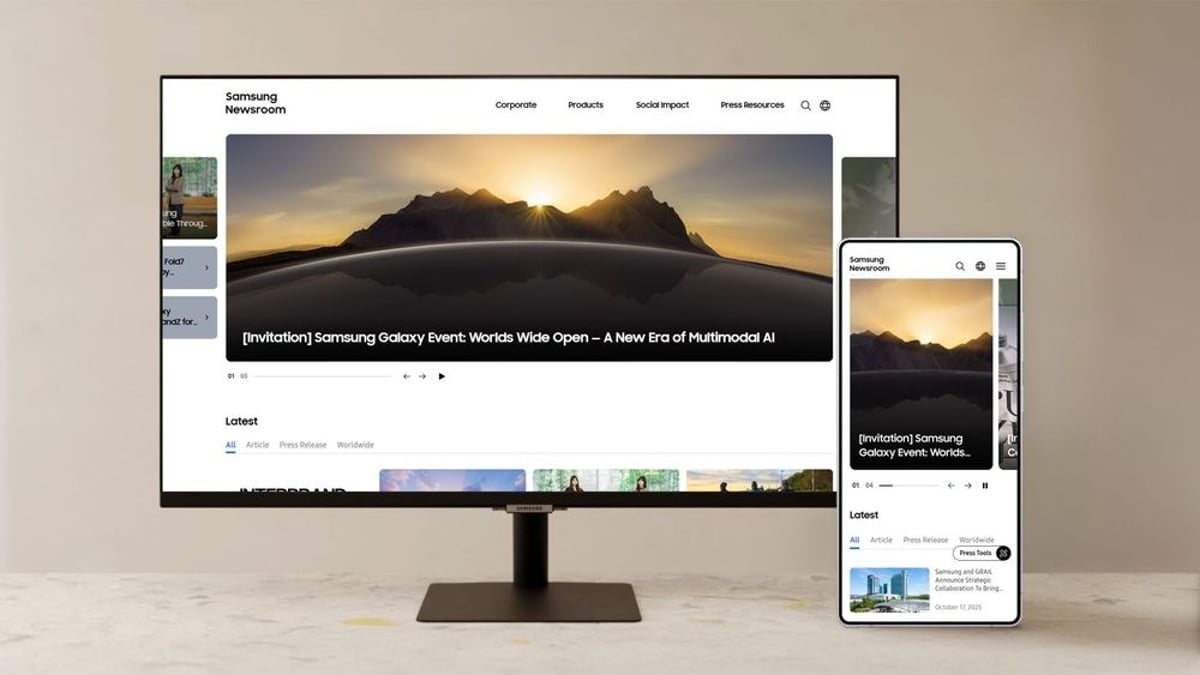
Samsung just reinvented how tech companies talk to the world. The electronics giant unveiled a complete overhaul of its Samsung Newsroom, ditching text-heavy layouts for a video-first platform that integrates AI summaries and advanced search capabilities. The move signals a broader shift in corporate communications as companies race to capture shrinking attention spans with visual storytelling.
Samsung just threw down the gauntlet in corporate communications. The tech giant's complete redesign of Samsung Newsroom isn't just a facelift - it's a fundamental reimagining of how major corporations engage with media and consumers in an attention-economy world.
The transformation centers on visual storytelling, with the new platform featuring an expansive multimedia carousel that plays videos directly without additional clicks. According to the official announcement, users can now browse content by theme while getting quick text summaries just by hovering over carousel items.
But the real innovation lies in Samsung's integration of AI throughout the user experience. Each article now features AI-powered summaries designed to help readers quickly grasp key points - a direct response to declining attention spans and information overload that plague modern media consumption.
"The revamp aligns with shifting communication trends, reshaping the user experience around images and video to enhance message clarity and impact," Samsung stated in the announcement. This isn't just corporate speak - it reflects a seismic shift happening across tech communications.
The timing couldn't be more strategic. While competitors like Apple and Google maintain relatively traditional newsroom formats, Samsung's betting that the future of corporate communications lies in the same visual-first approach that's transformed social media and consumer content.
The platform's enhanced functionality goes beyond aesthetics. Samsung introduced a dedicated "Press Tools" menu that consolidates resources journalists actually use, plus one-click downloads for high-resolution images, videos, and full article text. This streamlined approach addresses a persistent pain point for media professionals who often struggle to quickly access quality assets from corporate sources.
Search capabilities received a major upgrade too, with new tag-based and image-based search functions. Auto-suggestions, keyword highlighting, and flexible sorting options create a more intuitive discovery experience that mirrors consumer expectations set by Google and other modern search platforms.
The redesign also reflects Samsung's global ambitions. The platform now filters content from Samsung's regional offices worldwide, creating a unified but localized experience for international audiences. This consolidation gives Samsung a significant advantage in coordinating global product launches and corporate messaging.
Since launching in 2015, Samsung Newsroom has served as the company's primary communication channel. But this transformation represents more than technological improvement - it's a strategic positioning move as Samsung competes not just in hardware markets but in the attention economy itself.
The platform's seamless adaptation across smartphones, tablets, and PCs ensures consistent experience regardless of how users access content. In an era where mobile-first design often compromises desktop functionality, Samsung's commitment to cross-platform optimization signals sophisticated understanding of modern media consumption patterns.
What makes this particularly noteworthy is Samsung's willingness to invest heavily in corporate communications infrastructure while many companies are cutting marketing budgets. The move suggests Samsung sees direct-to-consumer and direct-to-media communication as increasingly critical competitive advantages.
The AI integration throughout the platform positions Samsung ahead of the curve as artificial intelligence becomes table stakes in content creation and curation. While other tech giants talk about AI integration, Samsung's actually implementing it in practical ways that solve real user problems.
Samsung's newsroom redesign isn't just about prettier interfaces - it's a strategic bet on the future of corporate communications. By integrating AI, prioritizing visual content, and streamlining media access, Samsung positions itself as a communications innovator while competitors play catch-up. The real test will be whether this investment translates to better media coverage and stronger consumer engagement. But for now, Samsung's shown that even corporate communications can be disrupted when companies think like startups rather than legacy institutions.