Slack just rebuilt Slackbot from the ground up as a personalized AI assistant, moving way beyond simple reminders to handle complex workplace tasks. The upgrade is already live for 70,000 Salesforce employees and will roll out to everyone by year-end, fundamentally changing how teams search through conversations and coordinate work.
Slack just dropped the biggest Slackbot upgrade since the platform launched, and it's already reshaping how 70,000 people work at Salesforce. The company rebuilt its humble notification bot into a full-blown AI assistant that can organize product launches, decode company jargon, and find that elusive document from last week's meeting with a simple conversational ask.
"Slackbot today is fairly rudimentary," Rob Seaman, Slack's senior vice president of enterprise product, told The Verge. "But what we've done is we've actually rebuilt it from the ground up as a personalized AI companion." That's not marketing speak - they literally started over.
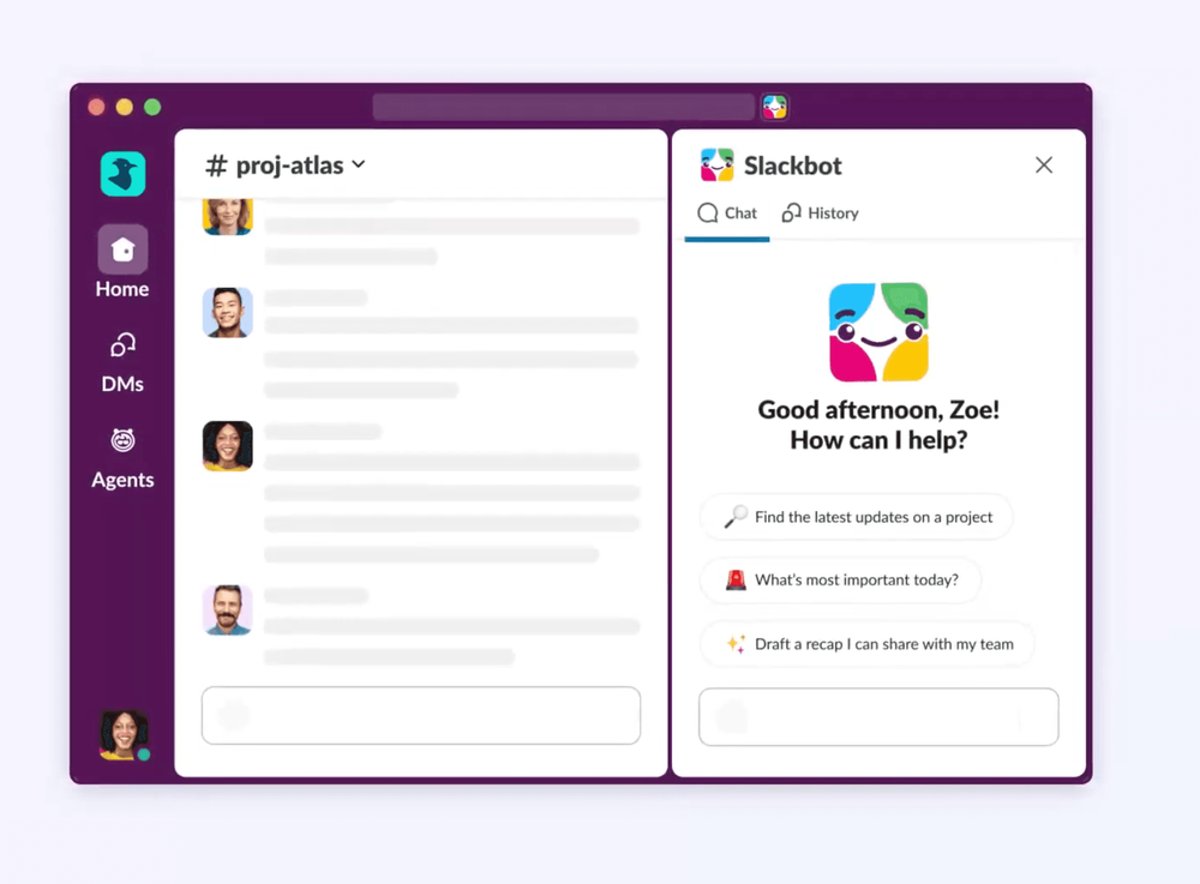
The new Slackbot appears as an icon next to the search bar, opening a ChatGPT-style panel where you can ask "What are my priorities for today?" or "Find the latest updates on the Peterson project." But here's where it gets interesting: it's not just pulling from a knowledge base. The AI assistant draws from your actual conversations, shared files, and workspace activity to provide genuinely personalized responses.
In demos shown to The Verge, Slack's AI can organize an entire product launch plan inside a Canvas by pulling information from multiple channels, then help create a social media campaign that matches your brand's tone. It's the kind of cross-platform coordination that usually takes hours of manual digging through message threads.
The real game-changer is natural language search. Instead of hunting for the right keyword, you can ask Slackbot "Find me the document that Jay shared in our last meeting" and actually get results. It can also tap into Microsoft Outlook and Google Calendar to coordinate meetings, turning Slack into more of a workspace hub than just a messaging app.
This builds on Slack's existing AI features that can summarize threads and channels and decode company jargon. "We'll keep putting those little touches there where they make sense, to save users a click," Seaman said about future AI integrations.
The privacy setup is worth noting: companies can opt out entirely, but individual users within a workspace can't pick and choose. All AI processing happens through Amazon Web Services' virtual private cloud, "meaning that no data leaves the firewall, no data is used in the training of the models at all," according to Seaman.
Timing matters here. While Microsoft Teams has been pushing Copilot integration and Google Workspace rolled out Gemini features, Slack's approach feels more conversational and contextual. Rather than feeling like you're talking to a generic AI, the new Slackbot knows your team's specific projects, communication patterns, and workflow.
The current pilot extends beyond Salesforce's internal deployment. Slack is testing with select customers before the full rollout hits everyone at the end of the year. That's a tight timeline for such a fundamental change to a platform used by millions of knowledge workers daily.
For workplace software, this represents a shift from AI as a feature to AI as the primary interface. Instead of learning new commands or navigating complex menus, teams can just ask their questions in plain English and get contextual answers from their actual work environment.
This isn't just another AI feature bolted onto existing software - Slack rebuilt Slackbot as a conversational interface for the entire workplace. With 70,000 Salesforce employees already using it and a year-end rollout planned, we're about to see if natural language can replace traditional software navigation for millions of knowledge workers. The real test will be whether teams actually adopt this new way of working or stick with familiar search and navigation patterns.