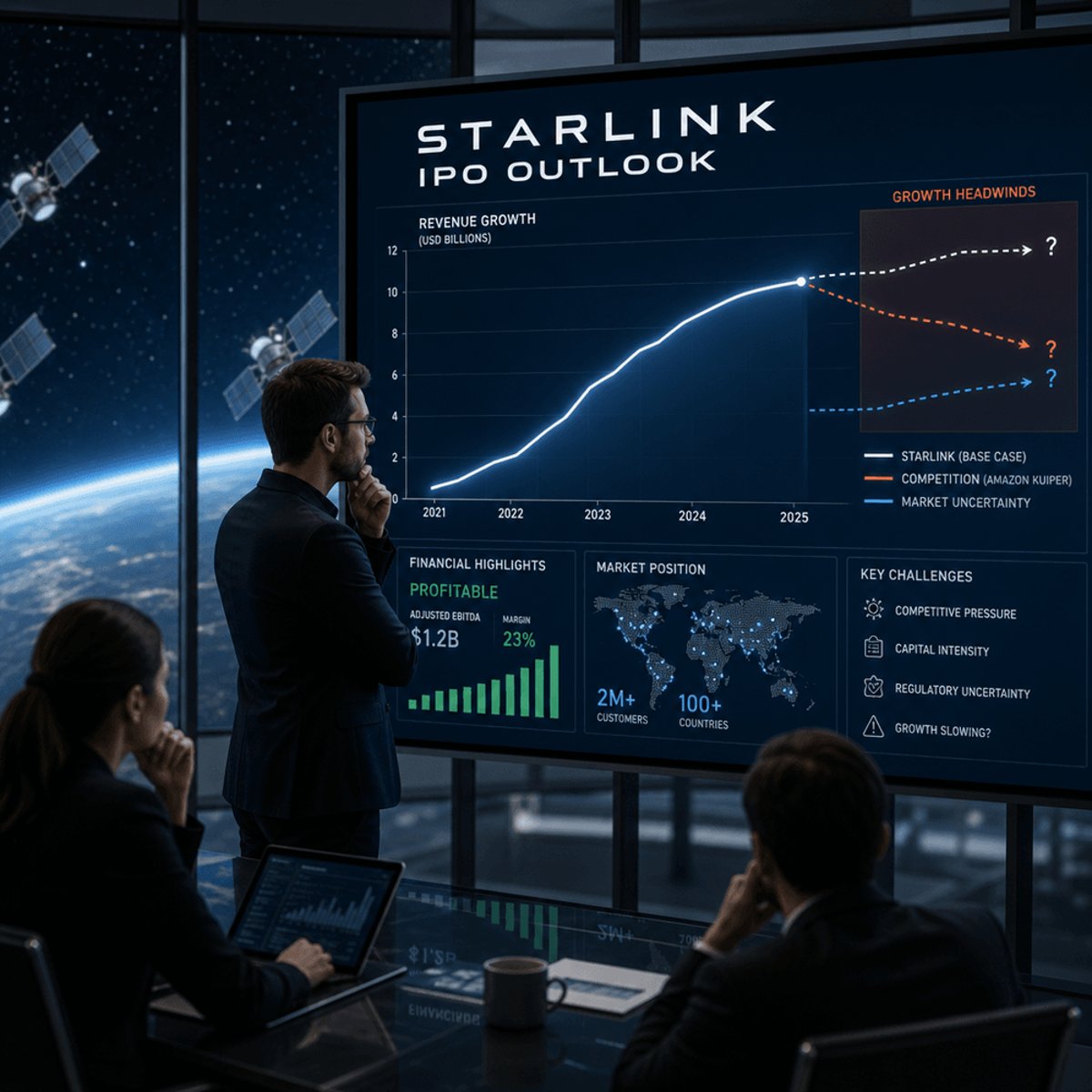
SpaceX is racing toward an IPO with a peculiar problem: its crown jewel is showing cracks. Starlink, the satellite internet service that's become the company's only profitable division, is hitting growth barriers just as SpaceX prepares to go public. The timing couldn't be more critical for a company that's relying on this single revenue stream to justify what could be one of the decade's biggest tech offerings.
SpaceX has spent years building toward this moment. The company's IPO plans hinge almost entirely on Starlink's ability to convince Wall Street that satellite internet isn't just viable but scalable. But according to recent analysis from CNBC, the numbers tell a more complicated story than the hype suggests.
Starlink has achieved something remarkable: it's the only SpaceX division that's actually profitable. While rocket launches and Starship development continue burning cash, the satellite internet service has been quietly generating positive margins. That's no small feat for a company that's launching thousands of satellites and building ground infrastructure across the globe.
But profitability alone doesn't guarantee a successful IPO. What investors really want to see is sustainable growth, and that's where Starlink is starting to stumble. The service has already captured most of the low-hanging fruit in rural America and remote locations where traditional broadband simply doesn't exist. Now it's facing the harder question: where does growth come from next?
The addressable market for satellite internet has always been narrower than SpaceX's valuation would suggest. Urban and suburban customers already have fiber and cable options that often deliver better speeds at lower prices. Starlink's sweet spot is people who literally have no other choice, and there are only so many of them willing to pay premium prices for satellite service.
Customer acquisition costs are climbing as Starlink moves beyond early adopters. The company initially attracted tech-savvy users in remote areas who were eager to ditch slow DSL connections. But expanding beyond that core base means competing directly with established ISPs who've spent decades building customer relationships and brand loyalty. That requires more marketing spend, more customer support infrastructure, and potentially lower prices to win market share.
Competition is heating up faster than SpaceX probably expected. Amazon is pushing ahead with Project Kuiper, its own satellite constellation that's designed to challenge Starlink's dominance. Traditional telecom companies are also improving rural broadband through government-subsidized fiber buildouts, which threatens to shrink Starlink's addressable market before the company can fully exploit it.
There's also the infrastructure reality that no one likes to talk about. Starlink needs to keep launching satellites to maintain and expand coverage, which means continuous capital expenditure. Each generation of satellites has a limited lifespan, so the company is essentially running on a treadmill where it needs to keep replacing hardware just to maintain service levels. That's a very different financial profile from software companies that can scale without proportional cost increases.
The regulatory environment adds another layer of complexity. Spectrum allocation, space debris concerns, and international licensing requirements all create friction that could slow Starlink's expansion plans. Several countries have already expressed concerns about allowing a U.S. company to dominate satellite internet infrastructure, which could limit growth in key markets.
For IPO investors, the calculus is tricky. Starlink is undeniably ahead of competitors and has proven it can operate profitably. But it's also a capital-intensive business with structural growth limitations that don't fit neatly into the high-growth tech narrative that commands premium valuations. The company is essentially asking investors to bet that it can maintain dominance in a niche market while somehow finding ways to expand that niche.
The timing of the IPO matters enormously. If SpaceX prices the offering based on Starlink's current profitability, it might find buyers. But if the valuation assumes the kind of exponential growth that investors have come to expect from Elon Musk ventures, there's a real risk of disappointment. The satellite internet market is real, but it's not infinite.
SpaceX's IPO story is ultimately a Starlink story, and that's both its strength and its vulnerability. The satellite internet service has proven it can generate profits in a market that didn't really exist five years ago, which is genuinely impressive. But the growth trajectory that justified SpaceX's sky-high private valuations is flattening just as public market investors prepare to scrutinize the numbers. The company has built something remarkable, but whether that translates into a compelling public equity story depends entirely on whether investors believe Starlink can break through its current constraints. Right now, the signals are mixed, and that uncertainty is going to make pricing this IPO a fascinating challenge.