When SpaceX goes public, not everyone celebrating will know what they actually own. Lower-tier SPV investors who bought into the rocket company through special purpose vehicles face a murky reality: hidden fees, payout delays stretching months past the IPO, and the genuine risk of fraud. According to Marina Temkin writing for TechCrunch, these investors won't discover their true holdings until post-IPO lock-up periods lift, exposing a largely unexamined corner of private market investing that could reshape how retail investors think about pre-IPO access.
SpaceX is hurtling toward its highly anticipated IPO, but a significant cohort of investors might not be celebrating just yet. Lower-tier SPV investors who gained exposure to Elon Musk's rocket company through special purpose vehicles are discovering an uncomfortable truth: they won't know what they actually own until well after the public debut.
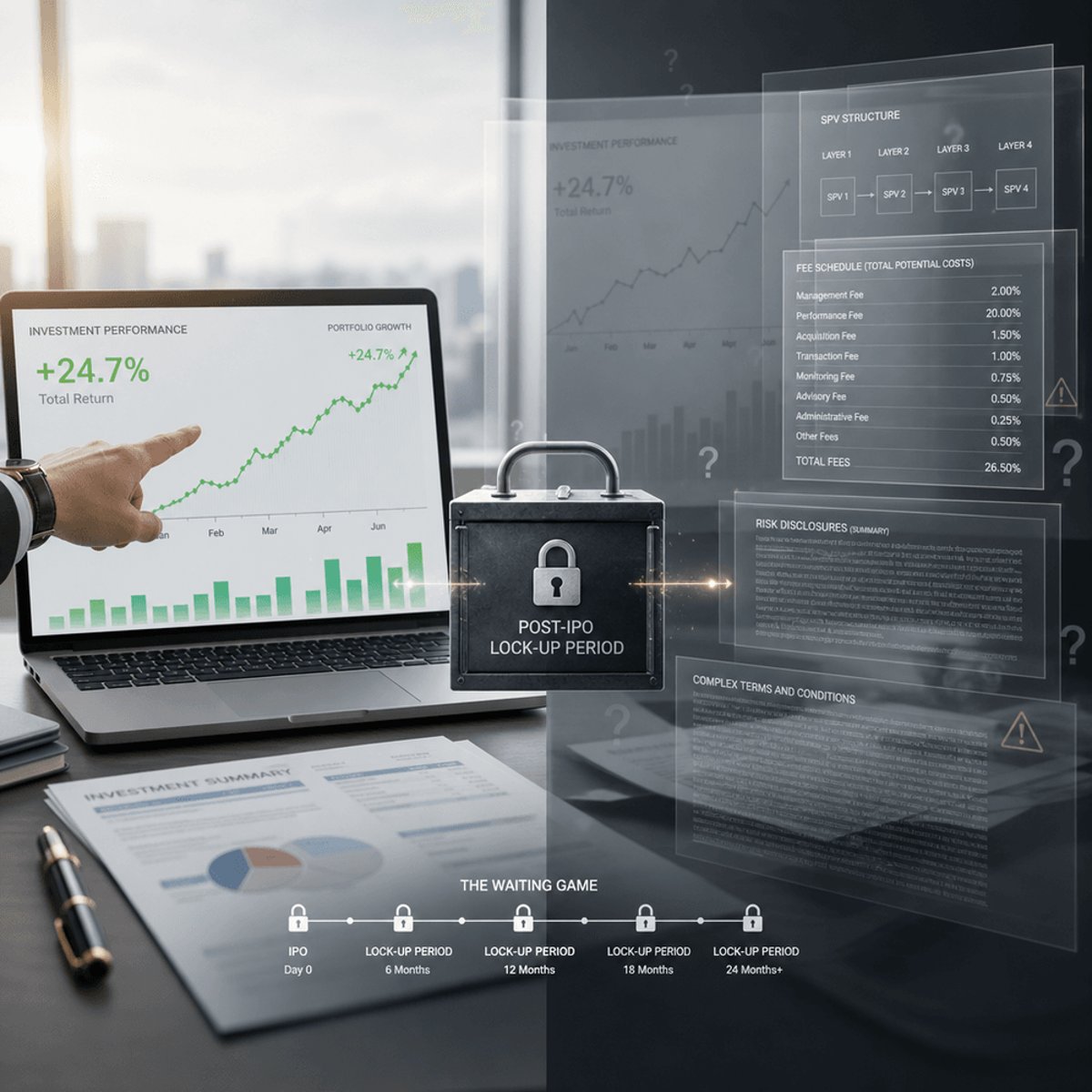
The issue centers on how SPVs operate in the murky world of secondary shares. According to TechCrunch's investigation, these investment vehicles layer fees and restrictions that remain largely invisible until lock-up periods expire, typically 90 to 180 days after an IPO. For investors who thought they were getting in on the ground floor of one of the most valuable private companies in history, the reality is far less transparent.
SPVs have exploded in popularity over the past five years as retail investors hungry for pre-IPO access piled into funds promising exposure to unicorns like SpaceX. These vehicles pool money from smaller investors to meet the minimum investment thresholds that companies like SpaceX demand. But the structure creates multiple layers of intermediaries, each potentially taking a cut that isn't always disclosed upfront.
The timing couldn't be more critical. SpaceX has been conducting regular tender offers that valued the company north of $200 billion, making it one of the most sought-after private investments globally. Demand for SPV access has been fierce, with some vehicles reportedly oversubscribed within hours of opening. But that enthusiasm may have blinded investors to the fine print.
Hidden fees represent just one dimension of the problem. Payout delays extend the uncertainty significantly. While direct investors in SpaceX might see their shares convert to publicly tradable stock on day one of the IPO, SPV investors face a different reality. Their holdings remain locked within the SPV structure, subject to the vehicle's own dissolution timeline and any contractual obligations to the underlying company. This can stretch the wait for liquidity months beyond the IPO date, during which stock prices can swing wildly.
The fraud risk adds another layer of concern. With limited transparency into how SPV managers calculate fees, distribute shares, and handle the conversion process, lower-tier investors have few mechanisms to verify they're receiving their fair allocation. Some SPV structures include performance fees, management fees, and administrative costs that compound over time. Without clear disclosure, investors might discover their percentage ownership diluted by fees they never fully understood.
This opacity stands in stark contrast to traditional public market investing, where fee structures and holdings are disclosed regularly. The Securities and Exchange Commission requires mutual funds and ETFs to publish detailed fee schedules and portfolio holdings. SPVs operating in the private markets face far less stringent requirements, creating an information asymmetry that favors sponsors over investors.
The SpaceX situation highlights a broader tension in private markets. As companies stay private longer, retail investors increasingly turn to SPVs for access. But the infrastructure around these vehicles hasn't kept pace with demand. Regulatory frameworks designed for institutional investors don't adequately protect retail participants who may lack the resources to conduct thorough due diligence on SPV sponsors.
Industry observers note that the problem extends beyond SpaceX. Any high-profile IPO involving companies that raised capital through SPVs faces similar issues. The difference is that SpaceX's massive valuation and cultural cachet have drawn an unusually large number of retail investors into these structures, making the stakes higher and the potential fallout more widespread.
For investors already committed to SpaceX SPVs, options are limited. Most vehicles include restrictions on early withdrawal, and secondary markets for SPV interests remain illiquid. The best case scenario involves waiting out the lock-up period and hoping fee calculations align with initial disclosures. The worst case could involve discovering that fees consumed a significant portion of expected returns, or that the SPV's allocation was smaller than represented.
The revelation is likely to prompt closer scrutiny of SPV disclosures as regulators and investors alike reckon with the growth of private market access products. Some venture capital firms have already begun publishing more detailed fee breakdowns in response to investor pressure, but standardization remains elusive across the industry.
The SpaceX IPO is shaping up to be a watershed moment not just for the space industry, but for how retail investors access private markets. The hidden fees and opacity facing lower-tier SPV investors reveal systemic gaps in investor protection that regulators will likely need to address as more unicorns go public. For now, anyone holding SpaceX exposure through an SPV faces an anxious wait to discover what they truly own. The broader lesson is clear: pre-IPO access through SPVs comes with strings attached that only become visible when it's too late to cut them.