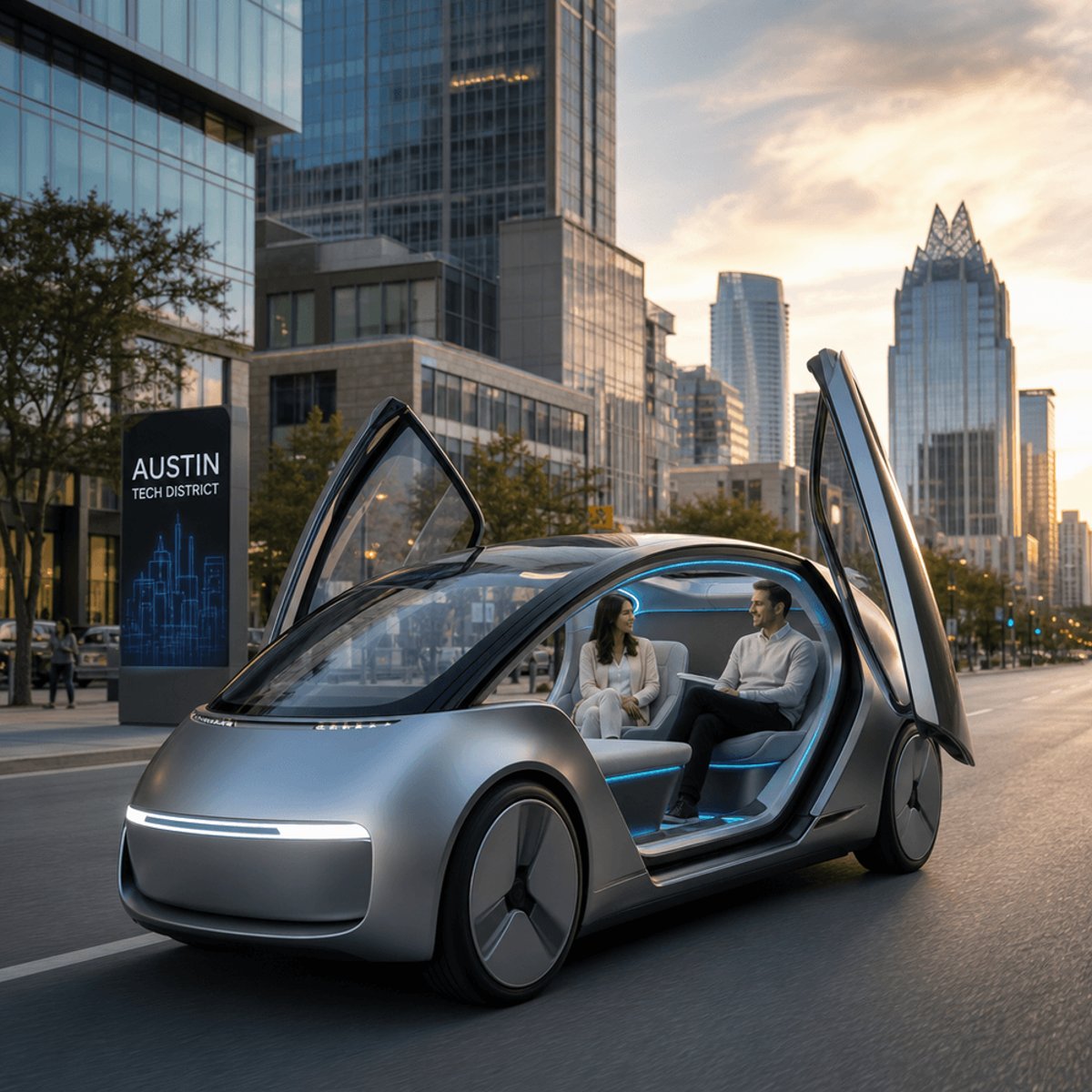
Tesla just put rubber to road on its most audacious bet yet. The company's started testing its Cybercab - a vehicle with no steering wheel, no pedals, and no human controls whatsoever - on public streets in Austin. After years of Elon Musk promising a robotaxi network was just around the corner, the company's finally moving from concept to concrete testing. It's a high-stakes gamble that could either revolutionize urban transportation or become another cautionary tale in autonomous vehicle development.
Tesla just made Elon Musk's robotaxi dream tangible. The company's Cybercab - a vehicle stripped of every traditional control mechanism - is now being tested on Austin's streets, according to TechCrunch. No steering wheel. No pedals. No way for a human to take over if things go sideways.
It's the kind of all-in move that defines Tesla's approach to autonomy. While competitors like Waymo spent years methodically expanding their geofenced robotaxi operations, Tesla's betting it can leapfrog them with a vision-only system that works anywhere. The Austin tests represent the first time that theory faces real-world validation at scale.
The timing tells you everything. Musk's been promising a Tesla robotaxi network since 2019, consistently pushing timelines while competitors actually launched commercial services. Waymo now operates in San Francisco, Phoenix, and Los Angeles. Cruise had been expanding before regulatory setbacks forced a reset. Even Zoox, Amazon's autonomous unit, recently started testing its purpose-built robotaxi in Las Vegas.
Tesla's taken a fundamentally different path. Where others rely on lidar sensors that create detailed 3D maps of surroundings, Tesla's sticking with cameras and neural networks - the same approach that powers its Full Self-Driving feature in consumer vehicles. It's cheaper to manufacture and theoretically more scalable. But it's also riskier, especially in a vehicle with no backup controls.
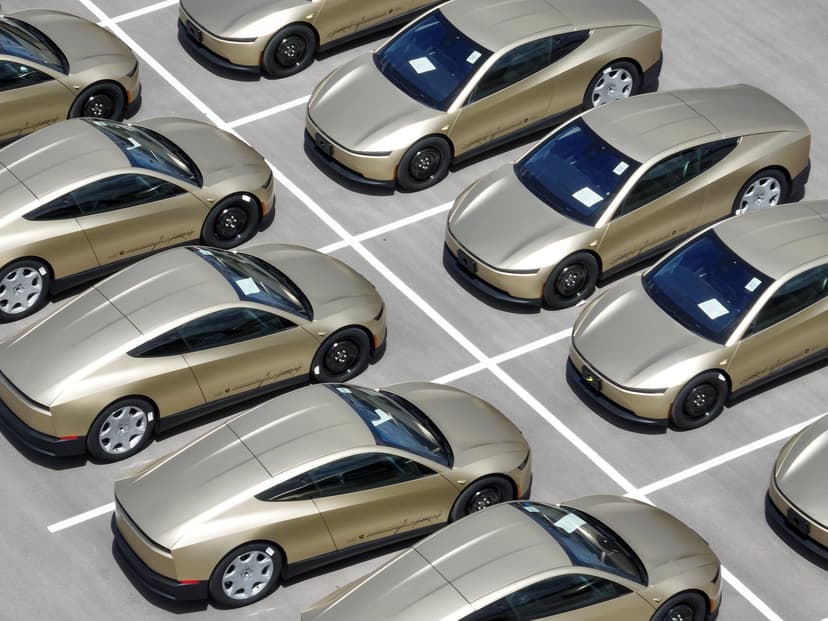
The Cybercab itself looks like Tesla distilled its design language into something purpose-built for autonomy. Based on glimpses from the company's October 2025 unveiling event, it seats two passengers, features butterfly doors, and looks more like a concept car than a production vehicle. That's intentional. Without needing space for steering columns or pedal assemblies, Tesla redesigned the interior around passenger comfort.
But design's the easy part. The hard question is whether Tesla's vision-only system can handle the chaos of real-world driving safely enough to satisfy regulators. The company's reportedly secured special testing permits from Texas authorities, which makes sense given the state's relatively permissive approach to autonomous vehicle testing. Still, getting from closed-course testing to carrying paying passengers is a massive leap.
The competitive pressure's real. Waymo recently announced it's completing over 100,000 paid rides per week across its service areas. That's actual revenue, actual customers, actual proof of concept. Tesla needs to show it can match that reliability without the expensive sensor suite Waymo relies on.
There's also the business model question. Musk's pitched the robotaxi network as a way for Tesla owners to earn passive income by adding their vehicles to an autonomous fleet when not in use. But the Cybercab suggests a different approach - a dedicated fleet of company-owned vehicles optimized for ride-hailing. That's a huge capital expenditure and a fundamental shift from Tesla's previous messaging.
Financially, Tesla needs this to work. The company's automotive margins have compressed as it's cut prices to maintain volume. A high-margin robotaxi service could offset that pressure while opening an entirely new revenue stream. Analysts have speculated that a successful robotaxi network could add hundreds of billions to Tesla's valuation.
The Austin test program's scope remains unclear. Tesla hasn't disclosed how many Cybercabs are on the road, what routes they're testing, or how long this phase will last before attempting commercial operations. That opacity's typical for Tesla, which often announces products years before delivery while sharing minimal technical details.
What's certain is that every other autonomous vehicle company will be watching closely. If Tesla can prove that camera-only systems work reliably enough for driverless operation, it validates a dramatically cheaper path to autonomy. If the tests reveal limitations that require additional sensors, it strengthens the case for the lidar-heavy approach most competitors have adopted.
Regulators are watching too. The National Highway Traffic Safety Administration has been investigating Tesla's Full Self-Driving system following multiple crashes. Approving a vehicle with no manual controls raises the stakes considerably. One serious incident could derail not just Tesla's program but the entire autonomous vehicle industry's momentum.
For Austin residents, the Cybercabs will either become a familiar sight or a short-lived experiment. The city's already tech-forward, with strong Tesla presence since the company moved its headquarters there. But being a testing ground for vehicles with no steering wheels is a different level of trust entirely.
Tesla's Austin Cybercab tests represent the company's most concrete step yet toward realizing Musk's robotaxi vision, but they also expose how far behind schedule that promise has become. While competitors already generate revenue from autonomous ride-hailing, Tesla's still in the proving-it-works phase with a technological approach that's either brilliant or reckless depending on who you ask. The next few months will reveal whether the company's camera-only bet can actually match the reliability of sensor-heavy systems - and whether regulators will trust vehicles with no human override roaming city streets. For an industry that's promised transformation for over a decade, Tesla's finally putting its boldest claim to the test.