Anker just gave the smart home a brain, and it doesn't need the cloud to think. At IFA 2026 in Berlin, the company's Eufy division unveiled the MindBase, a local AI hub that runs an in-house large language model directly on your hardware, promising to process security camera footage without ever sending it to a remote server. For an industry still nervous about privacy breaches and subscription fatigue, that pitch lands at exactly the right moment.
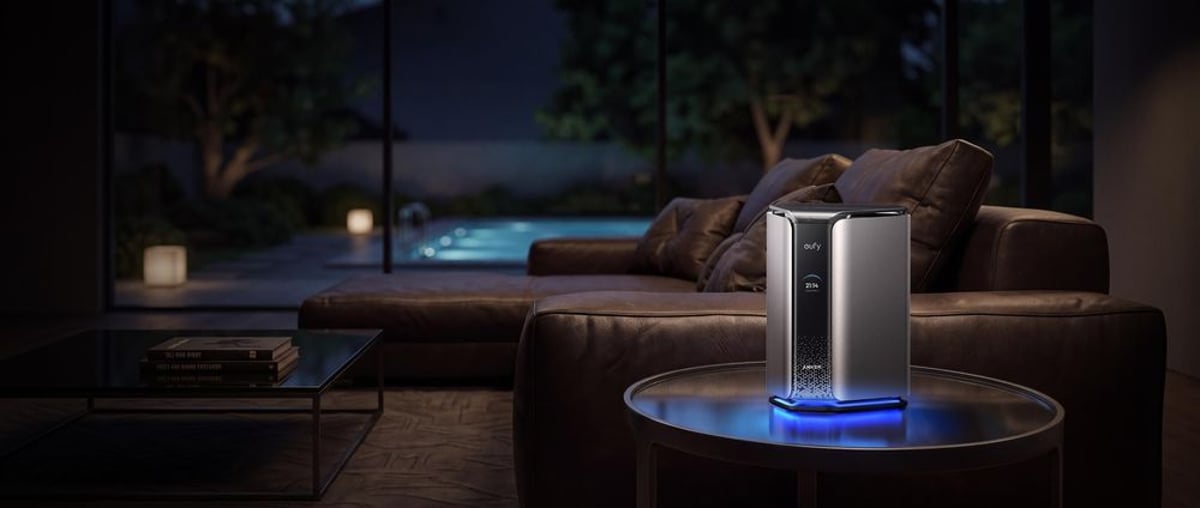
Anker isn't just selling another security camera this week. At IFA 2026 in Berlin, the company's Eufy brand pulled the wraps off the MindBase, a hub it's calling the "central brain for the home." The pitch is simple but ambitious: instead of shipping your camera footage off to some data center for AI analysis, the MindBase runs an Anker-developed large language model right on the device sitting in your living room.
That's a meaningful departure from how most smart home security has worked for the past decade. Companies like Amazon's Ring and Google's Nest built their businesses on cloud processing, uploading clips for AI-powered object detection, facial recognition, and activity summaries. It's convenient, but it also means your front porch footage is living on someone else's servers, subject to whatever data retention policy that company feels like enforcing this quarter. Anker is betting that enough customers are tired of that arrangement to make local processing a selling point rather than a technical footnote.
[Image: Anker MindBase lifestyle shot showing the hub integrated into a home setup]
According to The Verge's reporting, the MindBase isn't limited to crunching video. Anker is positioning it as a broader connectivity hub, complete with local storage and support for Matter, the cross-platform smart home standard backed by Amazon, Google, Apple, and Samsung. Security is the first job the MindBase is being asked to do, but the company reportedly has plans to expand its role well past camera footage, potentially turning it into a general-purpose control point for lighting, locks, and other connected devices around the house.
That's a strategic pivot worth watching. Eufy built its reputation on affordable, no-subscription security cameras, a model that already differentiated it from Ring's monthly-fee approach. Layering in a local AI hub pushes Eufy further into direct competition with broader smart home platform players, not just other camera makers. If the MindBase can genuinely serve as a Matter-compatible hub with real on-device intelligence, it starts to look less like a camera accessory and more like a mini home server, the kind of category Apple and Google have been circling with their own smart home ambitions.
The timing also isn't accidental. On-device AI has become the industry's favorite talking point in 2026, with chipmakers and device manufacturers racing to prove they can run sophisticated models locally instead of leaning entirely on cloud infrastructure. Running an LLM on a home hub is a meaningfully harder engineering problem than running one in a data center with unlimited compute, so if Anker's claims hold up under independent testing, it's a legitimate technical flex, not just marketing copy.
Anker didn't stop at the hub. The company also rolled out the TrackLight Cam S1, a new S4 video doorbell, and a dedicated window camera, filling out a lineup that suggests Eufy wants the MindBase to have plenty of company to talk to. Whether these individual devices bring meaningful upgrades over their predecessors is a separate question, but the strategy is clear: give customers a reason to buy into an ecosystem where the MindBase is the connective tissue.
The bigger test will come once the MindBase is in actual homes rather than a demo booth in Berlin. Claims about on-device AI performance and local-only data handling tend to look great in a press release and get picked apart the moment reviewers start poking at latency, accuracy, and whether "local" really means local or just local-until-a-firmware-update. Anker hasn't detailed pricing or availability windows in what's been shared so far, and that's usually where the real reaction begins. For now, the company has planted its flag on privacy-first, on-device AI as the next battleground for smart home security, and given how crowded that space has become, rivals will be watching just as closely as customers.
For readers tracking the smart home space, the MindBase signals where the next fight is heading: away from cloud subscriptions and toward on-device intelligence that keeps data local while still promising cloud-level smarts. It's an appealing pitch on paper, especially for anyone who's grown wary of handing security footage over to a third-party server. But the real verdict won't come from a Berlin trade show floor, it'll come once reviewers and everyday users get their hands on the hardware and find out whether Anker's local LLM actually delivers, and whether the rest of the smart home industry follows its lead or waits to see if customers even care.