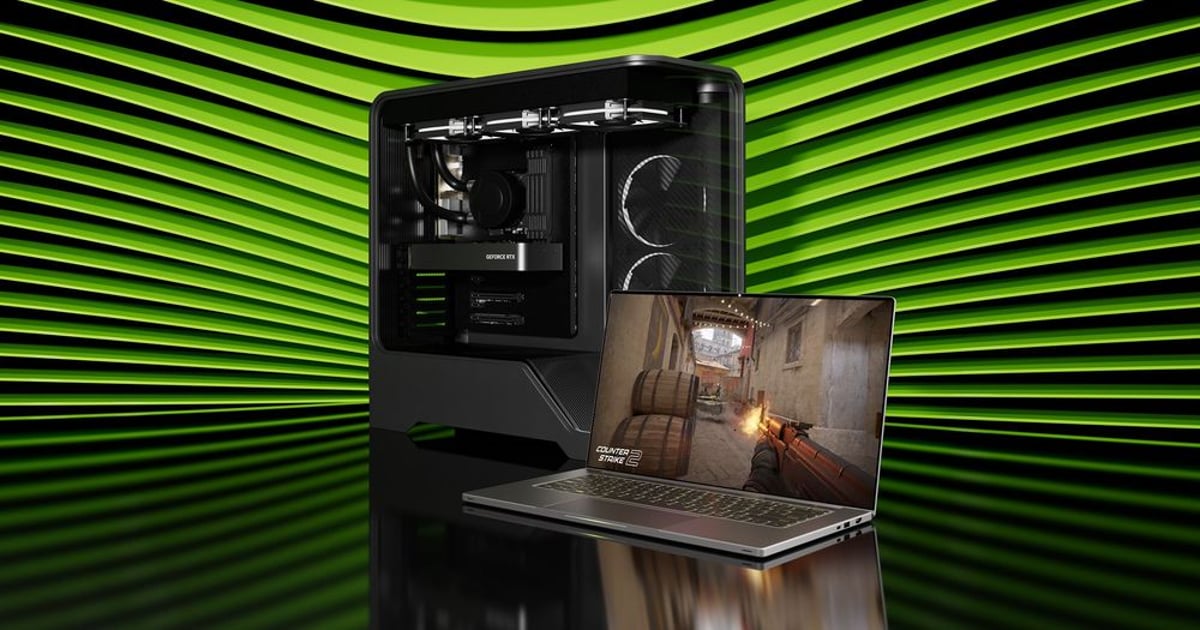
Nvidia is making its biggest play yet to break Intel and AMD's stranglehold on the Windows laptop market. Internal Lenovo documents leaked overnight reveal the world's largest PC maker has built six laptops around Nvidia's upcoming N1 and N1X Arm processors, including a 15-inch gaming rig. Combined with previously tipped Dell and Alienware systems, that's at least eight Nvidia-powered Windows laptops set to launch this spring, marking the chipmaker's most serious attempt to turn "Nvidia Inside" into the new standard for consumer PCs.
Nvidia just went from graphics card supplier to laptop platform challenger. The company that's dominated discrete GPUs for two decades is now positioning itself to compete directly with Intel and AMD for the heart of Windows laptops, and leaked documents show the offensive is bigger than anyone expected.
Dataminer Huang514613 posted product names to X that revealed Lenovo has built six different laptops around Nvidia's N1 and N1X Arm system-on-chips. The lineup spans 14-inch and 16-inch Ideapad Slim 5 models, two variants of the 15-inch Yoga Pro 7, a Yoga 9 convertible 2-in-1, and crucially, a Legion 7 gaming laptop. That gaming machine still appears in publicly accessible Legion Space software update pages as the "Legion 7 15N1X11," where the N1X designation points directly to Nvidia's higher-performance gaming chip.
You don't need to rely on social media leaks alone. A simple Google search turns up Lenovo's own web portal listings for password-protected "Nvidia N1x Portal Prod" and "Nvidia N1x Portal Test" sites, confirming the partnership extends deep into Lenovo's internal development infrastructure. For the world's largest laptop maker by volume, this represents a massive bet on Nvidia's ability to deliver competitive Arm performance for Windows.
But Lenovo isn't riding solo. Dell was previously tipped to launch an Alienware gaming laptop using Nvidia silicon by early 2026, and separate leaks suggest a Dell Premium system (now rebranded as XPS) with the N1X chip as well. That brings the known tally to at least eight different Nvidia-powered laptops hitting the market, a launch scale that signals serious manufacturing commitment from PC makers.
The timing aligns with a Digitimes report from three days ago stating Nvidia will launch its N1 and N1X laptop platform this spring, with broader availability by summer. The report also revealed Nvidia already has N2 and N2X chips on the roadmap for late 2027, suggesting this isn't a one-off experiment but a sustained platform play spanning multiple generations.
What kind of performance are we talking about? A Geekbench leak (always subject to skepticism, since fake entries have appeared before) suggested the N1X variant packs as many CUDA cores as a desktop RTX 5070 graphics card plus 20 CPU cores. That spec sheet matches Nvidia's GB10 "Superchip" used in the DGX Spark mini-PC, a connection Nvidia CEO Jensen Huang has essentially confirmed, saying the N1 and GB10 are "two halves of the same coin."
If those specs hold, Nvidia's gaming laptops could deliver discrete-GPU-class graphics performance from a single integrated chip, a feat that would fundamentally change laptop design. No more separate CPU and GPU dies, no more dedicated VRAM modules, just one SoC handling everything. That's the promise Apple delivered with M-series MacBooks, and it's what Qualcomm has been chasing with Snapdragon X laptops.
Nvidia isn't new to Arm-powered consumer devices. Every Nintendo Switch runs an Nvidia Tegra chip, and that Tegra line previously powered tablets including the original Microsoft Surface RT, Nvidia's Shield handheld, and Shield TV streaming boxes. But those efforts were either niche enthusiast products or locked to specific platforms. This time Nvidia is going mainstream, building the chips in collaboration with MediaTek and targeting the mass Windows laptop market.
The competitive landscape is shifting fast. Intel and AMD have split the x86 Windows market for decades, but Arm-based alternatives are suddenly viable. Apple's M-series chips proved Arm could deliver performance and efficiency gains that x86 struggles to match. Qualcomm's Snapdragon X Elite chips finally brought competent Arm performance to Windows after years of mediocre attempts. Now Nvidia, with its unmatched GPU expertise and AI acceleration capabilities, is jumping in with both feet.
For Intel especially, this represents an existential threat. The company that built its brand on "Intel Inside" stickers now faces a world where "Nvidia Inside" could mean better graphics, better AI performance, and potentially better battery life, all in one package. AMD's recent Ryzen AI laptop chips have kept it competitive, but Nvidia's entry adds a third major player with deep pockets and manufacturing partnerships already locked in.
The spring launch timing puts Nvidia's N1 laptops on shelves right as back-to-school and fall refresh cycles begin ramping up. PC makers will be watching closely to see if consumers respond to Nvidia branding on laptops the way they've responded to Nvidia GPUs in desktops. The gaming angle is particularly interesting since Nvidia dominates discrete gaming GPUs, and Legion branding signals Lenovo believes the N1X can deliver credible gaming performance.
One wildcard remains Windows on Arm app compatibility. While Microsoft has made significant strides with emulation and native Arm apps, plenty of software still runs better on x86. Nvidia's advantage here is its existing relationships with game developers and its ability to optimize drivers and software stacks. If anyone can smooth the Windows on Arm gaming experience, it's the company that's been doing GPU drivers for decades.
Nvidia's leap from GPU supplier to full laptop platform represents the biggest shift in Windows PC architecture since Apple abandoned Intel for its own silicon. With eight confirmed laptops launching this spring from the world's top PC makers and a multi-year roadmap already in place, this isn't a test balloon. It's a full-scale assault on Intel and AMD's home turf. The real question isn't whether Nvidia can build competitive Arm laptop chips, it's whether Windows users are ready to embrace a third architecture after decades of x86 dominance. If the N1X delivers on those leaked specs and Lenovo's Legion gaming laptop actually ships with credible frame rates, the "Intel Inside" era might be ending faster than anyone expected.