Samsung just announced it's deploying 50,000 Nvidia GPUs to create what it calls an 'AI Megafactory' for automated chip manufacturing. The massive deployment comes as Nvidia CEO Jensen Huang visits Seoul, cementing Korea's position as a critical AI infrastructure battleground where semiconductor giants are racing to automate production.
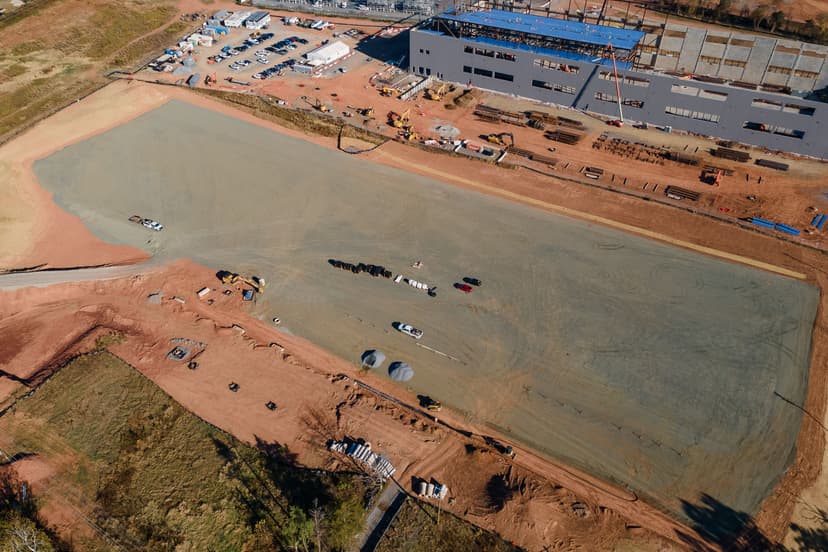
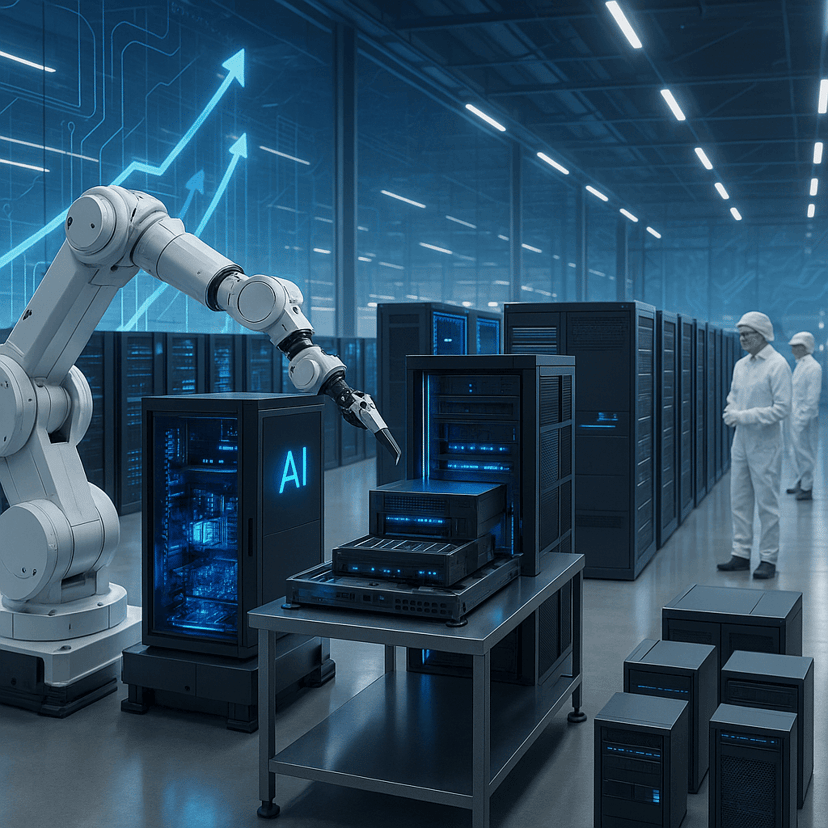
Samsung just made the biggest AI infrastructure bet in semiconductor history. The Korean giant announced it's buying 50,000 Nvidia GPUs to power what it's calling an 'AI Megafactory' - a facility designed to automate chip manufacturing for mobile devices and robotics applications.
The timing isn't coincidental. Nvidia CEO Jensen Huang was spotted in Seoul this week sharing beers with Samsung Chairman Lee Jae-yong and other Korean business leaders, just days after announcing partnerships with Palantir, Eli Lilly, CrowdStrike, and Uber at the GPU Technology Conference in Washington.
But Samsung's deployment goes deeper than just buying chips. Nvidia representatives say they're adapting Samsung's chipmaking lithography platform to work with their GPUs, promising 20 times better performance. That's a massive leap for a company already producing some of the world's most advanced semiconductors.
"We're working closely with the Korean government to support its ambitious leadership plans in AI," Raymond Teh, Nvidia's senior vice president of Asia-Pacific, told reporters Wednesday. The partnership reveals how Korea is positioning itself as an AI manufacturing powerhouse, with SK Group and Hyundai also deploying similar GPU clusters.
The deal validates Huang's bold claim that Nvidia has $500 billion in business booked from its current Blackwell generation GPUs plus the upcoming Rubin chips. That forecast helped push Nvidia past the $5 trillion market cap milestone this week, making it the first company to reach that valuation.
Samsung's relationship with Nvidia runs both ways. While Samsung is buying GPUs for its AI factory, it's also a critical supplier, manufacturing the high-bandwidth memory that Nvidia needs for its AI chips. Samsung said it will tweak its fourth-generation HBM memory specifically for Nvidia's AI processors.
The Korean company plans to use Nvidia's Omniverse simulation software alongside the GPU deployment, and run its own AI models for mobile device applications. Samsung didn't specify when the megafactory would be operational, but the scale suggests this is a multi-year, multi-billion dollar commitment.
This isn't just about manufacturing efficiency - it's about control. By automating chip production with AI, Samsung can respond faster to market demands, reduce human error, and potentially outmaneuver competitors like TSMC in the race for next-generation semiconductor leadership.
The partnership also highlights how AI infrastructure is becoming geopolitical strategy. Korea's government is clearly backing these massive deployments as part of its national AI competitiveness plan, creating a feedback loop where better chips enable better AI, which enables better chip manufacturing.
Samsung's 50,000 GPU deployment represents more than just a manufacturing upgrade - it's a bet on AI-powered semiconductor production becoming the new competitive battleground. With Korean chaebols racing to automate their factories and the government backing AI infrastructure investment, we're watching the emergence of a new model where the companies that make chips use AI to make better chips faster. The question isn't whether other semiconductor giants will follow Samsung's lead, but how quickly they can catch up.