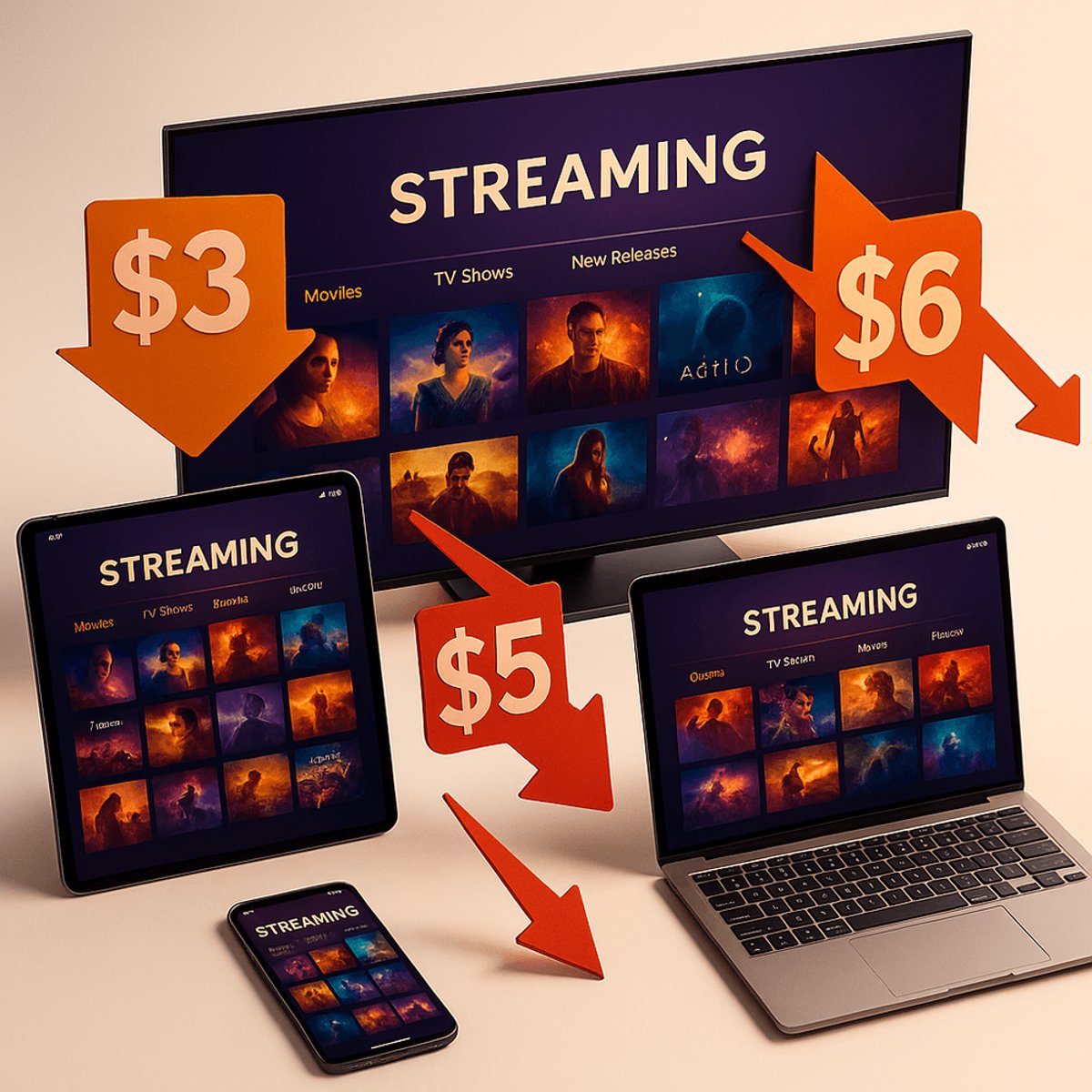
The streaming wars just got a massive price slash. HBO Max is leading the charge with an eye-popping $3 monthly deal, while Disney bundles with Hulu for $5 and Apple cuts its TV+ service to $6. These aren't temporary promotions - they're year-long commitments that could reshape how Americans consume entertainment.
HBO Max just dropped a bombshell that's shaking up the entire streaming landscape. The premium service is now offering its ad-supported tier for just $3 per month - a whopping 73% discount from its regular $11 price tag. But here's the catch: it's only for new customers or those with canceled subscriptions.
The move signals just how fierce competition has become in the streaming wars. Disney immediately countered with its own aggressive bundle, packaging Disney+ and Hulu together for $5 monthly, down from the usual $13. Meanwhile, Apple is practically giving away Apple TV+ at $6 per month for six months.
These aren't just Black Friday specials - they're strategic plays in a market where subscriber growth has flatlined. According to industry data, streaming services lost over 2.3 million subscribers in Q3 2024, forcing platforms to compete on price rather than content.
"Streaming apps are banking on you being complacent," notes WIRED's analysis. The companies are essentially betting that once you're locked into these discounted rates, you won't cancel when they eventually increase.
The HBO Max deal is particularly aggressive because it includes access to premium content like "The Wire" and "The Sopranos" - shows that typically command premium pricing. The service is even accepting customers who previously subscribed through other platforms, as long as they sign up directly through HBO's website.
Disney is taking a different approach, bundling its family-friendly content with Hulu's more mature programming to create a one-stop entertainment package. The $5 bundle represents serious value, considering Disney+ alone typically costs $8 monthly.
What's driving this price war? Streaming fatigue has hit consumers hard. The average American household now subscribes to 2.8 streaming services, down from 3.4 in 2022. With inflation squeezing budgets, many families are cutting back on entertainment spending.
The timing isn't coincidental. Black Friday has become the new battleground for streaming services, much like it is for retailers. Platforms are realizing they need to offer genuine value to win customers back from free alternatives like YouTube and TikTok.
Paramount is also joining the fray with a $3 monthly deal, though only for two months. Starz is going even further, offering an entire year for just $12 upfront.
But there's a hidden cost to these deals: data lock-in. If you switch emails to qualify as a "new" customer, you lose all your viewing history and personalized recommendations. It's a trade-off many consumers seem willing to make for the savings.
Industry analysts predict this pricing pressure will continue into 2026 as platforms fight for market share. The question isn't whether prices will rise again - it's when, and how much customer loyalty these rock-bottom prices can actually buy.
These massive price cuts represent more than just Black Friday bargains - they're a fundamental shift in how streaming services value customer acquisition. With HBO Max at $3, Disney bundles at $5, and Apple TV+ at $6, consumers are getting unprecedented value. The big question is whether these platforms can maintain profitability while training customers to expect rock-bottom prices. For consumers, it's a golden opportunity to sample premium content without breaking the bank.