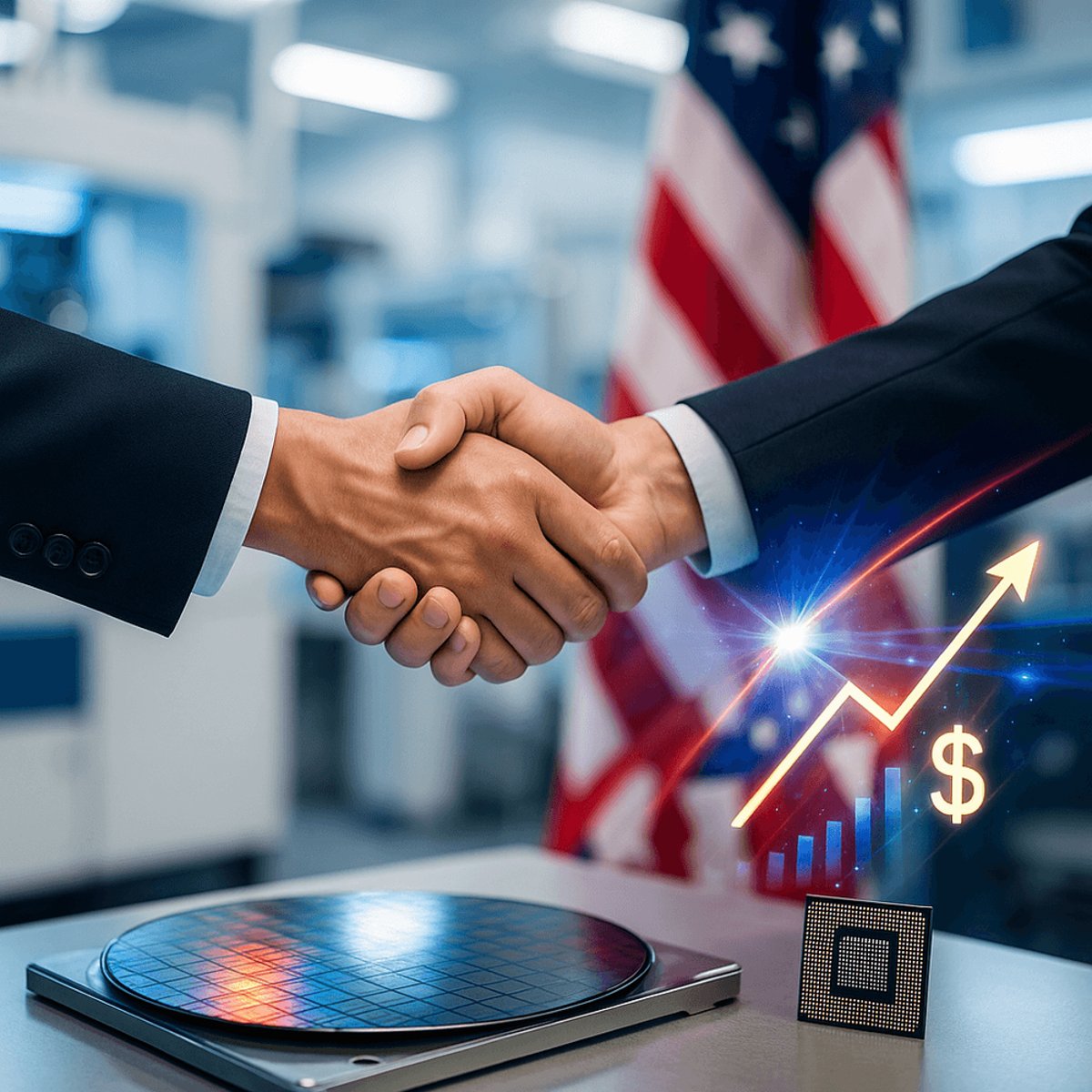
The Trump administration is injecting up to $150 million into xLight, a semiconductor startup developing particle accelerator-powered chip manufacturing technology, making the U.S. government likely the company's largest shareholder. The unprecedented Chips Act deal marks a controversial expansion of Washington's direct equity investments in private tech companies, sparking fresh debate about state capitalism in Silicon Valley's traditionally libertarian ecosystem.
Uncle Sam just became a venture capitalist, and Silicon Valley doesn't quite know what to make of it. The Trump administration's decision to pump up to $150 million into xLight represents the government's most aggressive foray yet into startup equity, transforming Washington from policy maker to cap table participant.
The Wall Street Journal broke the story Monday, revealing that the Commerce Department will likely become xLight's largest shareholder through funding from the 2022 Chips and Science Act. It's the first Chips Act award under Trump's second term, though the preliminary deal could still change.
This isn't Washington's first rodeo with equity stakes. The administration has already taken positions in public companies like Intel, MP Materials, Lithium Americas, and Trilogy Metals, plus two rare earths startups last month. But xLight represents something different - a direct bet on unproven technology from a four-year-old company trying to rewrite the rules of semiconductor manufacturing.
The Palo Alto startup wants to build particle accelerator-powered lasers the size of football fields to create more powerful and precise light sources for chip production. If successful, it could challenge ASML, the Dutch giant that's held an absolute monopoly on extreme ultraviolet lithography machines since going public in 1995. ASML's shares have surged 48.6% this year, reflecting the company's stranglehold on cutting-edge chip manufacturing.
Leading xLight's audacious mission is CEO Nicholas Kelez, a quantum computing veteran, and executive chairman Pat Gelsinger, the former Intel CEO who got ousted last year after his manufacturing revival plans stalled. "I wasn't done yet," Gelsinger told the Journal, describing the effort as "deeply personal" to him.
Gelsinger's involvement runs deeper than wounded pride. He's a general partner at Playground Global, which led xLight's $40 million funding round this summer. Now he's betting that particle accelerators can leapfrog existing technology - while ASML's machines operate at 13.5-nanometer wavelengths, xLight is targeting 2 nanometers with promises of 30% to 40% efficiency gains plus dramatic energy savings.
The government backing has Silicon Valley's traditional libertarians squirming. At TechCrunch's Disrupt event in October, Sequoia Capital's Roelof Botha delivered what might be the year's understatement: "[Some] of the most dangerous words in the world are: 'I'm from the government, and I'm here to help.'" Other VCs have quietly expressed concerns about suddenly competing against Treasury-backed startups or sharing board meetings with federal representatives.
Commerce Secretary Howard Lutnick frames the partnership as essential for national security and technological leadership, claiming it could "fundamentally rewrite the limits of chipmaking." The messaging reflects growing recognition that America's chip independence requires more than subsidies - it demands direct government participation in the riskiest, most capital-intensive ventures.
But the strategy raises uncomfortable questions about state capitalism disguised as patriotic policy. Even Botha, who describes himself as a "sort of libertarian, free market thinker by nature," acknowledged industrial policy's necessity when competing against nation-states that actively subsidize strategic industries. "The only reason the U.S. is resorting to this is because we have other nation states with whom we compete who are using industrial policy to further their industries that are strategic and maybe adverse to the U.S. in long-term interests."
The timing couldn't be more critical. China continues pouring billions into semiconductor development while Europe strengthens its technological sovereignty through companies like ASML. America's response increasingly resembles the same state-directed capitalism it once criticized, creating an uncomfortable reality for an industry built on private innovation and venture capital.
Both Kelez and Gelsinger will face questions about their government partnership at TechCrunch's StrictlyVC event Wednesday night in Palo Alto, where the implications of taxpayer-funded equity stakes will undoubtedly dominate discussion. The event represents a perfect microcosm of Silicon Valley's current tension - celebrating private innovation while acknowledging that some technological challenges might require Uncle Sam's checkbook.
The xLight deal crystallizes a fundamental shift in American industrial policy, where national security concerns now trump free market orthodoxy. While Silicon Valley wrestles with the implications of government equity participation, the reality is that technological competition with China and Europe may require exactly this kind of state capitalism. The question isn't whether Uncle Sam belongs on cap tables anymore - it's whether taxpayer-funded innovation can deliver the breakthroughs needed to maintain America's technological edge without stifling the entrepreneurial spirit that built the industry.