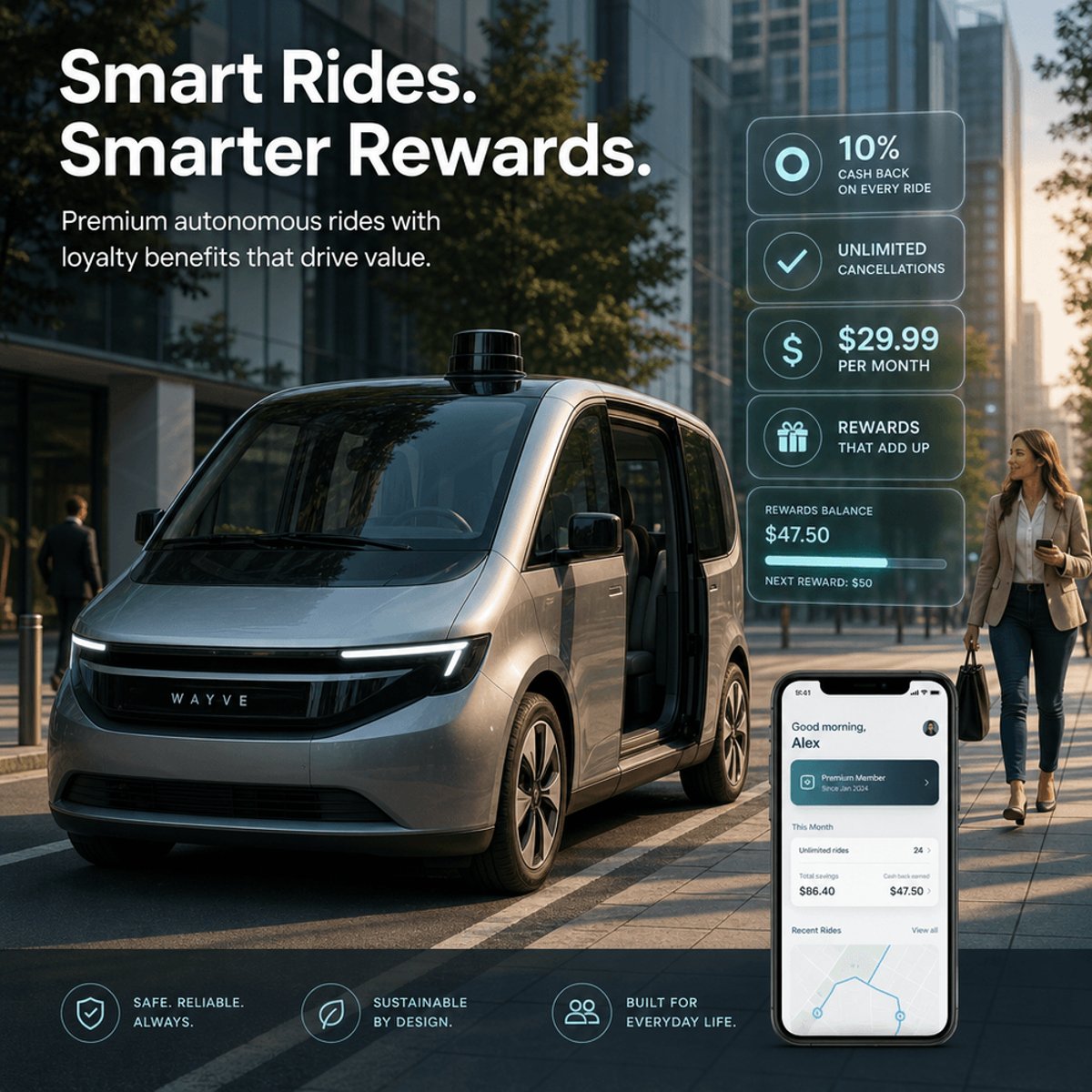
Waymo, Alphabet's autonomous vehicle unit, is rolling out its first-ever loyalty program as it pushes to turn occasional riders into committed subscribers. The new Waymo Premier membership, priced at $29.99 monthly, offers 10% cash back on rides and unlimited free cancellations - a clear play to compete with traditional rideshare giants Uber and Lyft who've long relied on loyalty perks to lock in users. The move signals Waymo's confidence that its robotaxi service has matured beyond novelty rides into everyday transportation.
Waymo just made its boldest bet yet that autonomous rides are ready for primetime. The Alphabet-owned robotaxi service announced Waymo Premier on Thursday, a $29.99 monthly subscription that hands frequent riders 10% cash back on every trip plus unlimited free cancellations. It's the kind of loyalty play that screams maturity - and a direct shot at Uber and Lyft, who've spent years perfecting the art of keeping riders hooked through rewards programs.
The timing isn't accidental. Waymo has been quietly expanding its service footprint across San Francisco, Phoenix, Los Angeles, and Austin, racking up enough rides to make a subscription model actually viable. According to reporting by TechCrunch, the program represents Waymo's first structured effort to build rider retention beyond the initial novelty factor that's driven much of its early adoption.
Here's the math that matters: if you're spending $300 or more monthly on Waymo rides, the 10% cash back effectively pays for the subscription fee. That's roughly 10-15 rides depending on distance, making it attractive for daily commuters or car-free urbanites who've already ditched personal vehicles. The free cancellations sweetens the deal further, removing the friction that often keeps riders from booking autonomous vehicles when weather or timing feels uncertain.
But this isn't just about perks - it's about data and predictability. Subscription models give Waymo something traditional rideshare companies have long coveted: committed revenue streams and behavioral patterns they can optimize around. When riders pre-commit to a monthly fee, Waymo gains visibility into demand that helps with fleet positioning and route planning. It's the same playbook Amazon Prime perfected - once you're paying monthly, you're incentivized to maximize value by riding more often.
The competitive pressure is real. Uber One, launched in 2021, bundles rideshare discounts with food delivery perks for $9.99 monthly - a lower price point but across a broader service portfolio. Lyft Pink, similarly priced, throws in priority pickup and relaxed cancellation policies. Waymo's betting that its autonomous angle - no driver tips, no awkward conversations, consistent pricing - justifies the premium.
What Waymo isn't advertising is how this program helps solve one of autonomous vehicle economics' trickiest problems: utilization rates. Self-driving cars cost millions to develop and deploy, but they only generate revenue when they're moving passengers. A loyalty program that encourages frequent, predictable rides helps smooth out demand curves and improve the unit economics that still make robotaxis prohibitively expensive to scale.
The program also arrives as Waymo faces mounting questions about its path to profitability. While the company doesn't break out financials separately from Alphabet's "Other Bets" category, analysts have long questioned when - or if - autonomous rides can pencil out without massive ongoing subsidies. A subscription model at least creates a foundation for recurring revenue that's less dependent on surge pricing or promotional discounts.
Industry watchers note that loyalty programs only work when there's enough supply to meet demand. Waymo's been battling fleet constraints in several markets, with riders sometimes waiting 15-20 minutes for pickups during peak hours. If Premier members start flooding the system expecting preferential treatment, the company will need to scale its vehicle count fast or risk frustrating the very customers it's trying to retain.
There's also the regulatory wildcard. As Waymo expands into new cities, it's facing increased scrutiny from local officials concerned about safety, traffic impacts, and labor displacement. A growing base of subscribed riders could actually help Waymo's case - demonstrating sustained demand and community integration rather than tourists taking joyrides.
For riders on the fence about autonomous vehicles, Premier might be the nudge that tips the scale. The psychology of subscriptions is powerful: once you're paying monthly, you look for reasons to use the service rather than reasons to avoid it. That's exactly what Waymo needs as it tries to normalize robotaxis from futuristic novelty into boring, reliable transportation.
Waymo's Premier program is less about the $29.99 price tag and more about signaling a fundamental shift in how autonomous vehicles position themselves. This isn't experimental tech anymore - it's trying to be your default ride. The real test won't be how many people sign up in month one, but whether Waymo can deliver enough consistent availability and pricing stability to make that subscription feel like a no-brainer. If they pull it off, expect every AV player from Cruise to Zoox to rush out their own loyalty programs. The race to own your daily commute just went subscription.