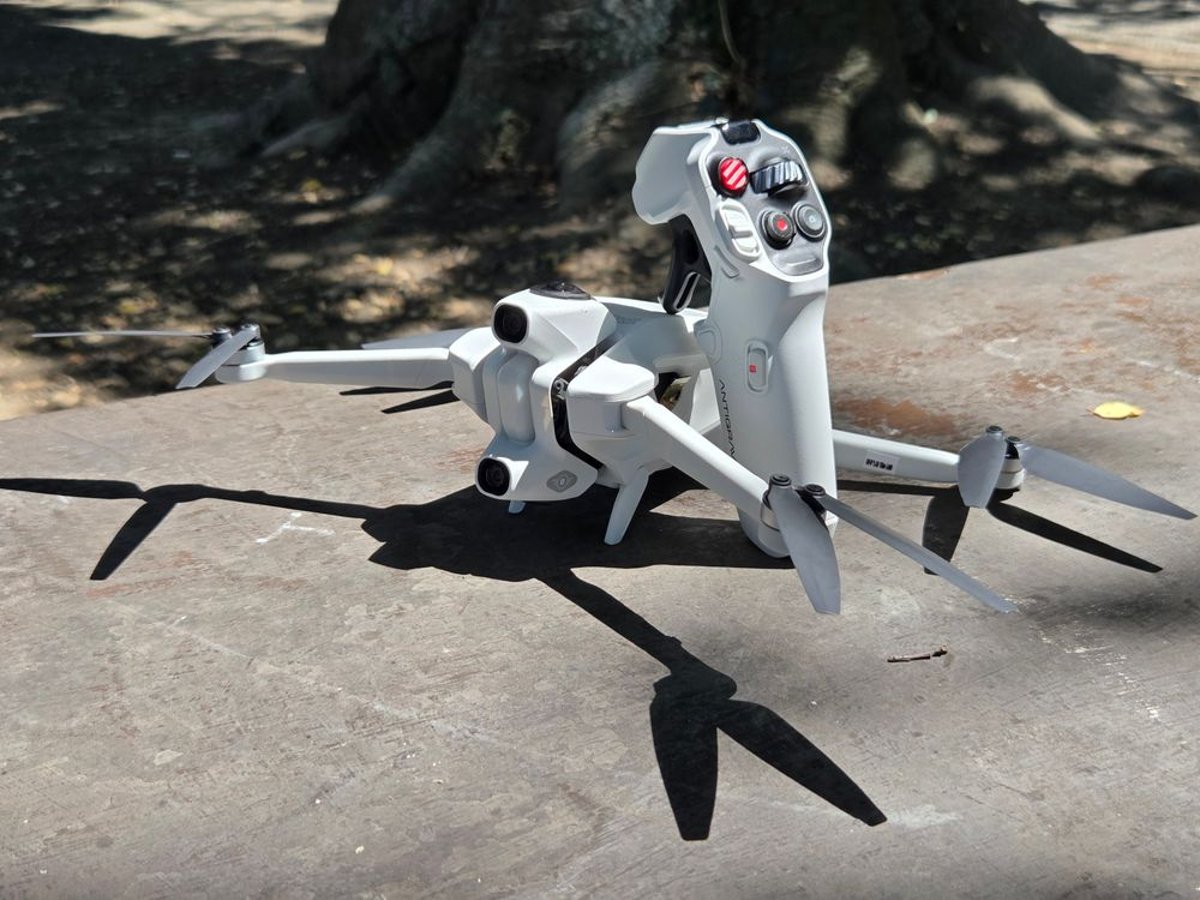
The Antigravity A1 just landed at Best Buy stores nationwide, offering the first real alternative to DJI's banned drones. This isn't just another quadcopter - it's a 360-degree flying camera with motion-sensing goggles that lets you point and fly without traditional piloting skills. With DJI facing an imminent US import ban, timing couldn't be more critical for drone enthusiasts.
Antigravity just pulled off the ultimate market timing. As DJI drones vanish from US shelves ahead of a looming import ban, the A1 drone is now shipping from Best Buy stores - a full day ahead of its official December 4th launch. The $1,599 bundle includes the drone, 360-degree camera system, and those distinctive motion-sensing goggles that make this feel like the future of consumer drones.
The A1 represents a fundamental shift from traditional drone piloting. Instead of learning complex controls, you simply put on the goggles, look where you want to go, and point with your arm. Pull a trigger, and the drone flies there while you're free to take in the aerial view. The 360-degree camera captures everything simultaneously, letting you edit and reframe footage afterward - no more worrying about getting the perfect shot in real-time.
Best Buy appears to have jumped the gun on availability, with stores already stocking three bundle options. The standard $1,599 package gets you started, while the $1,899 Explorer bundle adds three batteries, a multi-charger, and carrying case. The top-tier $1,999 Infinity bundle includes three high-capacity batteries for extended flight sessions.
This pricing puts the A1 in premium territory - more expensive than traditional drones that deliver higher-quality rectangular footage. But none of those competitors offer the A1's unique combination of 360-degree capture and intuitive motion controls. Early demos show it flies like a DJI Mini in terms of weight and portability, despite being priced closer to the banned Mavic and Air models.
The timing couldn't be more strategic. DJI's US troubles have created the first major opening in the consumer drone market in years. While DJI scrambles to get its own Avata 360 through FCC approval - which just happened last week - Antigravity is already on shelves with a compelling alternative.
But the two drones target different users. The A1 focuses on beginner-friendly experiences with gentle flight patterns and lightweight design that likely won't require FAA registration. DJI's Avata line traditionally caters to FPV enthusiasts who want speed and agility for dynamic aerial maneuvers.
For Antigravity, this represents a make-or-break moment. The company, which spun out from camera maker Insta360, has been promising US availability since August but couldn't guarantee it would happen. Now they're not just in the US market - they're potentially the only game in town for consumers wanting cutting-edge drone technology.
The broader implications extend beyond just one product launch. If the A1 succeeds, it proves that innovative features can compete with DJI's traditional advantages in flight performance and camera quality. Other manufacturers are likely watching closely, potentially accelerating their own US market entries.
What remains to be seen is whether American consumers will embrace this new approach to aerial photography. The A1's 360-degree capture and point-to-fly interface represent a significant departure from traditional drone operation. But with DJI options disappearing and regulatory uncertainty looming, early adopters may not have much choice in exploring these new paradigms.
The Antigravity A1's arrival marks a pivotal moment in the US drone market. With DJI facing regulatory headwinds and shelf space opening up, this 360-degree alternative offers consumers a genuinely different approach to aerial photography. Whether the $1,599 price point and learning curve around new interaction paradigms will resonate with mainstream users remains to be seen. But for the first time in years, American drone enthusiasts have a compelling non-DJI option that's actually available to buy.