AST SpaceMobile just scored its biggest win yet, inking a major partnership with Verizon to beam cellular coverage from space across America. The deal puts AST head-to-head with SpaceX's Starlink service and marks a critical moment in the race to connect every corner of the US through satellites. AST shares surged 15% on the news as investors bet on the company's ability to challenge Elon Musk's space internet dominance.
AST SpaceMobile just reshuffled the satellite communications deck with a game-changing Verizon partnership that could redefine how Americans stay connected in remote areas. The Texas-based company announced its most significant deal to date, integrating its space-based cellular network directly with Verizon's terrestrial infrastructure to deliver coverage where traditional cell towers can't reach.
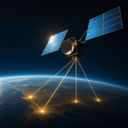
The partnership leverages Verizon's 850 MHz spectrum to create seamless connectivity between AST's BlueBird satellite constellation and unmodified smartphones. While financial terms weren't disclosed, the deal represents a major escalation in AST's battle against SpaceX's Starlink service, which has already begun rolling out direct-to-cell coverage with T-Mobile.
"This agreement marks our most significant partnership milestone," AST executives said in announcing the deal. The partnership builds on last year's $100 million commitment from Verizon to support AST's service rollout, signaling the telecom giant's serious bet on satellite-cellular convergence.
The timing couldn't be more critical for AST. The company currently has five BlueBird satellites operational in low Earth orbit - its initial "Block 1" constellation designed to provide intermittent coverage across the United States. But the real test comes with Block 2, an ambitious deployment of 45-60 next-generation satellites planned for 2026 that will determine whether AST can scale from proof-of-concept to mass market reality.
SpaceX isn't waiting around. Elon Musk's company recently agreed to acquire $17 billion worth of wireless spectrum from EchoStar, dramatically expanding its direct-to-phone capabilities. The acquisition gives SpaceX a significant spectrum advantage as it races to blanket the globe with satellite connectivity.
Verizon becomes AST's second major carrier partner, following a 10-year agreement with Vodafone that established the company's international footprint. The dual partnerships position AST as a legitimate competitor in what's quickly becoming a two-horse race between established satellite players and telecom incumbents seeking space-based solutions.
AST has already demonstrated the technical feasibility of its approach, successfully completing 4G and 5G connections between its satellites and standard smartphones, including voice and video calls. These testing milestones prove the network's capabilities, but scaling to serve millions of users presents entirely different challenges around capacity, latency, and reliability.
The satellite-to-cell market is evolving faster than most analysts predicted. What started as emergency communication services for remote areas is rapidly expanding into mainstream connectivity solutions. Industry projections suggest the space-based cellular market could reach $23 billion by 2030, driven by partnerships exactly like the AST-Verizon deal.
Investors clearly see the potential. AST shares jumped more than 15% in Wednesday trading as news of the Verizon partnership spread. The stock surge reflects growing confidence that AST can execute on its ambitious satellite deployment timeline while competing effectively against better-funded rivals.
The competitive dynamics are fascinating to watch unfold. SpaceX brings manufacturing scale and launch capabilities that dramatically reduce deployment costs. AST counters with purpose-built satellites specifically designed for cellular communication and partnerships with established telecom operators who understand spectrum management and customer service.
What happens next will determine whether space-based cellular becomes a niche solution for remote connectivity or fundamentally disrupts how we think about mobile networks. AST's ability to deploy its Block 2 constellation on schedule while maintaining service quality will be the ultimate test of its technology and business model.
The AST-Verizon deal represents more than just another telecom partnership - it's a defining moment in the satellite-cellular convergence that could reshape how Americans stay connected. With SpaceX aggressively expanding through spectrum acquisitions and T-Mobile integration, AST's success depends on executing flawless satellite deployments while proving its technology can scale to millions of users. The real winners will be consumers in remote areas who've waited decades for reliable connectivity, regardless of which company ultimately dominates this emerging market.