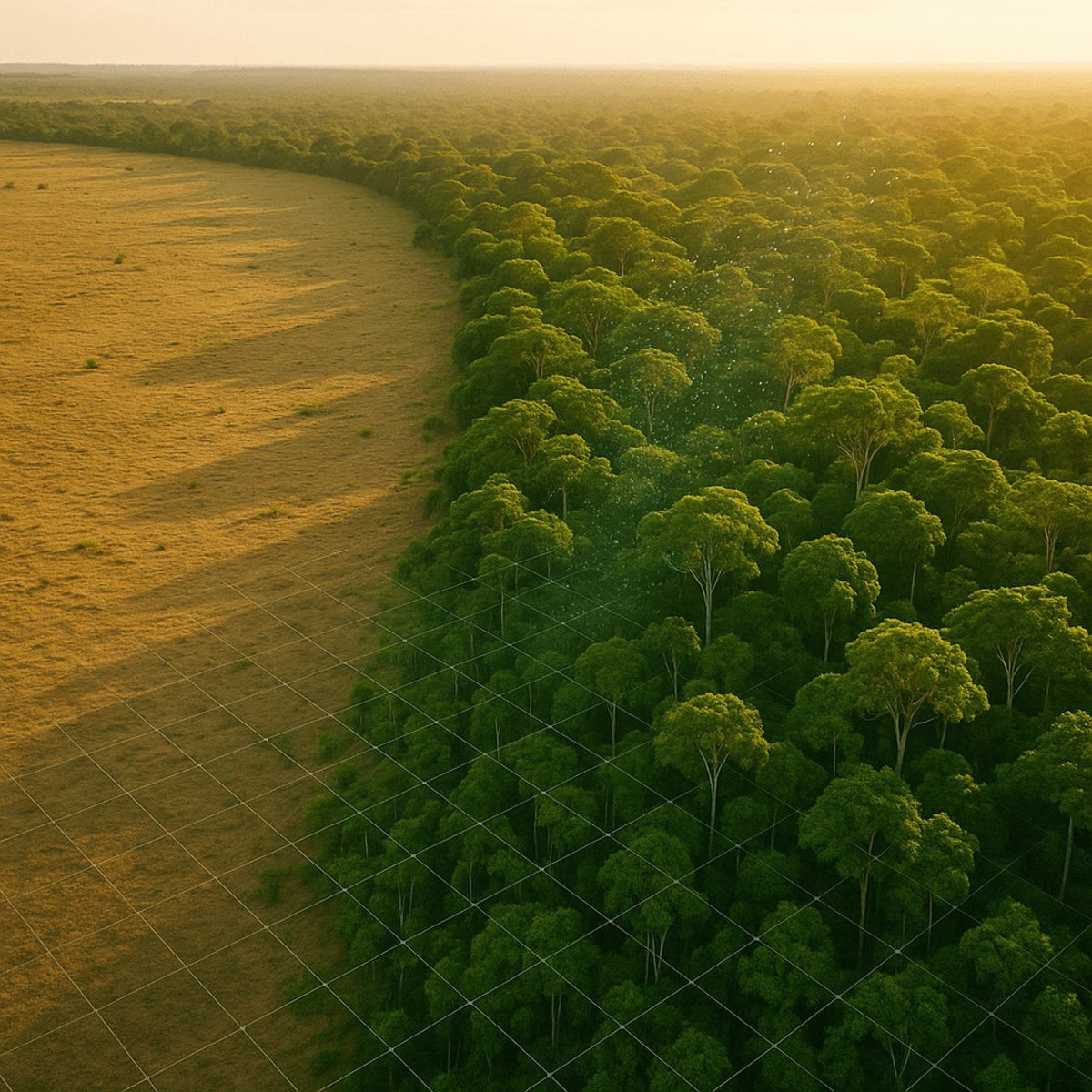
Google just made its biggest bet on nature-based carbon removal, committing to purchase 200,000 metric tons of carbon credits from a massive Amazon reforestation project in Brazil. The deal marks the first project selected by the Symbiosis Coalition, a new advance market commitment backed by tech giants that's designed to jumpstart the market for forest-based climate solutions.
Google is doubling down on forest restoration as a climate solution, announcing Thursday its commitment to purchase 200,000 metric tons of carbon removal from Mombak, a Brazilian company focused on Amazon reforestation. The deal represents a significant shift in how tech giants approach carbon neutrality, moving beyond industrial capture methods toward natural ecosystems.
The purchase comes through the newly launched Symbiosis Coalition, an advance market commitment that mirrors the successful Frontier initiative but focuses specifically on nature-based carbon removal. The coalition brings together Google, Microsoft, Meta, McKinsey, and Salesforce to create demand signals for forest-based climate projects.
"We're betting on nature's proven ability to sequester carbon at scale," a Google spokesperson told reporters during Thursday's announcement. The Mombak project will purchase degraded farmland in the Amazon basin and restore it to native forest, potentially capturing millions of tons of CO2 over the coming decades.
This marks a notable pivot for Google, which has historically favored direct air capture technology through its Frontier commitments. The company has invested heavily in industrial solutions like Climeworks and other mechanical carbon capture systems. But forest restoration offers advantages that technology can't match - biodiversity protection, watershed restoration, and community economic benefits.
The timing couldn't be more critical for Amazon conservation efforts. Deforestation rates have accelerated under political pressures, with recent satellite data showing concerning trends in forest loss. Mombak's approach of purchasing agricultural land for reforestation provides economic incentives that compete directly with cattle ranching and soy farming, two major drivers of Amazon destruction.
Google plans to leverage its DeepMind PerchAI technology to monitor and quantify the biodiversity impacts of the restoration project. This AI-powered system can track species recovery, analyze ecosystem health metrics, and provide verification data that traditional carbon credit systems often lack.
The announcement puts pressure on other tech giants to expand their own nature-based commitments. Amazon has focused primarily on renewable energy purchases, while Apple has invested in mangrove restoration projects. Microsoft operates both industrial and natural climate solution portfolios through its billion-dollar climate fund.
Nature-based carbon removal faces significant challenges that have limited corporate adoption. Forest projects risk losing their carbon storage if damaged by wildfires, disease, or future deforestation. Unlike direct air capture facilities, which can guarantee permanent storage, trees represent a more volatile carbon sink that requires decades of protection to deliver on promises.
But forests offer co-benefits that industrial solutions can't provide. The Mombak project will restore critical habitat for endangered species, replenish local water systems, and create sustainable jobs for rural communities. These additional impacts justify higher costs per ton of carbon removed compared to mechanical alternatives.
The Symbiosis Coalition's structure mirrors Frontier's successful advance market commitment model, which has channeled over $1 billion toward direct air capture development since 2022. By pre-purchasing carbon removal at premium prices, corporate buyers help finance the development of early-stage technologies and drive down future costs through scale.
Industry experts see this as a crucial moment for nature-based climate solutions. "Corporate demand has been the missing piece," said Dr. Sarah Chen, who tracks carbon markets at BloombergNEF. "These advance commitments provide the revenue certainty that project developers need to access financing and expand operations."
Google's Amazon reforestation commitment signals a broader industry shift toward natural climate solutions that deliver benefits beyond carbon removal. While forest projects carry risks that industrial capture methods don't face, they offer ecosystem restoration and biodiversity protection that tech companies increasingly value. The Symbiosis Coalition's launch provides a framework for scaling these investments, potentially channeling billions toward forest restoration globally. As corporate climate commitments mature, expect more tech giants to balance technological solutions with nature-based approaches that address the full scope of the environmental crisis.